What’s With The Incredible Ages in Genesis 5?

Today’s topic: How are we supposed to understand the frankly incredible ages that Genesis 5 gives of the antediluvian patriarchs? Was Adam really 930 years old when he died?!
What does the Bible tell us about these ages?
Also, who was too lazy to look up antediluvian?
(ante = before + diluvian deluge, flood—it means “before the flood”. You’re welcome.)
Seen Our New Podcast?
We are one week into our Year Through the Bible at Asbury. (Or, as the cool kids say, YTTB.) Every Thursday in this space, I’ll post some thoughts on what we have been reading. (If you are on my email list, the post will be emailed to you at 4:00 AM central time that morning. Subscribe here.)
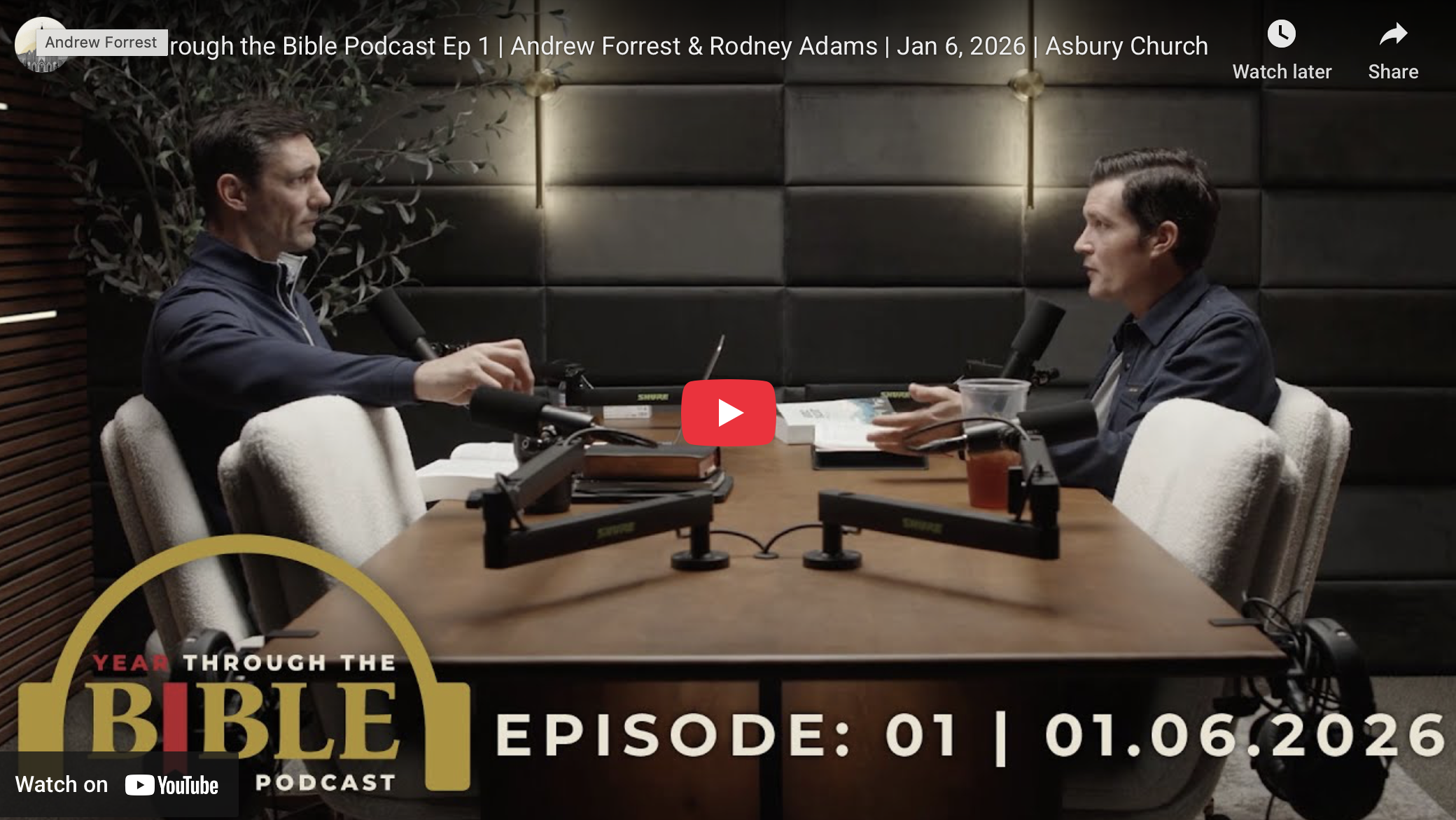
Our brand new Year Through the Bible podcast released yesterday. Episode 01 was about the most frequently-asked question we received: How should we think about Genesis 1? Did God create the universe in a period of six literal twenty-four hour days? Check it out here.
(Read below the image for today’s post—thoughts on the amazing ages recorded in Genesis 5.)
Genesis 5:1-32
5:1 This is the book of the generations of Adam. When God created man, he made him in the likeness of God. 2 Male and female he created them, and he blessed them and named them Man when they were created. 3 When Adam had lived 130 years, he fathered a son in his own likeness, after his image, and named him Seth. 4 The days of Adam after he fathered Seth were 800 years; and he had other sons and daughters. 5 Thus all the days that Adam lived were 930 years, and he died.
6 When Seth had lived 105 years, he fathered Enosh. 7 Seth lived after he fathered Enosh 807 years and had other sons and daughters. 8 Thus all the days of Seth were 912 years, and he died….
9 When Enosh had lived 90 years, he fathered Kenan. 10 Enosh lived after he fathered Kenan 815 years and had other sons and daughters. 11 Thus all the days of Enosh were 905 years, and he died.
12 When Kenan had lived 70 years, he fathered Mahalalel. 13 Kenan lived after he fathered Mahalalel 840 years and had other sons and daughters. 14 Thus all the days of Kenan were 910 years, and he died.
15 When Mahalalel had lived 65 years, he fathered Jared. 16 Mahalalel lived after he fathered Jared 830 years and had other sons and daughters. 17 Thus all the days of Mahalalel were 895 years, and he died.
18 When Jared had lived 162 years, he fathered Enoch. 19 Jared lived after he fathered Enoch 800 years and had other sons and daughters. 20 Thus all the days of Jared were 962 years, and he died.
21 When Enoch had lived 65 years, he fathered Methuselah. 22 Enoch walked with God after he fathered Methuselah 300 years and had other sons and daughters.23 Thus all the days of Enoch were 365 years. 24 Enoch walked with God, and he was not, for God took him.
25 When Methuselah had lived 187 years, he fathered Lamech. 26 Methuselah lived after he fathered Lamech 782 years and had other sons and daughters. 27 Thus all the days of Methuselah were 969 years, and he died.
28 When Lamech had lived 182 years, he fathered a son 29 and called his name Noah, saying, “Out of the ground that the Lord has cursed, this one shall bring us relief from our work and from the painful toil of our hands.” 30 Lamech lived after he fathered Noah 595 years and had other sons and daughters. 31 Thus all the days of Lamech were 777 years, and he died.
32 After Noah was 500 years old, Noah fathered Shem, Ham, and Japheth.
What ARe We Supposed to Believe About the Ages in Genesis 5?
Numbers are important in the Bible. The problem is that we have lost the ability to interpret the numbers in the way that the ancient Israelites would have understood them. So, when we read in Genesis chapter 5 that Adam lived to be 930 and his son Seth 912, we know that these numbers are important, but we don’t know why they are important.
Some possible ways to interpret the amazing ages in Genesis 5:
The ages report literal years, identical to our years. That is, Adam was 930 years old when he died, and Adam’s years were made up of 365 days, just like ours.
The years in Genesis 5 are different from our years. Adam’s 930 years mean something different than our years—they are units of time that we don’t understand.
The years in Genesis 5 are symbolic. The problem is, we don’t have the key to interpreting the symbols!
Which is it?
Why not just accept the numbers at face value and be done with it? Why do the numbers have to "mean something”?
Seeing the years listed in Genesis chapter 5 as completely identical to modern years might be the correct interpretation, but I’m not convinced, and that’s because of what we read further on in the Bible itself.
Use the Bible to Interpret the Bible
The most important way to interpret the Bible is through using the Bible itself. So, are there other passages that might shed light on the ages of Genesis 5? Yes.
First, we should notice that after the Flood, no one lives anywhere close to as long as beforehand. It is significant that Abraham, who lives after the Flood and is the greatest of all the Patriarchs, is recorded as living only to 175 (Genesis 25:7). Now, 175 is an incredible age, but it is hundreds and hundreds of years shorter than the ages in Genesis 5.
Why does the Bible go out of its way to tell us Abraham’s specific age? I think one reason might be because we are supposed to compare Abraham with the antediluvian patriarchs and see just how different their lives were before the Flood. In Genesis, the Flood permanently changes things, and one of the ways we can see that is through the great ages of the people who live before the Flood. So, the ages of the men before the Flood highlight the change that the Flood has brought to human life.
Second, we read in Psalm 90 that the ancient Israelites had lifespans similar to our own—70-80 years:
9 For all our days pass away under your wrath;
we bring our years to an end like a sigh.
10 The years of our life are seventy,
or even by reason of strength eighty;
yet their span is but toil and trouble;
they are soon gone, and we fly away.
So, for the readers of the Bible in ancient Israel—who lifespans were in the same ballpark as modern Americans—the ages of the antediluvian patriarchs would have also seemed extremely strange.
This fact suggests to me that the great ages recorded in Genesis 5 are meant to get our attention and strike us as strange. They are meant to stand out.
One more thing: all the ages and details given in Genesis 5 allow us to see that Adam is still alive when the ninth generation is born!
Adam lives 0-930.
Lamech, the ninth descendant, is born in Year 874.
This means that Adam saw the increasing violence and depravity that humans adopted as a result of his disobedience in the garden of Eden, all the way down to the ninth generation.
I find this a striking detail. Without the ages given to us in Genesis 5, we would not be able to know this.
What does the Bible itself teach us about the ages in Genesis 5?
“Are we supposed to see the years in Genesis 5 as identical to our concept of years?”
That’s the question folks ask, but it’s not the right question and there is no real way to answer that question.
The better question is, What does the Bible itself teach us about the ages in Genesis 5?
When we ask that question, we see that even in the Bible, these ages are unusual and so we should pay close attention to what we read in Genesis 5—these great ages are meant to grab our attention and teach us something important.
P.S. I kicked off YTTB this past Sunday at Asbury: You Are Going to Die (And Other Good News). Check it out here.