
America: Be More Like My Mom
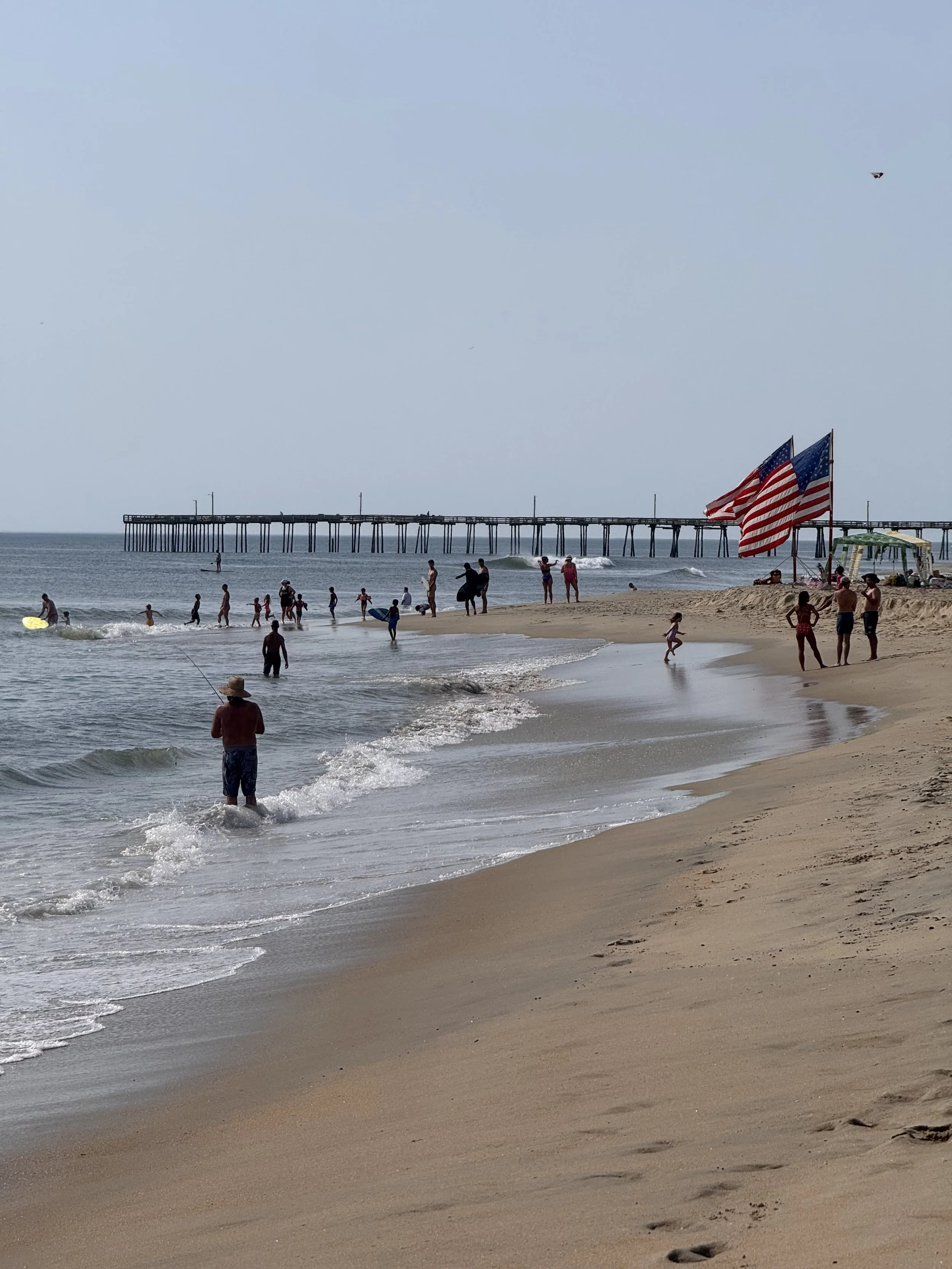
I took the above picture this morning. It’s the Fourth of July, which makes me think of this scene in The Great Escape:
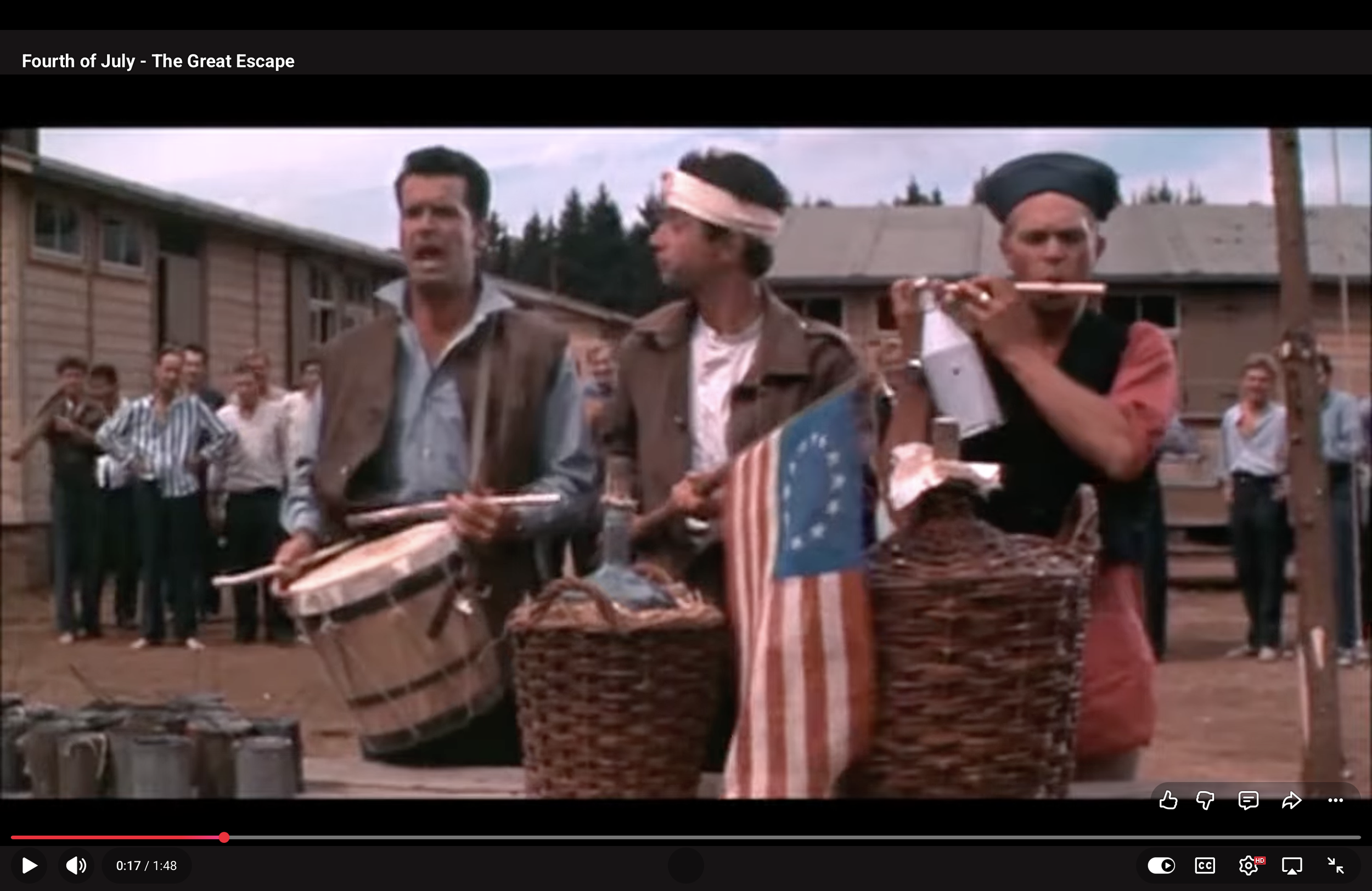
That Scene In The Great Escape
It’s totally unrealistic, but so fun: in the movie, there are only three Americans among the P.O.W.s in the Nazi camp. They have been making moonshine in secret, in preparation for the Fourth of July. When the date finally arrives, they march around the camp playing “Yankee Doodle” on the fife and drum, sharing out the illicit liquor with their fellow prisoners.
“They’re celebrating the Revolution.”
“It’s the Fourth of July!”
America’s Problem Is That It’s Full of Americans
America is full of Americans, and Americans have lots of conflicting opinions. Now, that’s nothing new: we’ve had conflicting opinions for 250 years. No, our problem is not all our differences—our problem is that we don’t have a realistic plan for the future. What’s your plan to reach the people who don’t think like you, vote like you, look like you—the people that hate you and think you are the problem?
Many people seem to believe that if we just we speak the facts often enough and loudly enough, people will eventually understand and agree with us. We are like the stereotypical American abroad who thinks that if he just speaks English a bit LOUDER AND SLOWER, the French-speaking waiter will understand.
This is crazy, and I wrote a whole book about this insanity.
So, on the Fourth of July, there really is no point in pointing out all the ways that the other side is wrong. You may be right, but it’s not going to matter.
So, what would make a difference?
The best I can think of these days is that we Americans ought to be more like my mom.
How to Be Like My Mom
My mom has this really annoying habit of wanting to leave things better than she found them.
She’ll say, “We need to leave it better than we found it.”
We’ll reply, “But this is a hotel—they don’t expect you to clean the shower.”
(I exaggerate, but not by much.)
I don’t see much hope in a strategy of trying to convince other Americans that they are wrong—that’s a waste of time as a primary course of action. But, I see a lot of hope in the commitment to leave things better than I found them. I see a lot of hope in deciding to be more like my mom.
The only thing I can control is myself, and in a culture in which everyone seems intent on tearing down, the future will belong to the builders. It might not seem fair. It isn’t. It might seem like a sucker’s game, but you’re only a sucker if you walk in blind. If you walk in with open eyes, knowing in advance that no one is going to thank you, that you’ll be cleaning up messes that someone else made, that it would be easier just to do the bare minimum—if you walk in knowing all of that, but also knowing that there is no other way, then you’re not a sucker. You’re a builder, and the future belongs to the builders.
A Walk on the Beach With My Wife
On the 250th anniversary of the signing of the Declaration of Independence, I think that those of us who love America and believe in America’s promise are just going to have to become more like my mom. Let the cynics and the nihilists carry on their bleak way—let’s be the ones who commit to leaving things better than we found them.
Last night, as my wife and I were walking on the beach, I saw a small green plastic bag sitting on the sand at the tide line, tied with a knot at the top. You know the bags I’m talking about—the ones people carry when they walk their dogs so they can clean up after themselves. (At least in theory.)
In this case, for some reason, someone had dropped a full bag right on the beach.
I was on a walk with my wife. It wasn’t my problem.
But I was thinking about my mom—“Leave things better than you found them”—and thinking about America and the Fourth of July and what the future is going to require.
So, I walked over, picked up the bag, and took the responsibility to throw it away.
The future belongs to the builders.
God’s not done yet.
Happy Fourth, everyone.
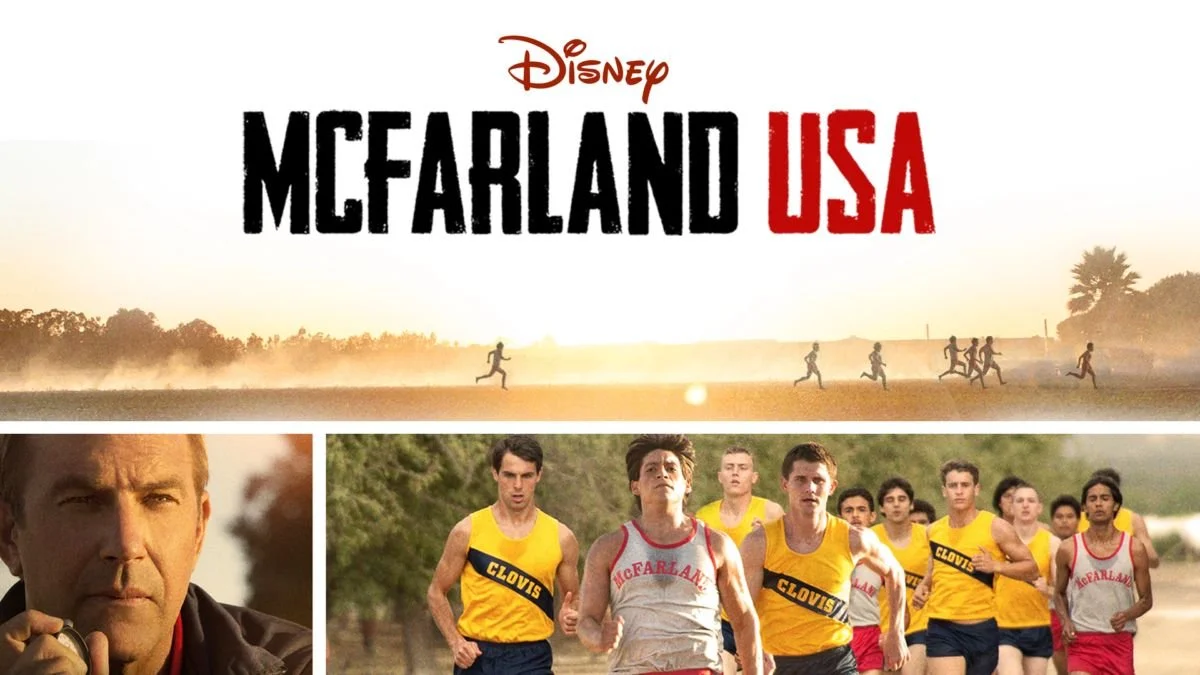
P.S. Want a good family movie to watch on the Fourth of July? I can’t recommend McFarland USA highly enough. Trust me!
Why I’m Showing a Rated R Movie to Teenagers
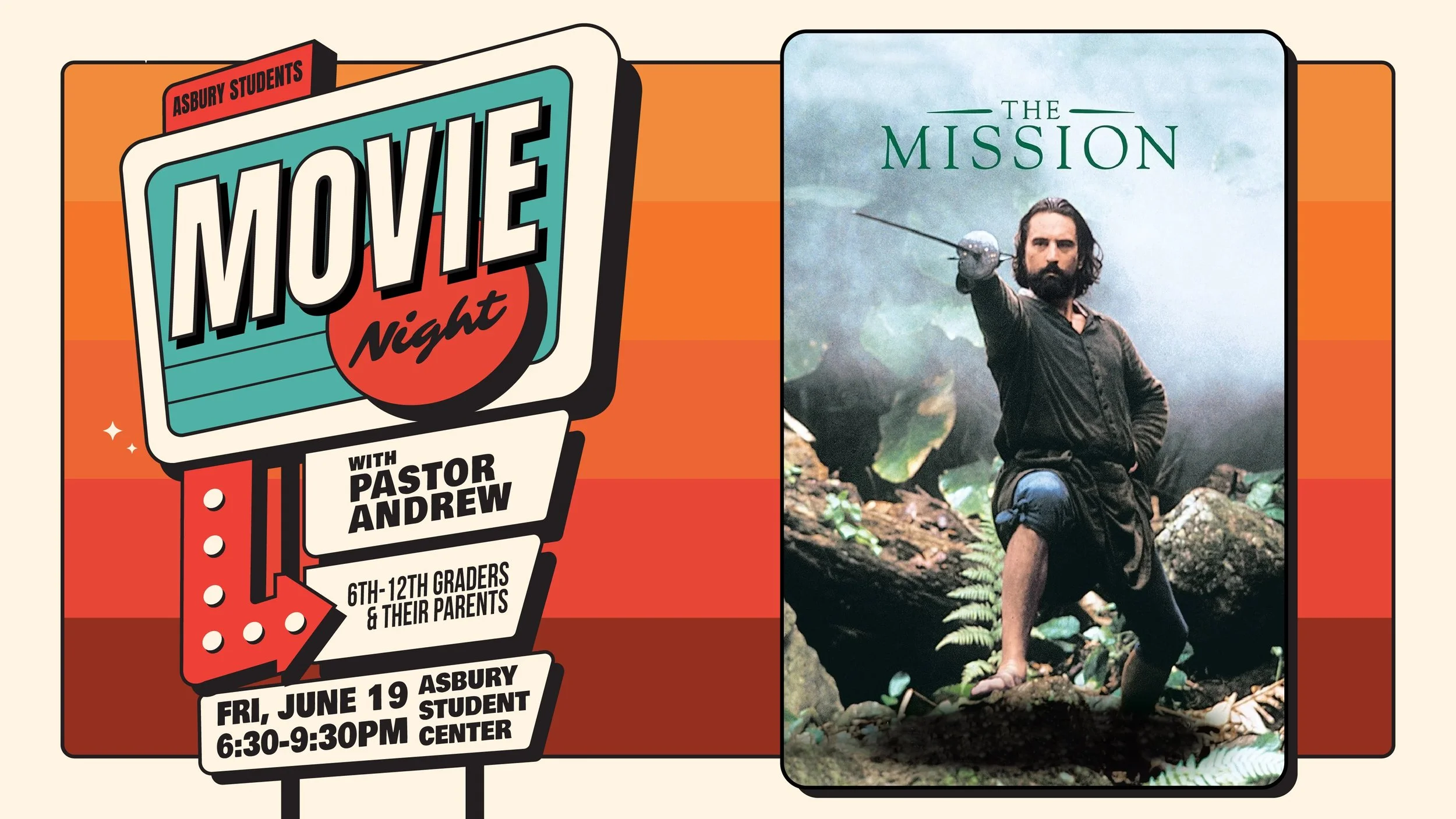
This Friday evening at Asbury I’m screening The Mission, the great 1986 Roland Joffé movie starring Jeremy Irons and Robert De Niro. I’m showing it our middle and high school students and their parents. It’s rated R, and deservedly so. Here’s why I doing this.
God is going to hold me accountable for the spiritual development of the young people at our church; I think about that all the time. We all know that the data over the last 50 years on young people leaving the church are grim. Here’s my abiding belief: young people are not leaving the church because we are giving them too much, but too little. If I am going to err as a pastor, I’m going to err on the side of more not less. In other words, I don’t want to dumb down the faith.
The Mission is a movie that asks deep questions about what it looks like to live faithfully in the world, but it doesn’t provide neat answers. There isn’t a nice clean ending. In fact, the final line of the movie haunts my thoughts as it makes the viewer consider his own place in the world.
This movie is going to stretch our young people—it’s not the kind of thing most of them will be used to watching. But, I think that can be a good thing.
One of the opening scenes of the movie features a beautiful depiction of masculinity in the service of God. In our time, we lack good examples of what masculinity is for—I like The Mission because it shows us what masculinity can look like when used appropriately.
But, be advised—this movie is not for little children. Here’s what I wrote in my description of the event:
"The Mission is one of my favorite movies, and I’ve been wanting to screen it at Asbury for our students for a while. Released in 1986 and with an all-star cast that includes Robert De Niro, Jeremy Irons, and Liam Neeson, The Mission is about Spanish and Portuguese colonization of South American Indians in the Amazon in the 18th century. Be warned—the movie is rated R for a reason and includes violence and non-sexual nudity of the native peoples. Obviously, I think the movie is worth seeing and I’m excited to get to show it to our students and their families, but it is NOT a movie for children.”
(For families with younger children, we will be playing the movie The Wild Robot in the room next door to where we are screening The Mission. We will be one of the divided families, with a child in each room. I’d like my daughter to see The Mission when she gets older, but it’s not appropriate for her right now.)
Propaganda vs. Art
Much of the Christian content produced these days is not art, but propaganda. Propaganda wants to tell you what to think, leaving no nuance. It expects nothing of the viewer. In fact, propaganda fears the viewer and worries that if there are any loose ends, if anything deviates from the neat and the clean, then people will fall into theological error. Propaganda worries that if people are allowed to think, then they will think the wrong things.
That may be true—people can easily fall into error. Left to their own devices, people will like as not think the wrong things. In fact, people have been thinking the wrong things since the Garden of Eden. So, if propaganda actually worked, I’d be all for it. But the problem with propaganda is that ultimately it doesn’t work! It isn’t captivating. It doesn’t stick with you. It doesn’t change you.
This is my problem with so many of the “Christian” movies being produced these days—they don’t really work. There is nothing wrong with that kind of thing in and of itself, but those sorts of movies are not going to reach people the way great art does. See, art expects something of the beholder—it asks you to do the thinking. It respects the idea that the world is not neat and clean, and that there are always questions along with answers.
The Bible, among many of things, is great art. The Bible expects something of the reader, and it doesn’t wrap things up neatly. For all the answers it provides, it also raises questions, questions through which God’s people have to learn to trust. (This is what faith is, by the way—trusting God’s goodness when you still don’t understand.)
What Movies Have Stayed With You?
I’m not expecting that every single student will find The Mission compelling this Friday, but I don’t care—I’m trying to put something out there that is worth attending to. I love what Chesterton said:
“An open mind is like an open mouth: it is meant to bite down on something nourishing. Otherwise it becomes like a sewer: accepting everything, rejecting nothing.”
So, that’s my goal with this movie: to give our students something to chew on.
Interested? Register here. I’m told that there will be a cornucopia of amazing movie snacks set out for our enjoyment, and, as I mentioned, a movie for little kids right next door to where we are screening The Mission.
What’s a movie that has stayed with you? Let me know in the comments.
World Cup
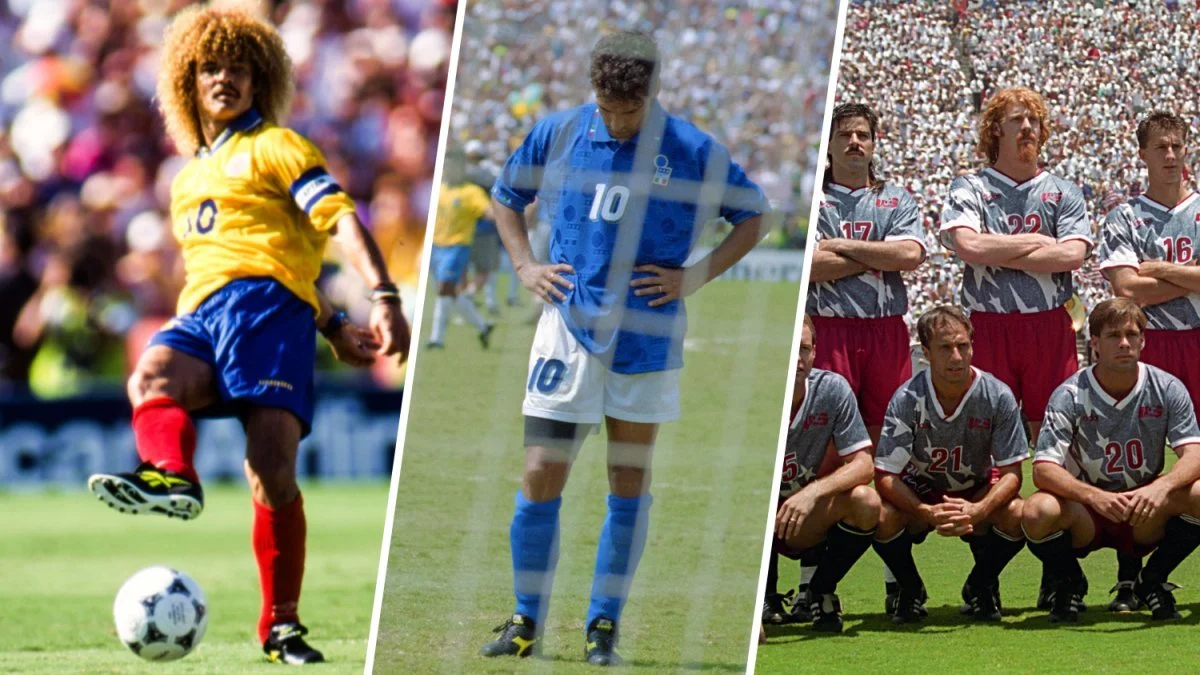
I had one of those strange experiences of memory last night, watching America’s opening World Cup game against Paraguay. In the build-up to the game, the Fox telecast did a fair amount of retrospective programming about the 1994 World Cup, showing lots of footage from 32 years ago.
THIRTY-TWO YEARS AGO!
It’s a cliche, but true in this case: I remember it as if it were yesterday. The 94 World Cup was being hosted in America for the first time, and I remember there being lots of hype around the entire event. One of the ideas behind having America host the 94 World Cup was to introduce soccer to an American audience. It certainly worked for me and my brother—we watched virtually every match, and I can remember where I was—and even the weather outside—when I think back on specific games.
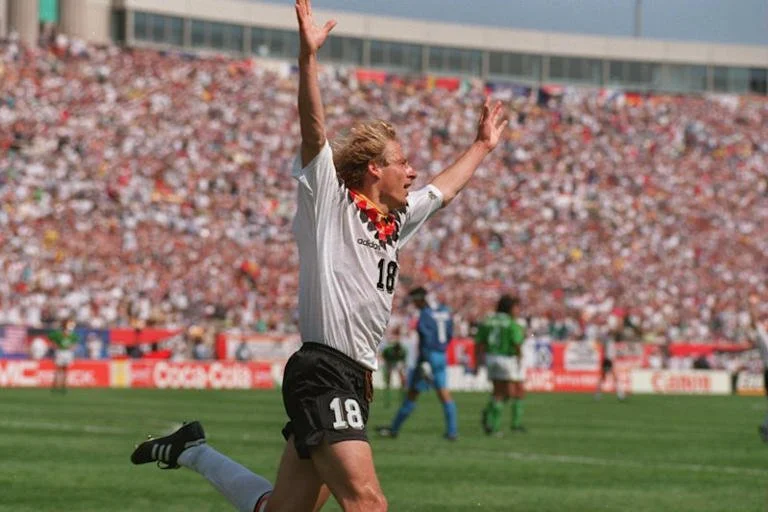
The opening match was in Chicago and featured Germany, which was one of the teams I was pulling for. (For some reason the teams I was pulling for were the US team, the Germans, Sweden, and Italy. I was rooting against Brazil, and I have no idea why.) Jurgen Klinsmann scored in the opening match wearing that awesome 90s German jersey with all the color blocks. (See above.) We were in Cape Cod and it was a BEAUTIFUL June day. I remember going out to the back yard of my parents’ Cape house and playing soccer with my brother. That house had AMAZING grass—like a carpet.
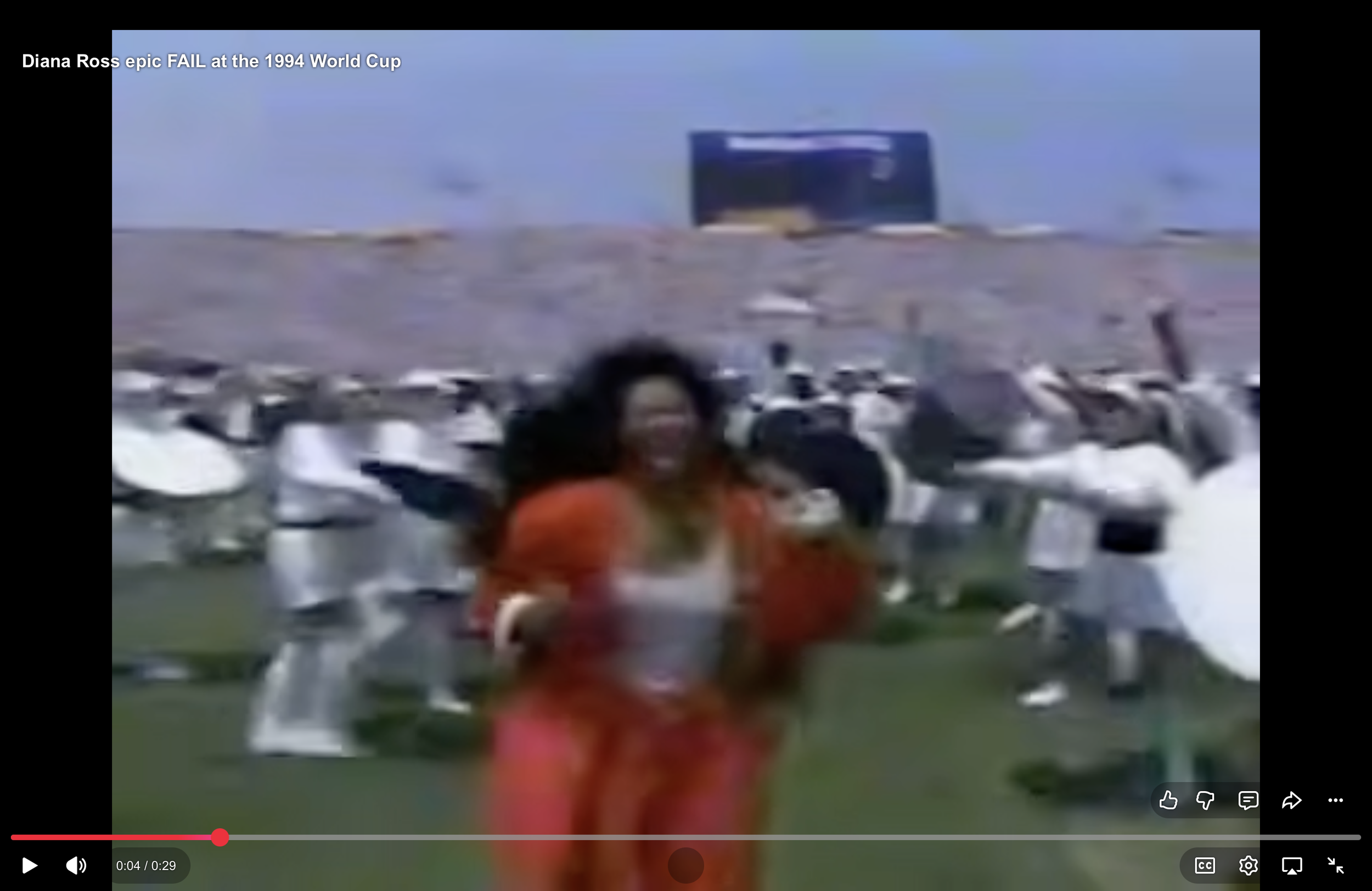
That opening match in 1994 also featured a bizarre opening ceremony, in which Diana Ross gave the worst penalty kick of all time. Check out this 19 second clip.
I remember the match in Dallas between the Germans and the South Koreans. It was played in the Cotton Bowl, and it was HOT. The Germans were wilting at the end of the match, and the Koreans—who were super fit—were able to come back and almost tie the game.
I remember the US versus Brazil game, which was played on the Fourth of July. We lost, but come on, it was the Fourth of July and we were playing Brazil!!
We had a youth group event on the day of the final, so I taped it and watched it that Sunday evening. I was so sad when Roberto Baggio put his penalty over the bar to hand the World Cup to Brazil.
I was fourteen at the time. All of those memories were brought back to me as we watched the US play Paraguay last night.
I’m on the West Coast with my family, and it was surreal thinking how quickly these past thirty-two years have gone by. I’m married and a father now, and, because my folks are with us on our trip out west, we watched the US game as a family of three generations.
Here’s the question that all the stirred-up memories of 1994 have me wondering:
What would fourteen year-old me have thought of this, if he had had insight into the future?
That 94 World Cup got my brother and I into watching soccer. Following the World Cup, one of the local TV stations would play highlights from England and Italy each Thursday afternoon, and it was must-see TV for us. When we had to miss, we’d bug my mom to set the trusty VCR.
I haven’t followed the build-up to this year’s tournament and I don’t even know who the favorites are supposed to be, but last night’s festivities got me fired up. Can’t wait to watch as as many games as possible, hopefully with family around.
Quick thoughts on last night’s game:
Rebecca Lowe is the host of NBC’s English Premier League coverage, but I guess she is on loan to Fox for the tournament, because she was the studio host for the coverage last night. She’s great, as were the guys with her—Thierry Henry (French), Zlatan Ibrohimovich (Swede), and Alexi Lalas (American).
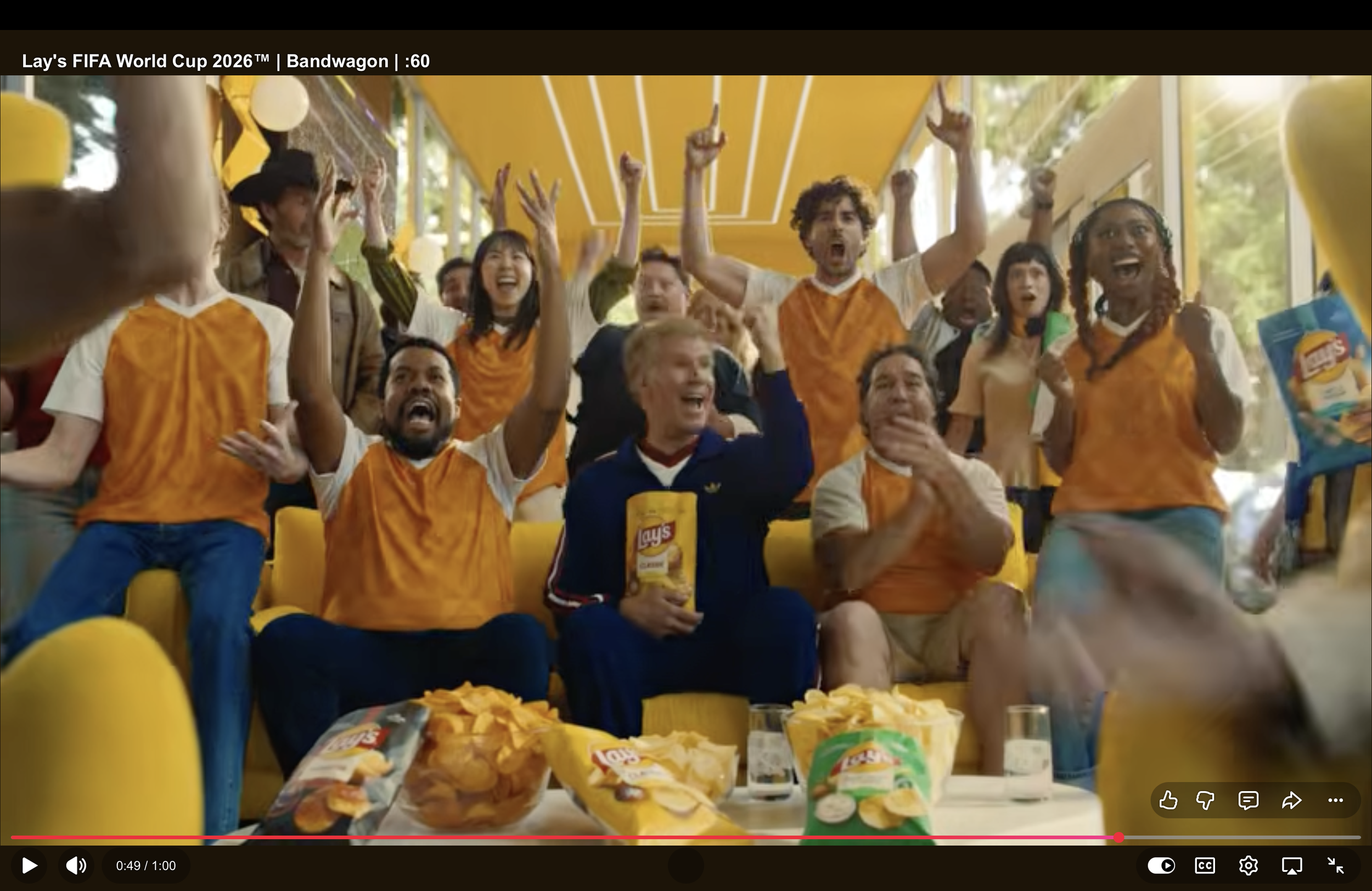
That Will Ferrell commercial for Lays potato chips about being a bandwagon fan is GREAT. Actually, I liked all the World Cup-themed commercials I saw last night.
It’s nice being on Pacific time and having the games occur earlier in the day. I could get used to this. Also, the weather on the West Coast?! Yes, please. There is a heat advisory this weekend, and it’s only going to be in the low 80s! Cracks me up.
There is one thing that I HATE about soccer, and as an American I will always hate: the “diving” and the writhing around on the ground. I’ve been watching soccer for over thirty years, and I still don’t get it. I find it shameful and unmanly—the way these amazing athletes pantomime injury and cry and writhe around, trying to get the ref to call a foul. We saw it happen last night when Miguel Almiron simulated being fouled by our captain Tim Ream. He dived to the ground even though replays showed that he was not even touched. Fortunately, the ref reversed his initial decision to penalize the US. I’ve cued up the video for you here.

I think the culture around fouling in soccer is one of the things that will keep soccer from ever really catching on in America. Patrick Mahomes is really disliked because of the way that NFL fans think he milks the slightest touch to grab a roughing penalty. And his behavior is not in the same universe of these whining soccer players!
As I mentioned, I haven’t really been paying much attention to the World Cup this year, but it was exciting last night to cheer for our boys and have us not only win, but win big, and score on the final kick of the game! USA!
Everyone knows America is really divided these days, so here’s hoping our boys will have a deep run in the tournament. I think that could be just what America needs, leading up to our 250th. Who knows?
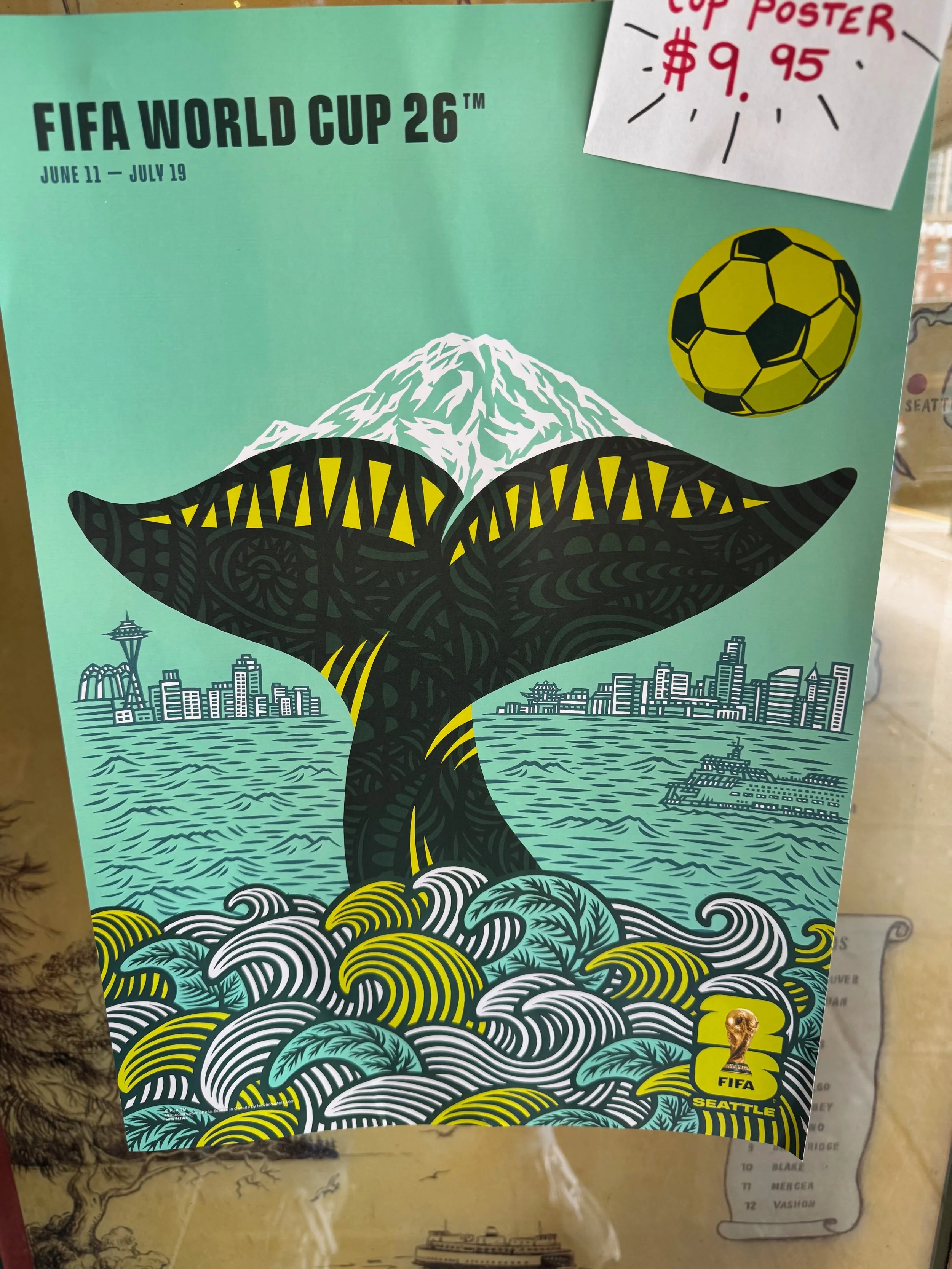
P.S. I think the Seattle World Cup logo is a perfection of graphic design. How cool is this?
Commencement Speaker
Tomorrow (Saturday), I’m giving the commencement address at Asbury Theological Seminary in Wilmore, Kentucky.
I’ll actually be speaking twice, due to the number of graduates and the size of the venue.
10:00 AM Eastern - Commencement for Graduate Students
2:00 PM Eastern - Commencement for Postgraduate Students
Both ceremonies will be livestreamed here.
I’m really honored to be here and grateful to Asbury’s new president, the Rev. Dr. David Watson, for the opportunity to address the graduates. ATS is a special place, and American Christianity (and, in fact, global Christianity) has greatly benefited from the Holy Spirit’s work through ATS over the years.
It’s a quick trip—flew in today and fly out tomorrow. Fingers crossed I make all my flights and get back to Tulsa late tomorrow evening. If not, I’ll be calling in and preaching from my cell phone Sunday morning….
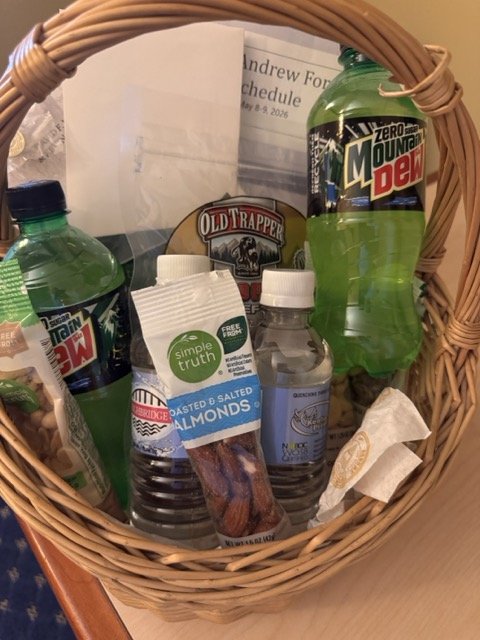
P.S. As the photo below shows, the ATS folks had Mountain Dew Zero waiting for me in my hotel room. I think my assistant Sandie must have been a co-conspirator. Nothing like a nice cool MDZ to getcha goin’.
P.P.S. I didn’t grow up around the Great Lakes. Flying into Chicago never ceases to amaze me—that’s a lake?!

P.P.P.S. Horse country! Pretty sure this is Churchill Downs, right?
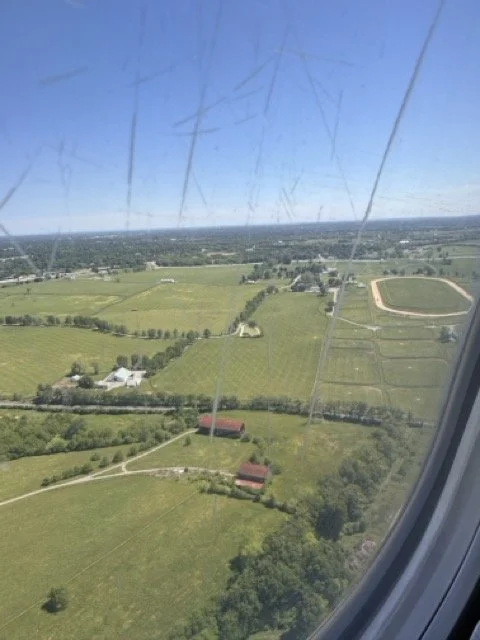
P.P.P.P.S. That’s a joke. Churchill Downs is in England, I think. Or one of the Carolinas? I never can remember.
P.P.P.P.P.S. Asbury Church—my church in Tulsa—and Asbury Theological Seminary—in Wilmore, Kentucky—are separate institutions, but we’re both named after the same man, the great early American missionary to the frontier, Francis Asbury. These days, Asbury Church hosts an extension site of ATS on our property in Tulsa, but we are still separate institutions. Just thought I’d clear up any confusion. Also, I’m testing to see if you, dear reader, have actually read this far.
This Week in DC I’m Reading the Hardest Passage in the Bible

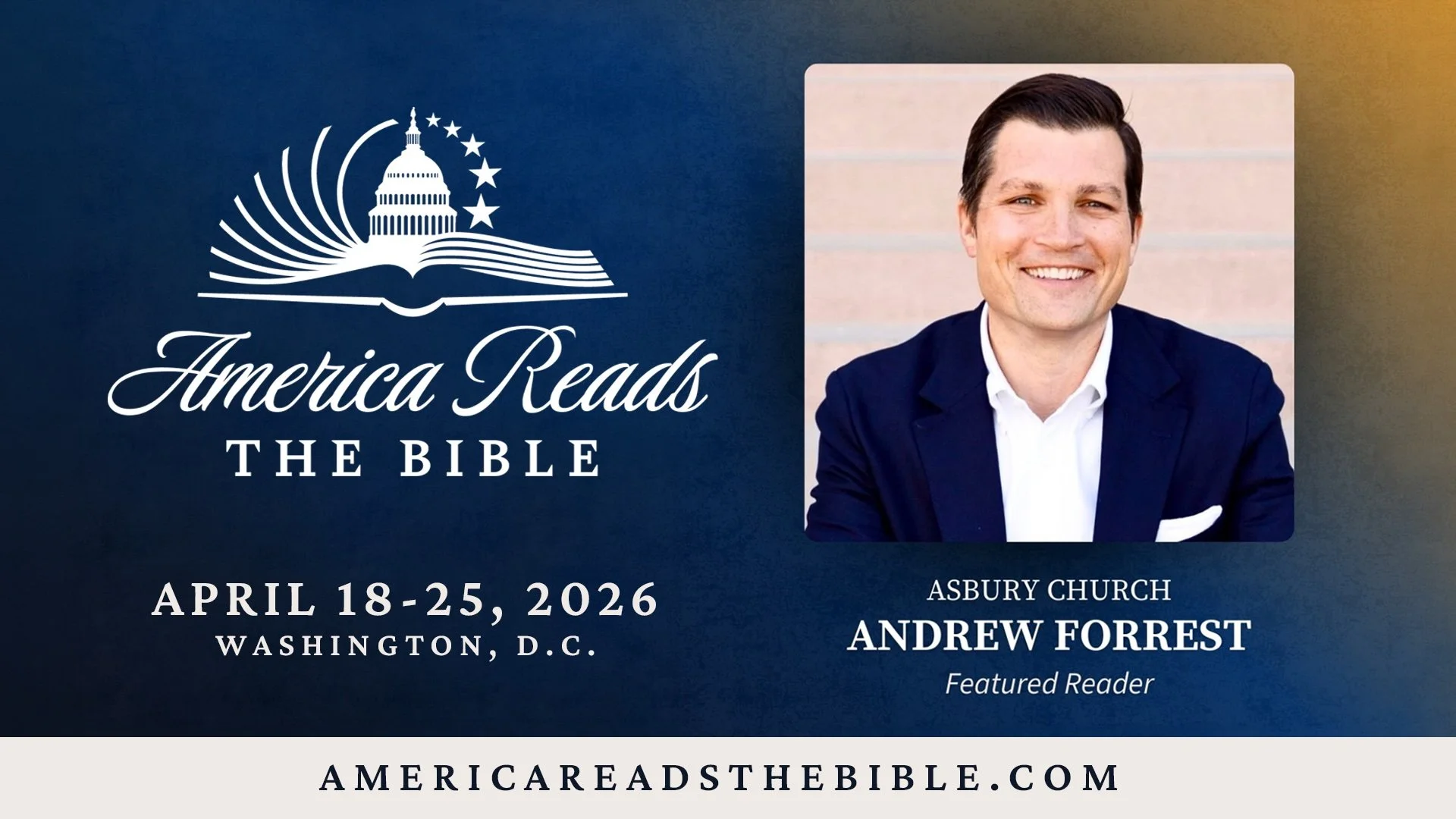
I’m participating in an event this week in Washington, D.C. called America Reads the Bible.
It’s being held at the Museum of the Bible, and Christian leaders from across the country are taking turns reading through the entire text of the Bible, 8 AM-8 PM (CDT) each day.
I’m reading tomorrow (Tuesday, April 21) in the 7:00 PM hour (CDT). I am reader #4 out of 5 for the hour. (Here is the full schedule, and here is the list of all the readers, in alphabetical order.)
How to Watch the Livestream
The livestream is free but you have to register. It’s very easy—you don’t even have to create a password or account or anything like that.
My Assigned passage is the Hardest in the Bible
I am reading what I think is the hardest passage to read in the entire Bible:
Ezra 1-3 in the King James Version. I’m not exagerating—check it out and see what I have to work with!
As hard as this passage is to read, I actually think it’s a really cool passage, for reasons I’ll explain later.
Join me on the livestream. I’ll give you a wink from the podium.
My 3 Week *Live* Online Course
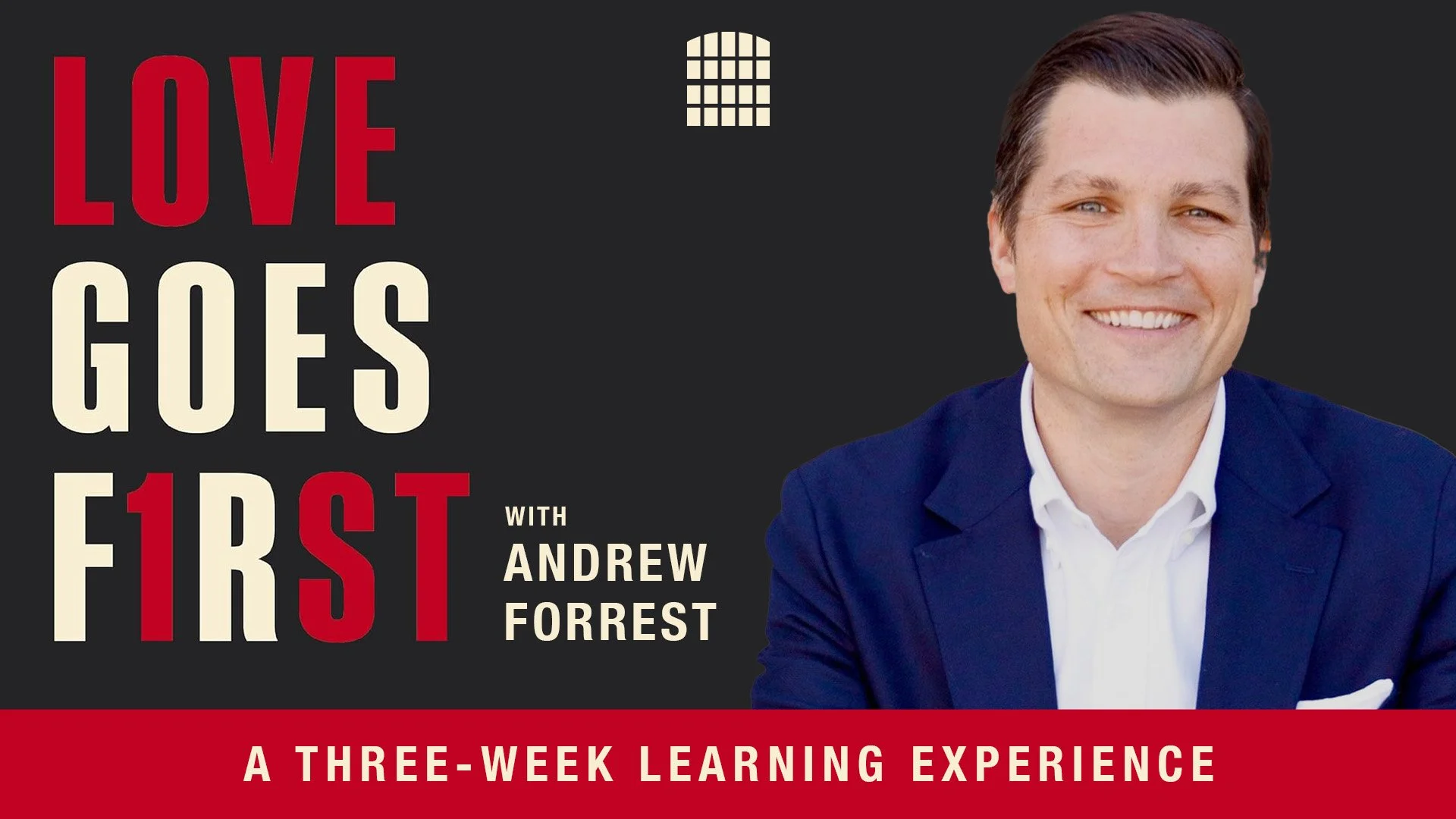
I’m doing a *live * three week online course building on my book Love Goes First. Register here.
Mondays in March. 6:30-8:00 PM central time.
March 9
March 16
March 23
BONUS SESSION: March 30
Can’t do live? The course will also be available on-demand for any and all sessions you miss.
What’s The Course About?
I’m doing this in partnership with Seedbed—a publishing and resourcing ministry from Nashville. They asked me if I’d want to teach the course and I jumped at the opportunity.
I really believe that the most important question for the church in our time is, “How are we going to reach the people who hate us?”
This course will be about what to do.
In a world of division, we will talk about the only way to actually make a difference: to go first. It will be practical advice anyone can follow.
Have you noticed that we are more divided than ever?
Have you noticed that the facts don’t seem to matter?
Have you noticed that people prefer their tribes to the truth?
I have. And I want to talk about:
How we got here.
What to do about it.
Who Is This For?
This course is for church leaders and church people.
Pastors—take the course and then preach a series on the content.
Church people—take the course and feel equipped to actually reach your neighbors and your family members.
The goal of the course is to help regular people like you and me know what to do now.
Gather a Group and Take the Course Together
This would be a great course for a small group to do together. A good excuse to order pizza and get some folks together.
Because it’s live, you’ll be able to submit questions that I’ll be able to address during the session.
But remember: the course will also be on-demand so you can watch any and all sessions at any time in the future.
Cost + Discount code
$49 for the course + my book Love Goes First
$39 for the course alone
The registration fees go directly to Seedbed, not to me, but they have given me a discount code.
Click here to email my assistant Sandie. She’ll send you the discount code.
(Additional scholarships are also available. Email Sandie for more details.)
Will There Be New Content?
I submitted my book to the publisher last May and I preached an 8 week series through the book in October and November. Since then, I’ve had lots of thoughts that I’m excited to share.
The course will include lots of new material. Folks who have read the book will not be disappointed.
Doing Things Live Is More Fun
I’m fired up that this course will be live. (And on-demand as well, of course.)
I did lots of live online stuff during the pandemic, and I miss it. There is a thrill to doing things live, like being on the trapeze without a net.
P.S. I really believe in the message of love goes first, and I’d really appreciate anything you can do to help get that message out:
Spread the word.
P.P.S. I’m going to do a brief trial session this coming week just to be sure everything works correctly. Want to be a guinea pig and help us test out everything? Email my assistant Sandie and we’ll let you know how to take part in the trial run, sometime during the week of March 1. This will be fun.
Forrest Family Reunion
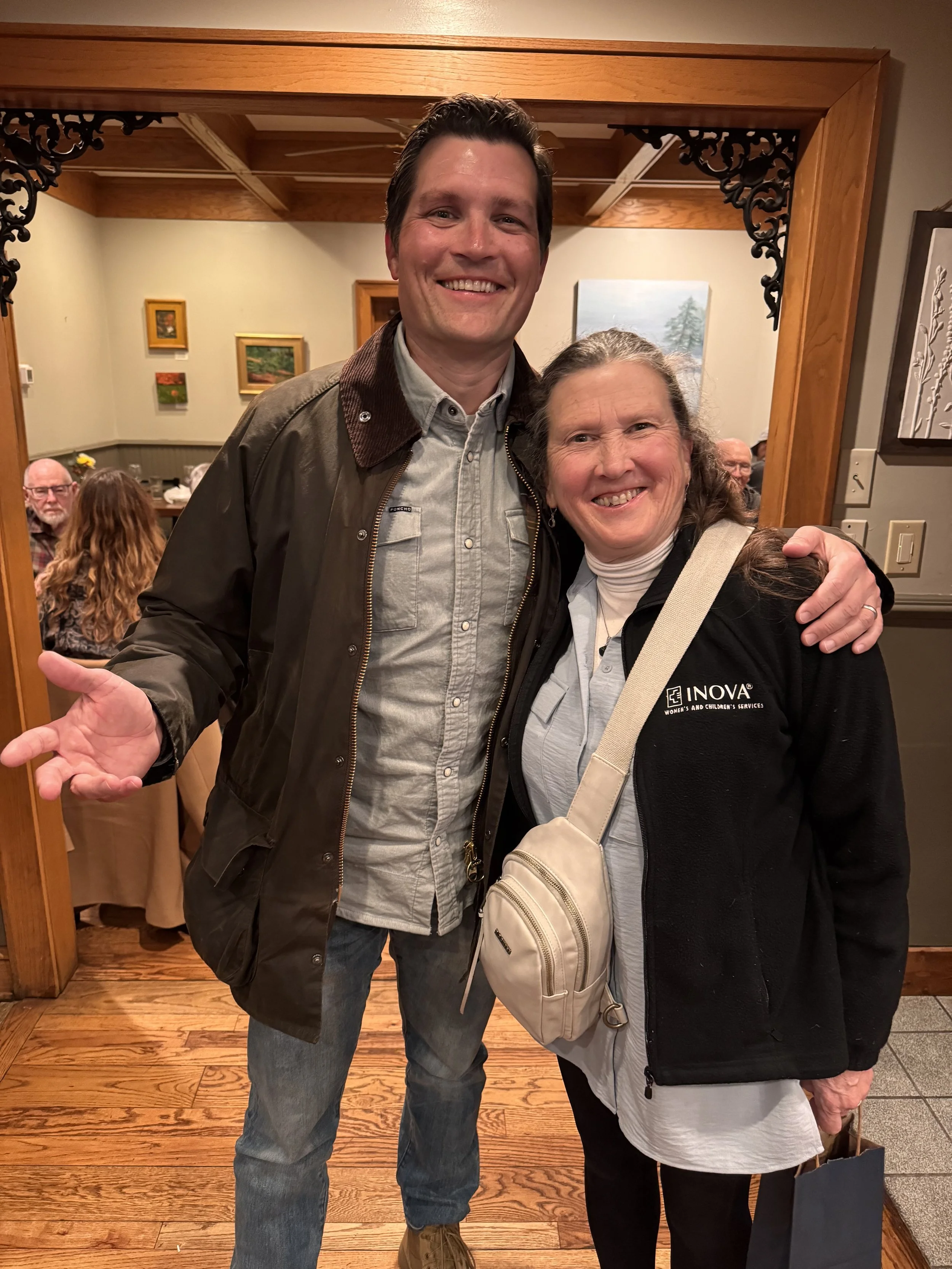
About two weeks ago, I decided to attend a pastors retreat that was going to be held outside of Asheville, North Carolina—in Black Mountain, to be exact. I’m at that retreat as I write this—I arrived today.
This past Sunday evening, I called my dad, just to check in. He said, “I just dropped your mom off for her mission trip.” I naturally asked where she was going. He said, “Black Mountain, North Carolina.” (My parents live in Northern Virginia.)
Wait, what?!
“Pop,” I said, “I’m going to Black Mountain, North Carolina THIS WEEK.”
Her team had planned a team dinner at a local restaurant for this evening. (They are repairing homes that were damaged due to the terrible flooding that took place in the Asheville area during Hurricane Helene in 2024.) My dad was able to find out where they were going, which turned out to be only 7 minutes from the retreat center where I am staying!
So, I arrived at the restaurant, came up behind her, gave her a big hug and a kiss, and said, “I’m so glad to see you.”
(Keep in mind that I live in OKLAHOMA, a thousand miles from here!)
Needless to say, she was flabbergasted to see me there.
The team then graciously invited me to join them for dinner, which I did.
How cool is that?!
My One Word for 2026

2025 was one of the biggest years of my life.
After literally years of work, I published my first book in October: Love Goes First: Reaching Others in an Age of Anxiety and Division. The book has not yet even been out for three months, but I have already been privileged to hear from people who have been wrestling through the ideas in the book, people who have decided to go first and move toward others. Often these stories are intensely personal and I feel privileged to have heard them—I wish I could share all that I have heard. This past fall, I preached a two month sermon series at Asbury on Love Goes First, a series that turned out better than I could have hoped. That’s actually how I feel about the book as a whole—looking back to New Year’s Day 2025, I could not have imagined that I’d finally finish the book and that I’d be so immensely proud of it and grateful for what the Lord gave me.
Last New Year’s Day, in fact, I published my annual “My One Word” post; my 2025 word was first, and it referenced my forthcoming book, among other things. From that post:
“My One Word for 2025 is also the theme of my new book. I really believe in its message and I believe that going first is the only way forward for the church in a post-Christian culture—we’ve got to move toward the very people that hate us.”
So, 2025 was a banner year for me.
And, in addition to the book coming out, it was just a good year overall. Thank you, Lord.
Which raises the question, What is my problem?
“A Preacher Should Preach Out of His Pain”

I’ve recently come up with phrase that describes what I believe to be the foundation of good preaching:
“A preacher should preach out of his pain.”
What I mean by “pain” is nothing to do with trauma or the therapeutic. That’s not what I mean at all. Rather, it might be better to say
“A preacher should preach from the pain points or places of friction in his life, or from problems he is trying to solve, or from places in his own life where he is trying to figure things out.”
What I mean is that the best preaching comes out of the preacher’s own gut—what are the things that are really capturing my attention? Where are the places in my life where I feel like I am falling short? Where is this personal to me? Why do I care? I find that the best preaching is the most personal—not in the sense of sharing personal stories, but rather from what really matters to me, personally. When I tap into the personal, that’s when a sermon speaks most to others.
As an example, let me give some insight into my Christmas Eve sermon this year.
Preaching to Myself On Christmas Eve
I don’t have any problems. Seriously. I know what problems are, and I know I don’t have any.
And yet, I really found myself lacking peace this past Advent season. I was short with my coworkers, easily frustrated and annoyed, ungrateful, and generally lacking joy.
As I was preparing for Christmas Eve, I decided that what the angels were singing was something I needed to listen to:
Glory to God, and peace on earth.
According to the heavenly host, the birth of Jesus means peace for the world.
So, that was the theme of my Christmas Eve sermon. But, why is it so hard to find peace? (Watch it here.)
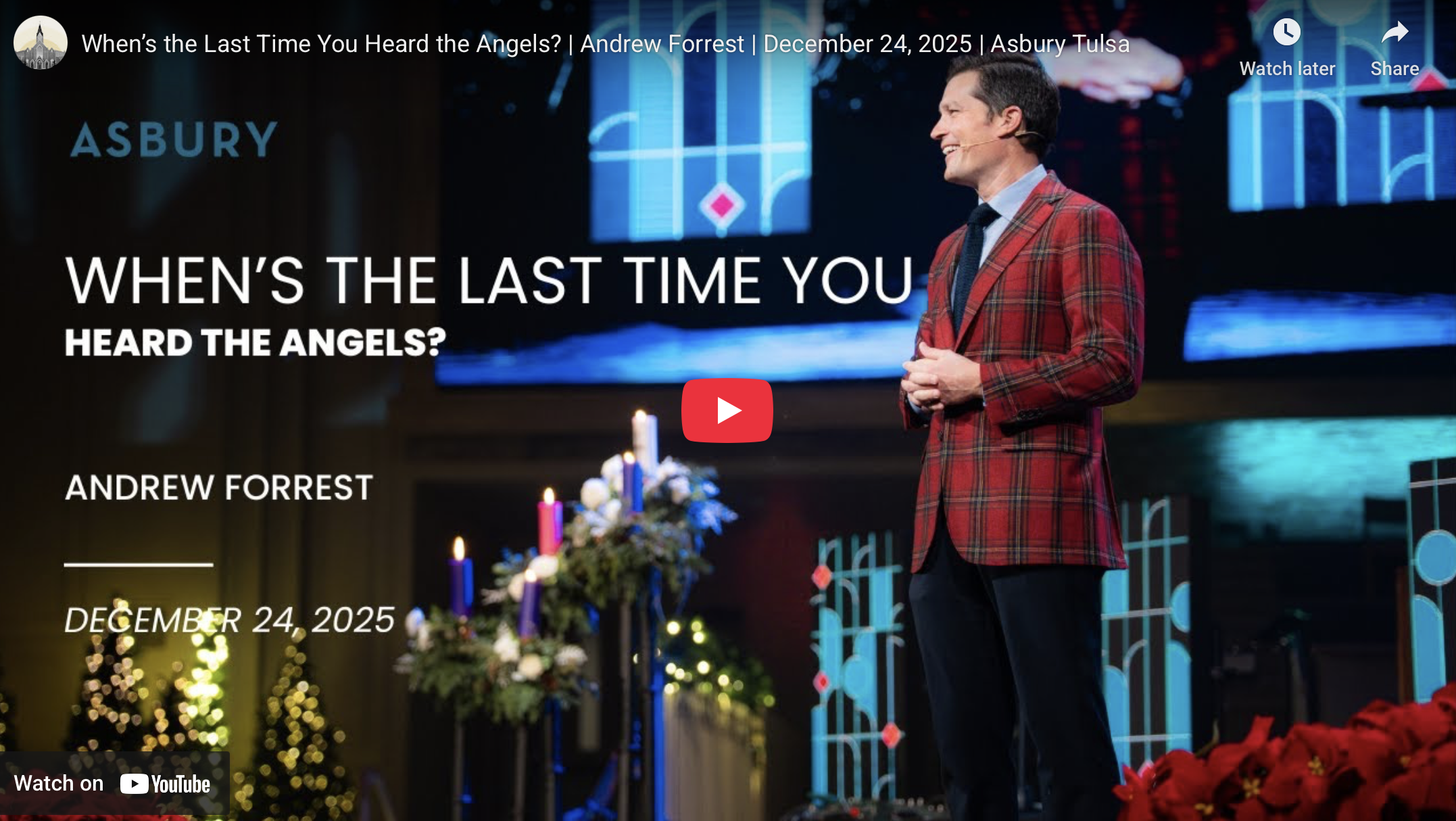
I was preaching to myself!
What is my problem? Why do I have such a hard time being poised and pleasant?
In the midst of all the blessings God bestowed on me in 2025, why did I so often indulge frustration and entertain annoyance and display ingratitude? What is my problem?
The One Thing We Know About Parenting
My wife and I are definitely not parenting experts. In fact, we have called ourselves The Unexperts™️ in the past.
But, there is one thing we do know:
It is important for parents to delight in their children.
That is, children are a gift from God, and like all gifts, the appropriate posture a recipient should display is delight in what has been given. There is a place for discipline and difficult decisions, but delight should be the foundation.
Actually, delight is not just for parents, but for everyone. Life itself is a gift, and so we ought to delight in the very fact that we exist. Everything begins there.
“Delight” Turns People Tree-Like

I love what Psalm 1 has to say about scripture and the promise God extends to all who study it:
1 Blessed is the man
who walks not in the counsel of the wicked,
nor stands in the way of sinners,
nor sits in the seat of scoffers;
2 but his delight is in the law of the Lord,
and on his law he meditates day and night.3 He is like a tree
planted by streams of water
that yields its fruit in its season,
and its leaf does not wither.
In all that he does, he prospers.
Notice that what the psalmist says is the correct posture we should have before the scripture: delight.
We ought to delight in the Bible
the way a young woman delights in her new engagement ring
the way a dog delights in a new bone
the way a proud grandfather delights in that fiftieth anniversary picture when all the children and grandchildren are gathered together around him and his wife
etc.
I can’t think of a better theme for this year through the Bible than that of Psalm 1, and delighting in the scripture.
Psalm 37 Is My Medicine
In Psalm 37, the psalmist is even more explicit:
Delight yourself in the Lord,
and he will give you the desires of your heart. (Ps. 37:4)
What the psalmist is saying is that the way to be truly happy is to delight in the Lord and his gifts.
So, if I am annoyed or frustrated or lacking peace, the solution is to choose to delight in God and what he has given me.
(Another way to put it—to be grateful. I think you could argue that true gratitude always takes the form of delight.)
My One Word for 2026
I really want to have peace this year. But, for some reason “peace” as my one word just didn’t seem right.
This is the Year Through the Bible, and yet “Bible” didn’t seem quite right, either.
As I posted yesterday, I’m aiming for perfection when it comes to my Bible reading—“NDO 2026”—and yet perfection didn’t seem right, either.
Plus, I like my one word to be an action or a posture or a habit—something I can do.
So, I wanted a word that:
Would lead me to peace and joy and gratitude;
That would emphasize my commitment to the Bible in 2026;
That would be a continual reminder of what I needed to do in any and every situation.
So, drawing on all of the above—and especially Psalm 1—I decided on what I want my one word to me.
My One Word for 2026 is
delight.
NDO 2026

This summer, I started running again.
I’d taken a ten-year break, but while on the Outer Banks this summer for some reason I just decided I wanted to run again. I’d run in the heat of the day down to the local marina and back; sometimes I’d have to walk a fair amount, particularly on the way back through a long patch of shadeless asphalt. The summer on the North Carolina coast is HOT. On a few of the days the humidity would be so thick it was like running into a headwind—you could feel the heat pressing down on your shoulders and into your eyes. I didn’t run fast, but nevertheless, I was running.
The first morning back from summer vacation I laced up my shoes and went for a run in my neighborhood in Tulsa. From where I live, it’s easy to access the local trail system, and I enjoyed being out and exploring. I’d been so busy in my first three years in Oklahoma that I hadn’t even tried to see what was possible from my front door.
All fall, I kept up running, adding more and more weekly mileage. There is a huge hill a few miles from my house, and running up and over it and then back up and over it has been part of my regular route. (It never gets easier.) I don’t run with headphones—just me and my thoughts. I think that’s what I like about it so much—the ability to just be totally alone with my thoughts. That, and being outside.
A New Jacket and a Dead Otter
Over Thanksgiving weekend, I picked up a fancy running jacket on sale from a company called Tracksmith. They make high-end running apparel in a New England, Ivy League heritage style. The Tracksmith tagline:
“Professional quality for the amateur spirit.”
As I mentioned, one of the things I love about running is being outside in any and all weather conditions. I actually like running in the heat of the summer when everyone thinks you are crazy, and I like running in cold, foul weather for the same reason. But, you do have to have the right gear. Hence, the Tracksmith jacket. Which, by the way, exceeded my expectations—the jacket breathes well and offers just enough warmth for a long run in cold weather. I wore it on a frosty December morning a few weeks ago when I came across a dead otter(!) on the side of the road. I happened to have my phone with me and filmed a quick video.)
NDO - No Days Off
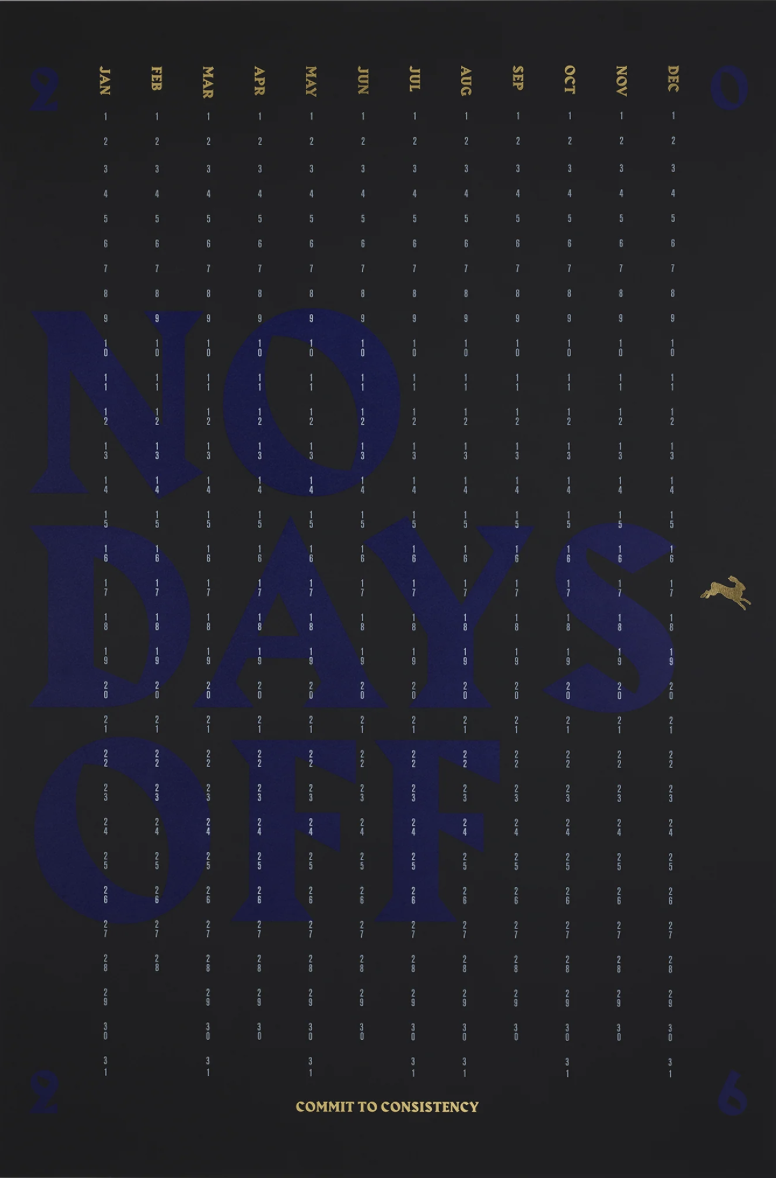
Tracksmith has a winter campaign called NDO, which stands for “No Days Off.” The idea is, don’t let foul New England (or in my case, Oklahoma) weather keep you from getting a run in. Something about that has really resonated with me—NDO, no days off.
If you order a piece of gear from the Tracksmith NDO Collection, they will send you a 365 day poster calendar you can use to track your workouts. (You can order the calendar by itself, too.)
I think the calendar is perfectly suited to what I want to accomplish in 2026. So, I got one and am itching to strike through that first “1” tomorrow morning.
I wonder if the good folks at Tracksmith ever figured someone would use their calendar the way I am going to use it. (Spoiler: I’m not primarily concerned with using it to track my running.)

The Year Through the Bible
2026 is the Year Through the Bible at Asbury. (YTTB for those in the know.) We are using the One Year Bible, which helpfully divides up the entire Bible into 365 daily readings. (All the info you need is on the website we created: www.yearthroughthebible.com.)
I’ve been thinking about it, and though I know it can be foolish to set perfection as a target, I think the NDO message works with what I want to accomplish this next year when it comes to my daily Bible reading. No days off.
Will I miss some workouts in 2026? I’m sure I will. I’m not overly worried about that. (Though I do love a winter run.)
What I don’t want to do is miss a day of reading the Bible in 2026.
No excuses. No days off. No reason to ever miss.
For me, it is going to be NDO 2026.
Publication Day!
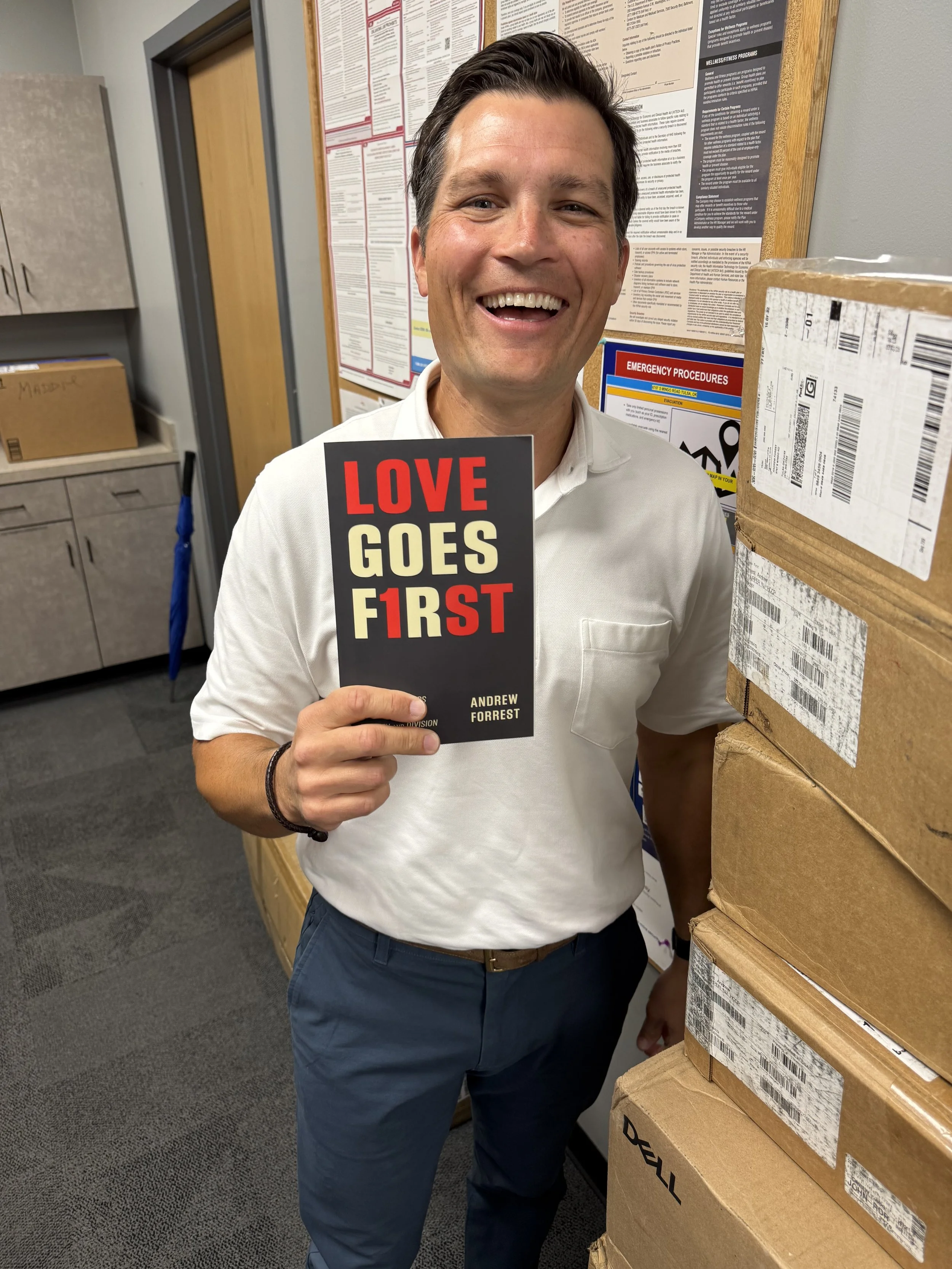
My book Love Goes First was released TODAY.
You can get it anywhere books are sold. It’s available in three versions:
There is the softcover book.
There is the e-book.
And there is the audiobook, with yours truly as the narrator! (Click the link to listen to the sample.)
I first had the idea that “love goes first” over ten years ago. I think I first pitched the idea of the book to Zondervan in 2018. I signed the contract in March of 2020. I sent in all final edits once and for all this past May.
And now here we are.
What Is Love Goes First About?
The subtitle of the book is Reaching Others In An Age of Anxiety and Division. The book is about how to actually do that.
Everybody talks these days about how divided we are. That’s all well and good.
Here’s what I want to know—What are we actually doing to do to reach the people that hate us?
Why This Is Not Just Another Self-Help Book
This is a book about what to do, about how to move forward in our divided and polarized world, about how to change the world. It is based on a simple insight into how the world actually works and how people actually change. I hope the principle I propose will motivate people to decide to move from complaint to action, from being victims to taking agency, and that people who follow this principle (and are willing to pay the price) will overcome division and thereby realize lasting change in both the political and personal spheres. More than that, I am writing this book because I want to offer a way forward for the church in the twenty-first century, and I’m praying that the American church will see a remarkable spiritual harvest by reaching the very people who are most hard-hearted and hateful toward Jesus.
But because the argument of this book is that the way to get big things done is by focusing on the small things, that the way to make big changes is by starting with small interactions, this book could almost fit right in on the self-help shelf. The message of this book is immediately applicable to every relationship in our lives, from the most intimate and significant, such as our spouses and families, to the more transactional and temporary, such as the client we struggle to agree with, the cashier at the grocery store, the next-door neighbor with the political sign in the front yard. I hope marriages will be healed and enemies reconciled because of the contents of this book.
But this is not really just another self-help book. It is actually a book about the love of God. It is a theological reflection on two profound, related ideas:
1. God is love.
2. We love because God first loved us.
And more than changing others, I believe that the central idea of this book has the power to help us change ourselves.
Love goes first. Those three words are a definition and an admonition—they are about what love is and about what love does. This three-word principle is a way to make love practical, and, as I will argue in the book, it is our way forward in a divided and polarized world. “What do we do now?” My answer: If you want to change the world, you have to go first, because love goes first. I wrote this book to explain what that means.
The Warehouses Are Empty And The Scammers Are Working
I had trouble getting copies to be shipped to Asbury for our Book Launch and Bible Study tomorrow. I had bought some books directly from the publisher, only for the sales rep to call me on Friday and tell me that Amazon had somehow bought up every single remaining copy in the warehouse right before he was able to ship my Asbury order! (I was able to scramble and buy some copies from Seedbed—the books were delivered to church today, so we will have some books for the launch party and Bible study tomorrow.) More books are being printed, but if your local bookstore doesn’t have any copies of Love Goes First in stock, Amazon might be the place to go at this point…until they run out. (Running out of books is a good problem to have, right?)
But, the scammers are already at it. If you search for “love goes first andrew forrest” on Amazon, look what comes up right after my book:
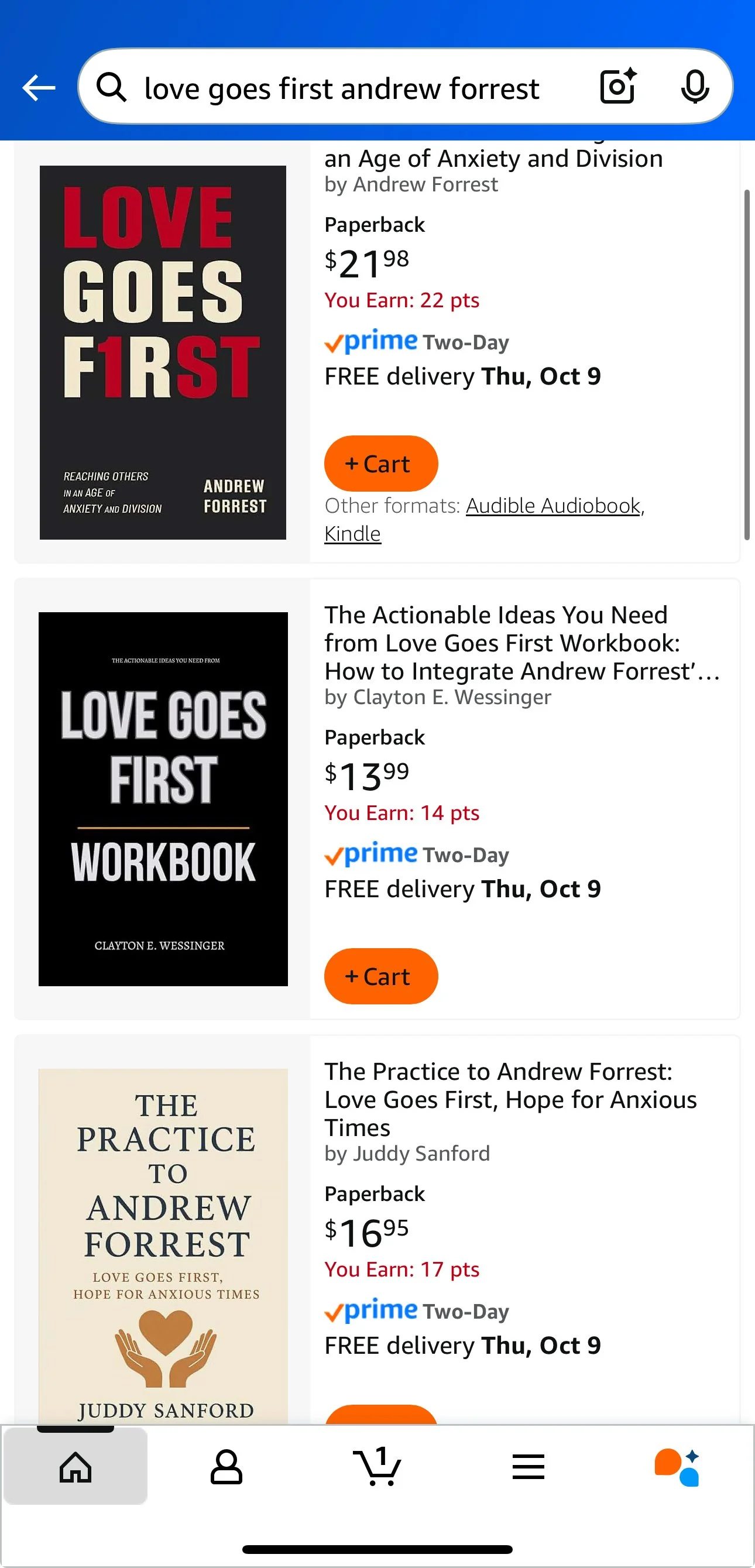
These two books are definitely scams, probably created by AI. (Look at that author name on the second title—“Juddy Sanford”. What a fake-sounding name!) Apparently, this is common these days. The scammers are hoping you order and then forget to contact Amazon and get your money back when inevitably you never receive anything. I suspect that the cover image is all there is to these “resources”.
But, again, looking on the bright side, I guess it means the scammers think the book will be successful.
(What’s also great are the “used” copies being sold on Amazon. That sounds hard to pull off, since the book was only released TODAY!)
You have to give these crooks credit for their brazen boldness.
What I’m Most Proud Of
I really believe in the idea and message of the book, and I stand behind the idea that the only way forward that will make a difference is to actually go first toward other people. But, I think what I’m most proud of is the actual writing in the book. I worked hard to craft each sentence, each paragraph, each chapter. I wanted each sentence to snap like a whip, to be lean and taut without wasted words. And so, whether the book resonates with anyone else or not, I feel proud of it and can look myself in the mirror and know I did my best. There is a peace in that.
Media Mentions
Mark Tooley of the Institute of Religion and Democracy did a 20 minute video interview with me about the book last week. Here’s the video.
2. Kevin Watson published an extensive review of Love Goes First on his website last week. What I found particularly special were the extensive quotations he shared from the book, which means he actually read it all the way through!

Grateful
I am amazed and so grateful at how many of you pre-ordered the book without ever having seen it! I don’t deserve all that kindness, and I hope that your trust in me will be repaid by the book itself.
Tonight, we celebrated as a family. I had so many nights and mornings and weekends when I just holed myself up in my office to grind out my work, and I know that my absence from the family was a sacrifice that they didn’t ask to make.
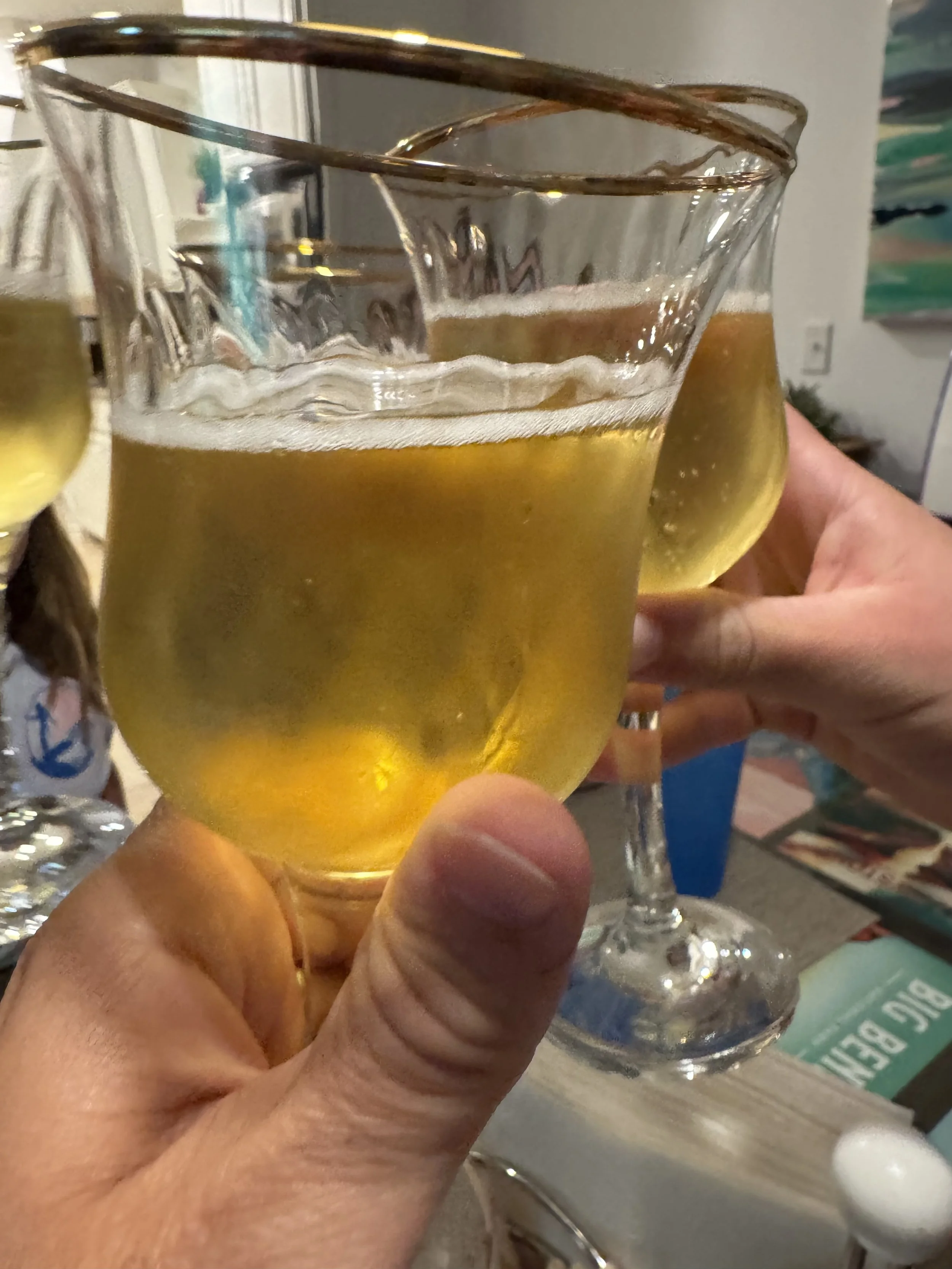
Someone had brought us a bottle of sparkling cider, so it was cheers all around.
A good day.
Robert Redford’s Question
“There is this great scene at the end of the 1972 satirical political movie The Candidate, which is about a man (played by Robert Redford) who runs for the United States Senate in California believing that he has no chance of winning and therefore nothing to lose. Because he doesn’t expect victory, he is surprised to find himself on election night having just been elected senator from California. Robert Redford’s character is dumbfounded and overwhelmed by the shocking result. In his hotel, cheering supporters swarm the narrow hallways as he pushes his way through them, desperately trying to get his campaign manager alone so they can speak privately. The two men succeed in ducking down another hallway and grabbing a few seconds alone in an empty room. As the supporters push their way into that room, too, eager to escort the newly elected senator to the ballroom for the victory speech, Robert Redford’s character mouths a question to the campaign manager, a question that the movie does not even attempt to address as the scene fades to black: “What do we do now?”
That’s the question I wrote this book to answer.”
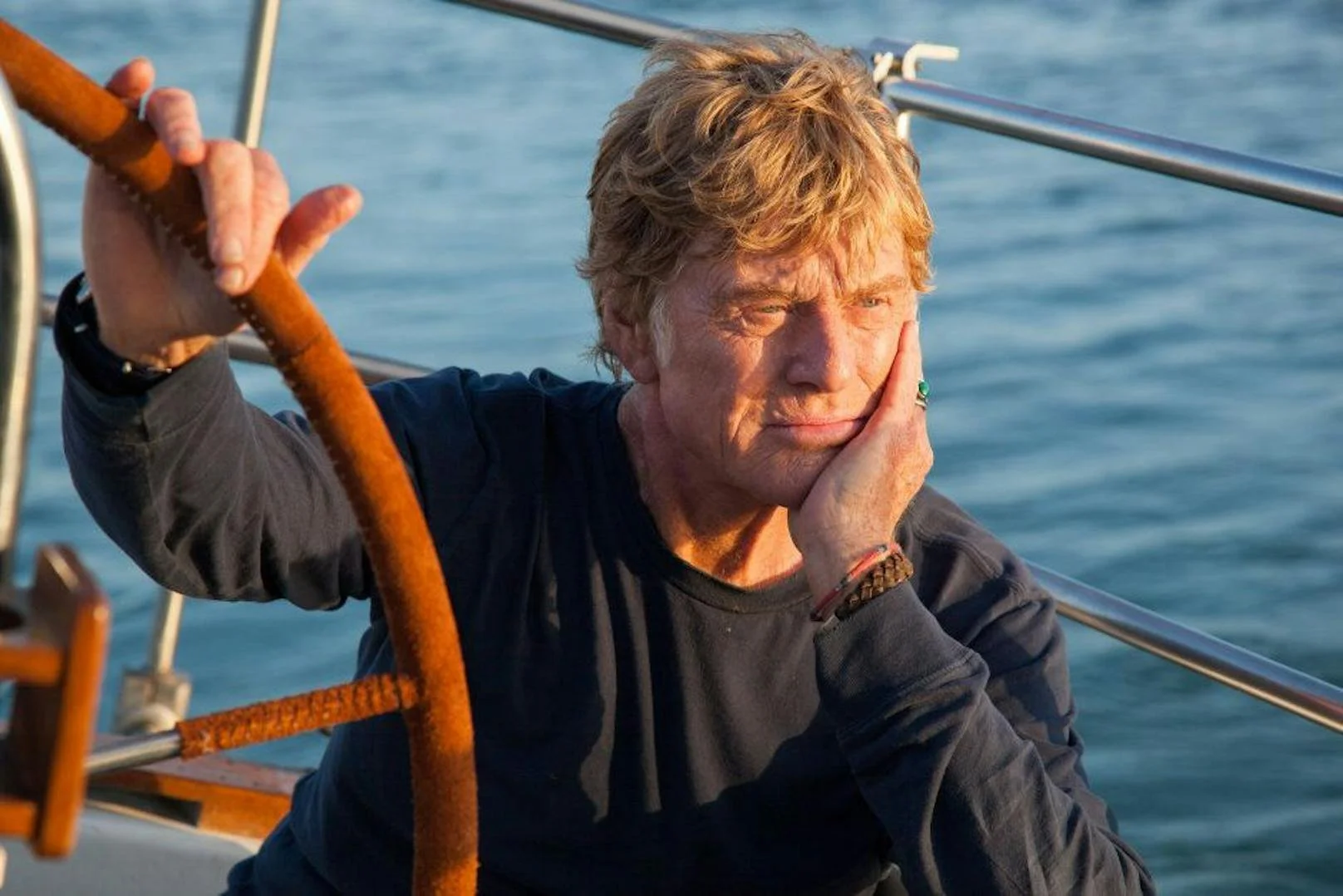
I’m writing from DFW airport, on my way to a conference in Alabama. I’ve been thinking about Robert Redford today, having heard the news of his death at the age of 89.
I’m on my way to speak publicly for the very first time about my forthcoming book, Love Goes First. I’ll be delivering a pre-conference workshop on the book, and then a main stage talk about the basic idea: if we want to change the world, we have to go first, because love goes first. My wife is with me, and I’m looking forward to the opportunity. One of the things I’m excited about is seeing my book in print for the very first time—though the official release date is not until October, copies will be available at the conference for purchase. (And everyone who attends my pre-conference workshop will receive a copy of Love Goes First, hot off the presses.)
“What Do We Do Now?”
When I sat down to think about how to open my new book Love Goes First, my mind immediately went to that closing scene from The Candidate that I described above.
It’s not 1995 or 1955 any more.
In our time, what do we do? The culture seems to be spinning out of control.
I think these days a lot of us feel like Robert Redford does at the end of the movie. Here’s the scene:
Robert Redford was one of the greats, and he will be missed.
When I was in high school and college, my brother and I would rent a movie from the video store nearly every weekend we could, and we watched a lot of great movies. These days, I rarely watch a movie, but every now and then I’ll sneak out of the office on an afternoon and go to see something by myself.
The news of Robert Redford’s death got me talking to my family on the way to school this morning about the great Robert Redford movies that I’ve seen. What follows is a list, in no particular order, of some of my favorites.
The Sting (1973)
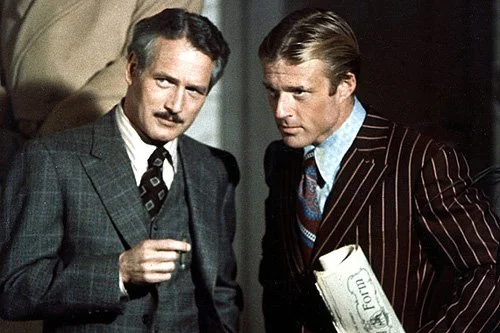
The soundtrack alone (Scott Joplin’s “The Entertainer”) makes this a fun movie. That scene on the train when Paul Newman cheats Robert Shaw’s mob boss—such a fun scene.
Butch Cassidy and the Sundance Kid (1969)
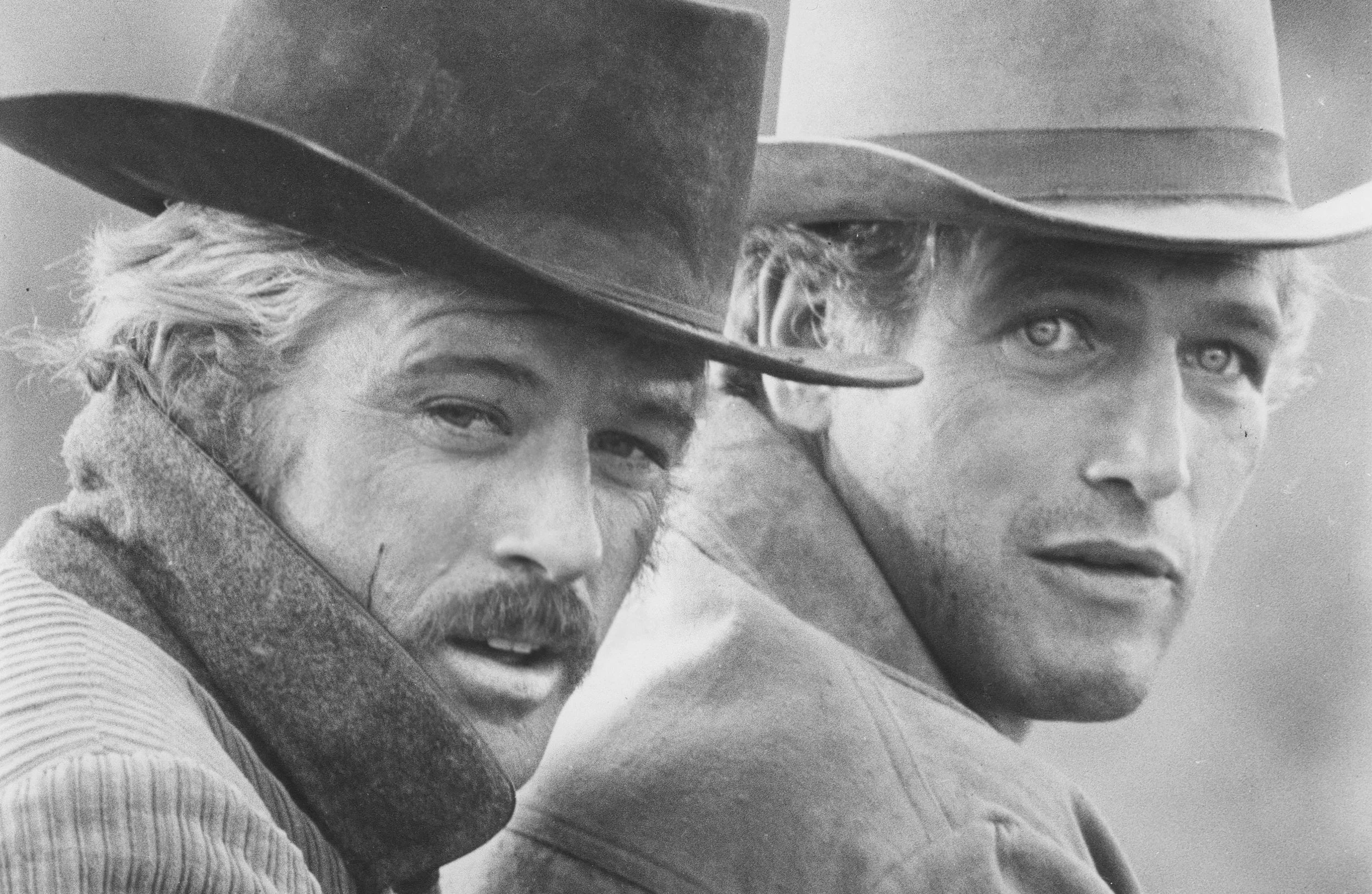
Great movie and a great mustache on Sundance, played by Robert Redford. (Have never really liked the ending, however.)
Barefoot in the Park (1967)

A young Jane Fonda and a young Robert Redford—how great is that? I always remember the scene where the young husband keeps his one necktie inside the dictionary, so it will be clean and pressed for the morning. Also, Robert Redford’s character gets the mother of all headcolds in the movie—that detail has stuck with me.
The Candidate (1972)

See the description above. The movie must have stuck with me, since when it came time to write my book, I decided to open by describing its closing scene.
Out of Africa (1985)

“I had a farm in Africa, at the foot of the Ngong hills.” I like the memoir more than the movie, but still, a gorgeous film.
Three Days of the Condor (1975)

I just read the novel on which the film is based last month. I remember liking the movie better, though it’s been a while since I saw it.
The Natural (1984)

The main theme from that soundtrack—it’s like the sound of heaven. I saw this as a little kid when I lived in Africa, and then watched it again as an adult. The whole scene in which Roy Hobbs gets shot by Kim Basinger was much darker than I remembered. Still, that final scene, with the sparks falling from the floodlights—what’s better than that? Also, WONDERBOY ⚡️!
A River Runs Through It (1992)
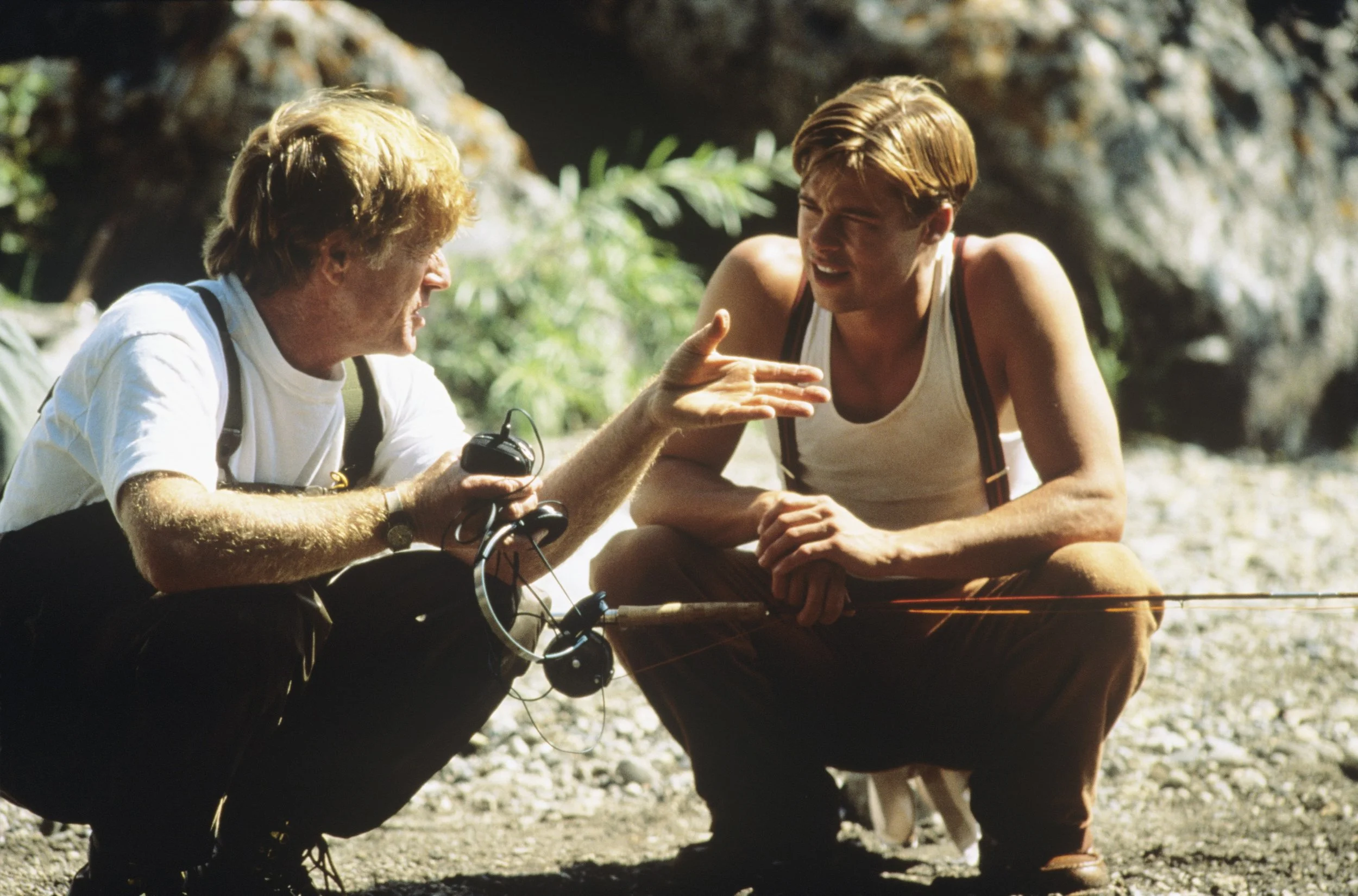
Now, Robert Redford doesn’t technically appear in it, but he is the director and the voice-over narrator for Norman Maclean’s beautiful prose. I love this movie.
Sneakers (1992)
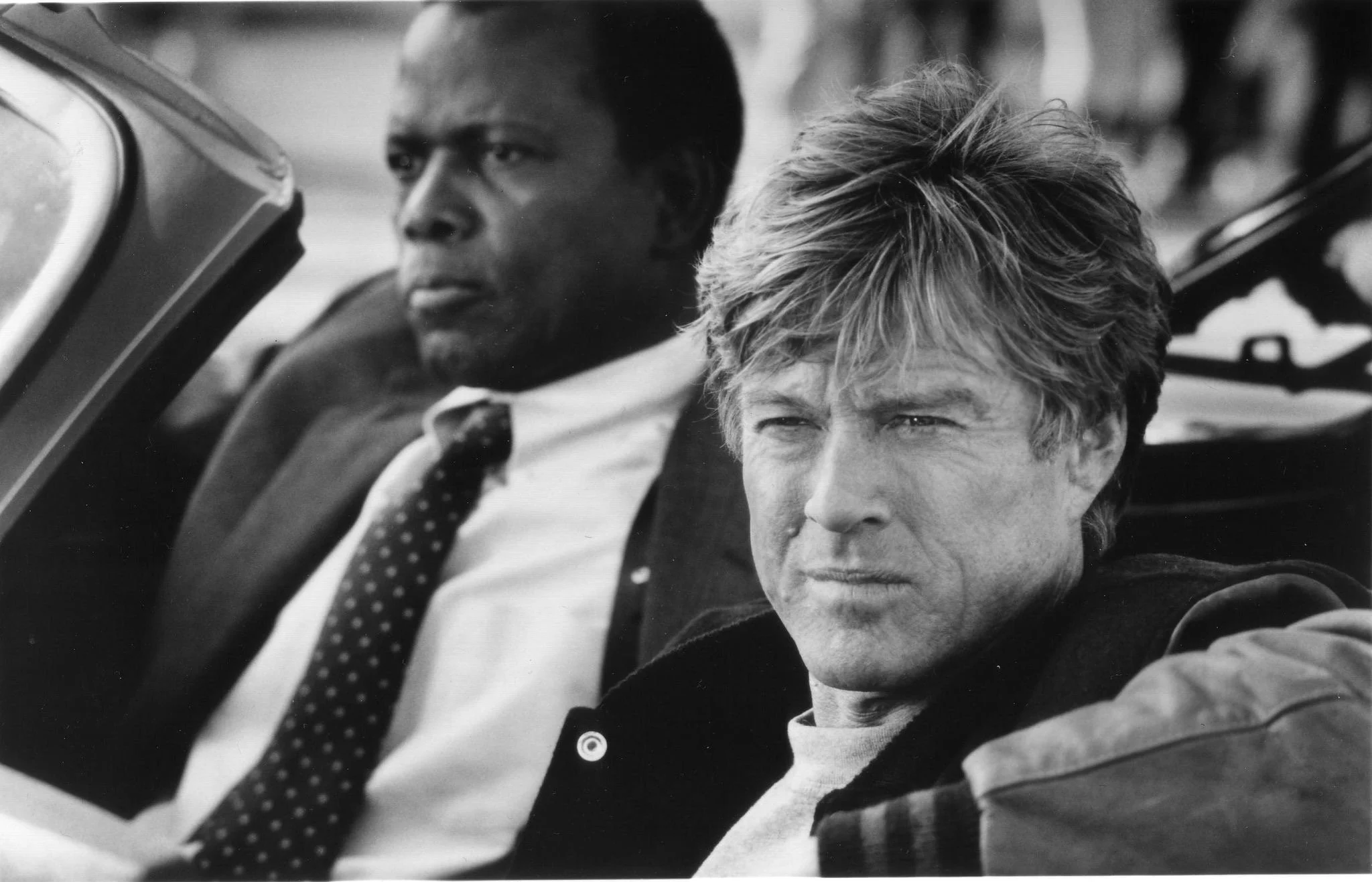
A really fun and suspenseful-but-not-too-suspenseful techno-thriller about a bunch of hackers—remember when Hollywood used to make those kinds of movies? Also stars River Phoenix, before his untimely death, and Sydney Poitier. I bet if you went back and watched it now, the tech would be laughable. But I really liked it when it came out.
An Unfinished Life (2005)

Robert Redford is a gruff, cruel old man, who lives with his friend Morgan Freeman in remote Wyoming. His estranged daughter-in-law Jennifer Lopez shows up, bringing with her a granddaughter he didn’t know he had. The final scene is terrifying and the emotional transformation of the old man will break your heart. A movie about grief and how life has to go on in spite of it.
All Is Lost (2013)
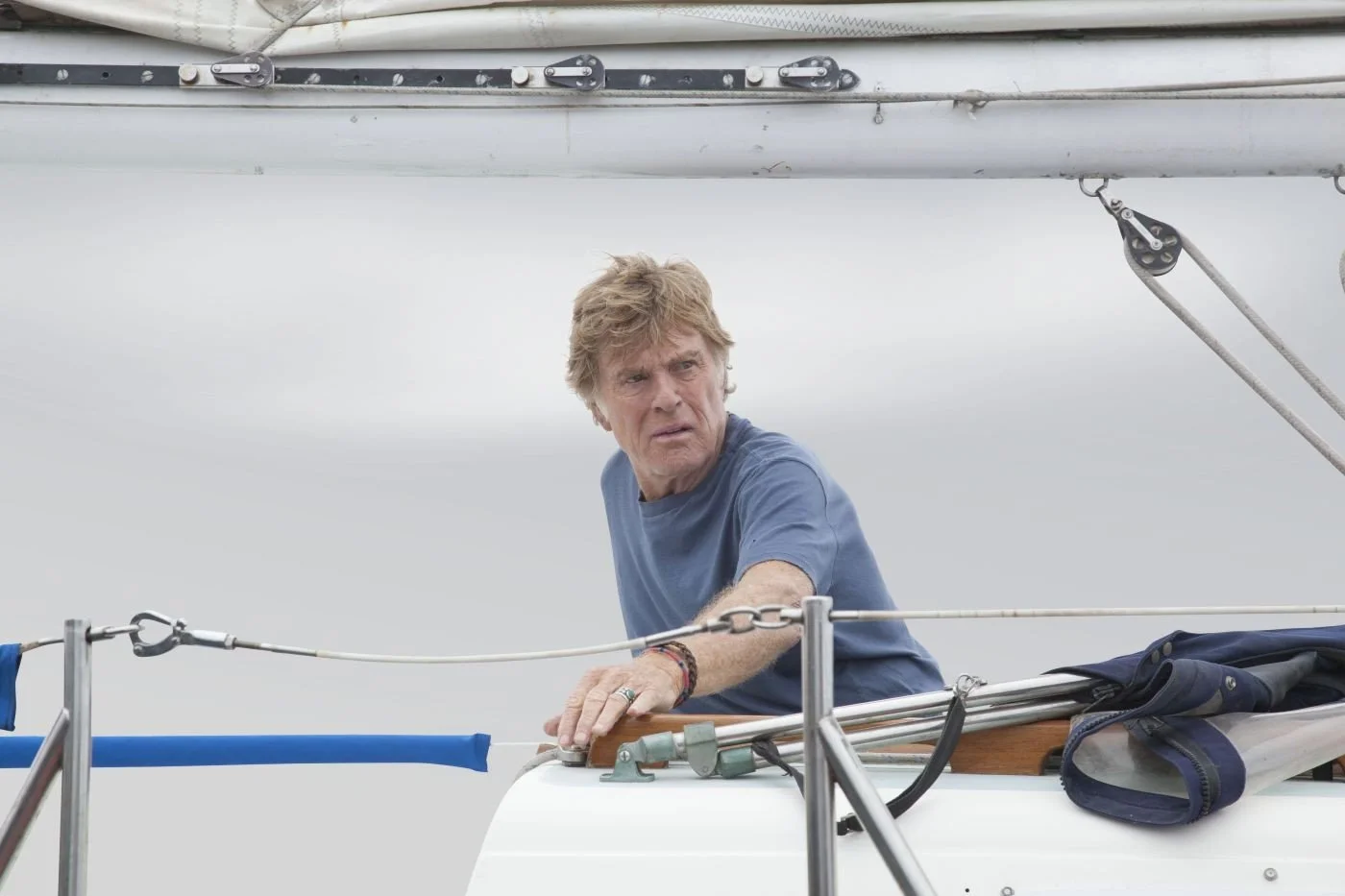
Starring Robert Redford…and literally no one else—no one else even appears in the film. It was appropriate therefore that I saw this movie in the theater by myself. Robert Redford is sailing alone in the middle of the Pacific Ocean until there is a problem and, finally, all is lost. An ending that is perfectly ambiguous.
Charles Robert Redford, Jr (1936-2025). In memoriam.
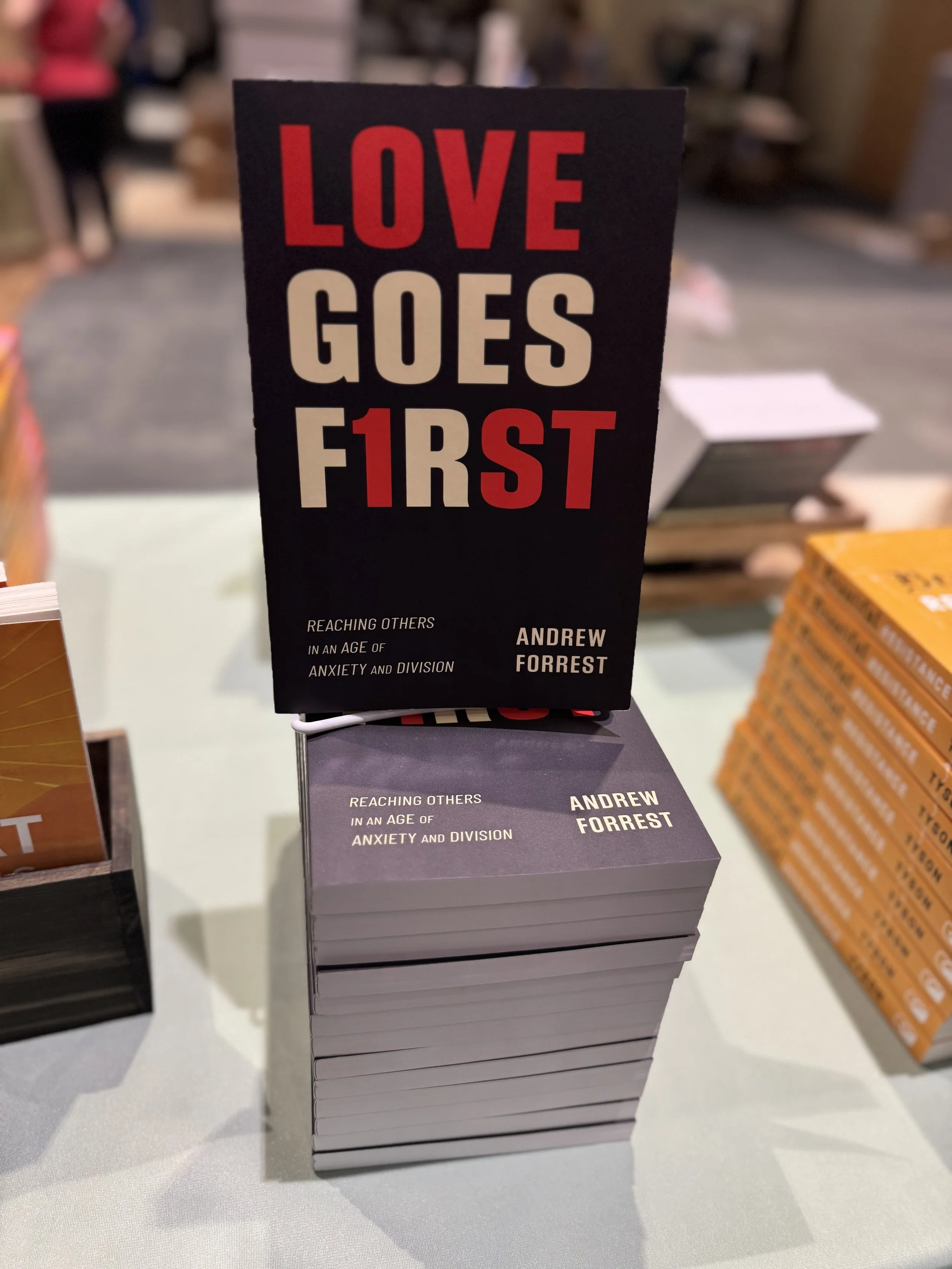
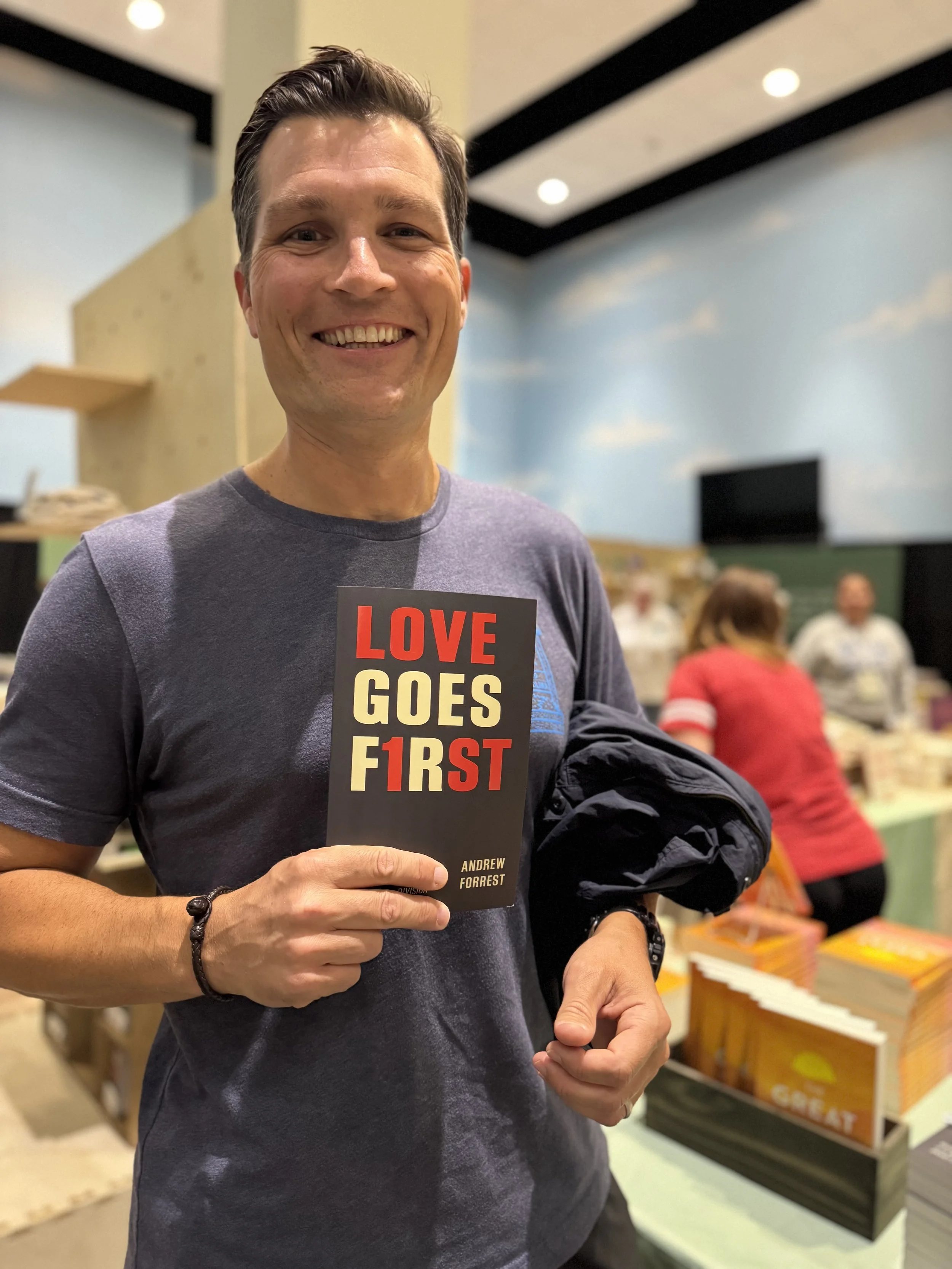
P.S. I’m finishing up this post late Tuesday evening in my hotel room in Montgomery. Stopped by the church where the conference will be held and saw them setting up the bookstore. Guess what I saw for the first time?!
Are We Just Going to Kill *Everyone* Who Disagrees?

The following excerpt is from the introduction to my upcoming book, Love Goes First. Although I wrote these words months ago, in light of Charlie Kirk’s assassination this week they seem particularly relevant.
“Whether you are a vegan or a West Texas wildcatter, whether you are a Hasidic Jew or a gun owner, whether you are an environmental activist or a religious conservative—and even if you are all of the above—there are millions of other people who want the exact opposite thing from what you want, and millions of people who are working to oppose what you want and implement its opposite. In the words of Mike Tyson, “Everyone has a plan till they get punched in the mouth.” What’s your plan to reach those people and win them over to your point of view?
Good intentions will not be enough. You can say you want world peace, but unless you have a plan to win over the people who want war, and unless you are willing to back that up with conviction and sacrificial action, your good intentions won’t amount to all that much.
Gaining political power and achieving electoral victories can seem like the answer, but political power is by its nature impermanent and incomplete. Even if your party wins at the ballot box, there will still be millions of people who voted against what you voted for, people who will then work hard to overturn whatever the last election made possible. Political victories are usually short-lived. There is always another election in the future, and political popularity tends to swing like a pendulum between opposing parties—who is up will then be down, and vice versa.
No, political power alone will not get us what we want. So how do we motivate deeper change than the changes wrought at the ballot box? How do we change the people on the other side?
Of course, there have always been people throughout history who decided that reaching their opponents was a fool’s errand and that violence was the best way to overcome division—just kill the people in the way. Violence is effective, but only in the short term. This is because controlling and coercing other people through violence will constantly require more and more violence just to maintain control, and soon the path of violence will become an all-encompassing end in itself—a police state requires a lot of policing. Are you going to kill everyone who stands in the way? And in the end, of course, we cannot actually side-step the moral question anyway: Each of us will have to stand before the Lord on judgment day, and may God have mercy on the ones who chose to live by the sword. Violence is not the answer.
Whoever we are, we must confront the stone-cold fact that in this country there are millions of people who do not like us or think like us or believe like us—people who want the exact opposite of what we want—and they aren’t going anywhere.
For Christians the question of how to reach those who hate us has a particular urgency because Jesus has told us that reaching every single people group on earth is the church’s divine purpose: “Go and make disciples of all nations” (Matt. 28:19). In the divided world in which we find ourselves, how are we going to reach the people who do not share our beliefs? What do we do now? Is there any way to break through and reach the people on the other side?
There is, and this book is about how to do it. I am tired of just talking about the problems that divide us, and so this is a book about how to go on offense. I’m writing as a pastor interested in equipping people to take action, to reach across division. This book is about how we, as American Christians, can reach the people who believe we are the problem, those who hate us and all we stand for. And though our situation might seem difficult, this book is not a complaint or an indulgent excuse, it is a way forward. Which is good, because with regard to its divine mission of reaching the world, the church is facing an unprecedented challenge….”
This book can’t get here soon enough—the release date is October 7. Please pre-order and help get the word out.
Elvis and Mike Tyson and Me

My new book, Love Goes First: Reaching Others In An Age of Anxiety and Division, comes out one month from tomorrow.
Just typing that sentence is surreal.
I heard from the publisher yesterday that copies are already in the warehouse. Folks, I really can’t believe this is happening. I’ve been working on this project for literally years, and to think that in a month the book will be here is something I still find astounding.
Below, I’ve pasted a few paragraphs from the introduction to the book to give you an idea of why I wrote it. Basically, this is a book about what to do.
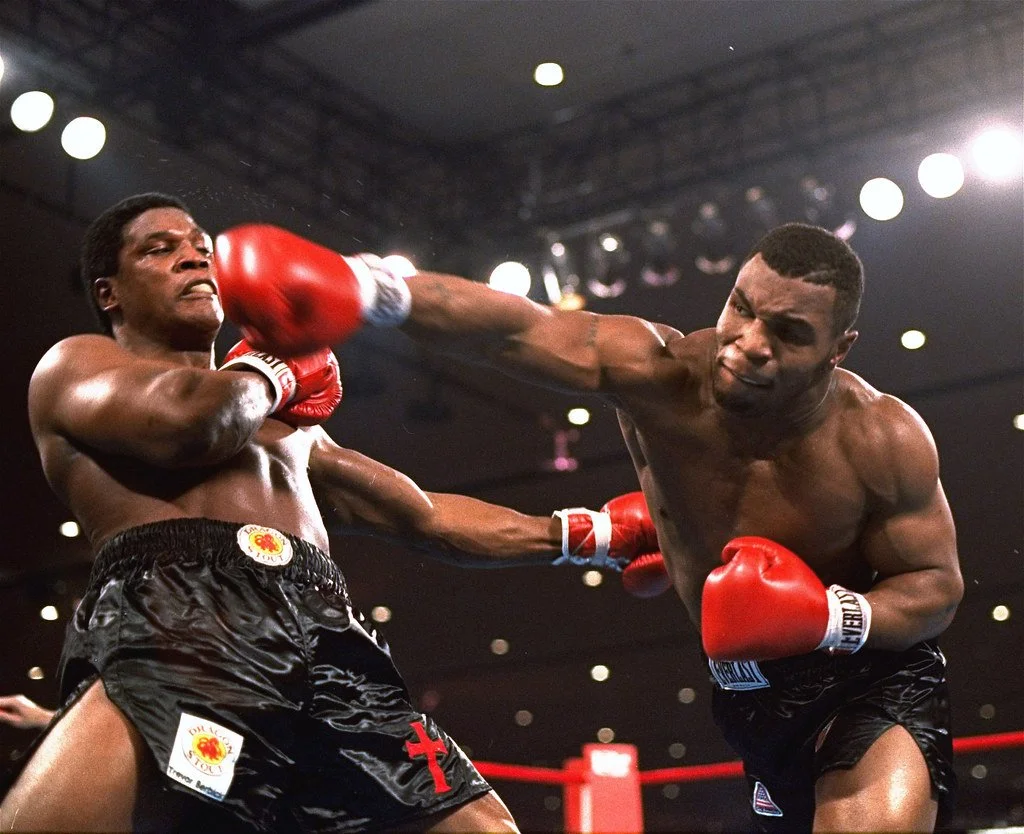
Elvis and Mike Tyson and Me
“There is lots of talk about division and polarization in America: the causes, the trends, the demographics. This talk can be helpful—it’s good to know what things are really like and how they got this way. But though that kind of talk can be helpful, it is not sufficient—it doesn’t change anything. Instead of talking about division, the more urgent and interesting question to ask is this: How are we going to reach the people on the other side? The people who don’t agree with us, don’t like us, and in some cases hate us?
Our world is deeply divided. But what should we do about it? How are we going to overcome division and polarization and enmity? I find that there is lots of talk these days about division—theory and analysis and complaint about division—but very little talk about action. Elvis Presley—of all people—captures my sentiments exactly: “A little less conversation, a little more action, please!”
In a divided world, regardless of who you are or to what group or tribe you belong, there will always be other people who do not think like you or agree with you. And, unfortunately, in our divided world there will also be people who dislike you and even hate you. If you don’t have a plan to reach those people, you are unlikely to make a difference. It’s easy to reach the folks who are on your side, but what will actually change things is reaching the people on the other side, and that’s much harder. This is because any proposal that hopes to bring real change in our divided world must account for the fact that other people will be devoted to defeating it.
Whether you are a vegan or a West Texas wildcatter, whether you are a Hasidic Jew or a gun owner, whether you are an environmental activist or a religious conservative—and even if you are all of the above— there are millions of other people who want the exact opposite thing from what you want, and millions of people who are working to oppose what you want and implement its opposite. In the words of Mike Tyson, “Everyone has a plan till they get punched in the mouth.” What’s your plan to reach those people and win them over to your point of view?”
Some Insight Into the Publishing Industry
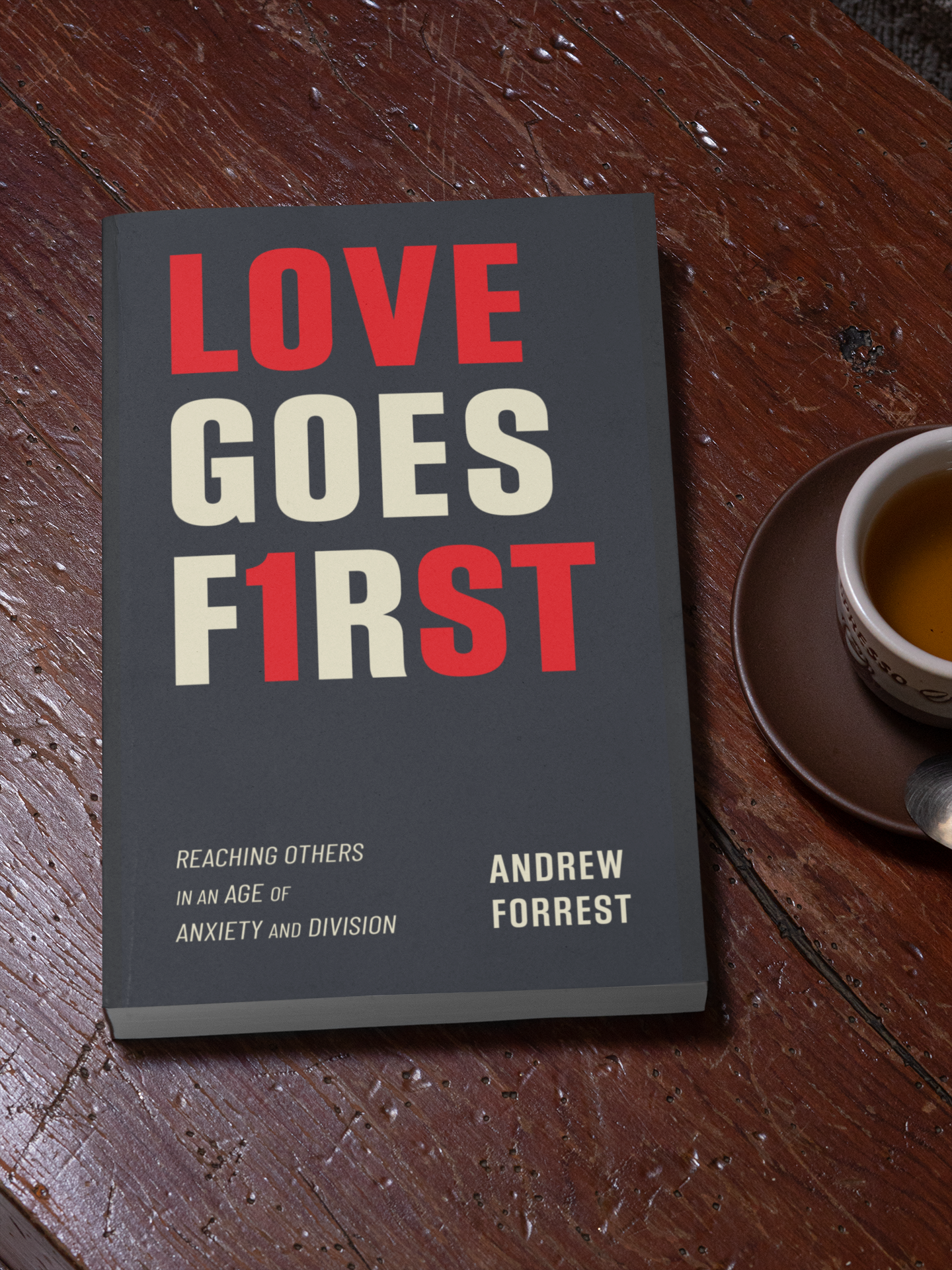
The publishing industry is just like the film industry in that no one can really know for sure in advance which new book or new movie will prove to be successful. So every year publishers make a bunch of small bets on the various titles that they will publish, knowing that if only a few of the new books do well, then they will have had a successful year. The problem is that the publishers don’t have any idea which books will take off and which ones won’t.
Booksellers are obviously in the same boat—they don’t know which titles will be best-sellers any more than the publishers. So, booksellers wait and see which way the winds are blowing before they really back a new book. This is why, if you go to a book store, books that are already popular are in an endcap at the end of an aisle or are turned out on the shelf so you can see the whole cover or are advertised with a banner in the store. This is why, on Amazon, e.g., after you buy one book, a list of “suggestions” comes up—these are books that are already popular, and so they are books that the sellers think are worth pushing.
In other words, publishers and booksellers like a sure thing. (Who doesn't?!) But you can already see the problem—it’s hard for new books to break in. The successful just get more successful, and the new guys get overlooked. How many more versions of The Purpose-Driven Fisherman do we need? (I kid, I kid.).
These days, pre-sales are an important indicator of whether a new book is going to gain traction or not. So, pre-sale numbers help publishers and booksellers hedge their bets and give them insight into the future. Every single pre-sale counts as a day 1 sale, so pre-sales help give the book a big push on its release date. The more pre-sales there are, the more the booksellers push the book, and the more they push the book, the more it sells. Pre-sales are like adding lighter fluid to kindling—they help get the whole thing going.
I Was #1 (Briefly, But Still….)
Last week, Love Goes First was briefly #1 in the Amazon category of New Releases in Evangelism. (I know that’s a bit like “my cousin’s nephew’s neighbor once knew a guy who sold Tom Brady his first house”, but still, it ain’t nothin’.)
The marketing manager at my publisher sent me proof:

Since last week, my book has tumbled down the list, but I’ll treasure those sweet minutes of glory forever.
Would You Consider Pre-Ordering the Book?
My book is available everywhere, so pre-order wherever you’d like. Over the past year, I personally have pre-ordered a few books on Amazon, and it couldn’t be any easier. Here’s how it works on Amazon.
Add Love Goes First to your shopping cart as you would any other title.
Check out and place your order.
Easy peasy. And here’s what’s really cool:
Your credit card won’t be charged until the book ships;
If the price fluctuates between now and then, you will pay whatever ends up being the lowest price Amazon sets;
Very likely, the book will arrive before the expected date. (At least, that’s been my experience.)
You can pre-order on Amazon here. Or, choose whatever bookseller you like best.
Love Goes First
I really believe in this book, which gives me a strange sense of peace—I am proud of Love Goes First, whether anyone reads it or not. Just the fact that it exists is extremely gratifying.
But on the other hand, I didn’t write this book to put it under a bushel basket—I hope folks will read it. I’ll share some other excerpts from the book over the next month in this space, and as you’ll see, I believe that the way forward for the church in this fractious twenty-first century is to go first.
So, anything you can do to help get the word out, I’d appreciate.
P.S. I still can’t believe this is actually happening….
Photo of My African House
I have a new book coming out in October. It’s called Love Goes First: Reaching Others in an Age of Anxiety and Division.
In a world of division and polarization, how we do actually reach the people on the other side? That’s what my new book is about.
My mom recently digitized some old photos, and she shared a couple of them on our family text thread. The photos made me think of a little story I tell in the book, which I share below, and I thought the photos might help you get a sense of the story.
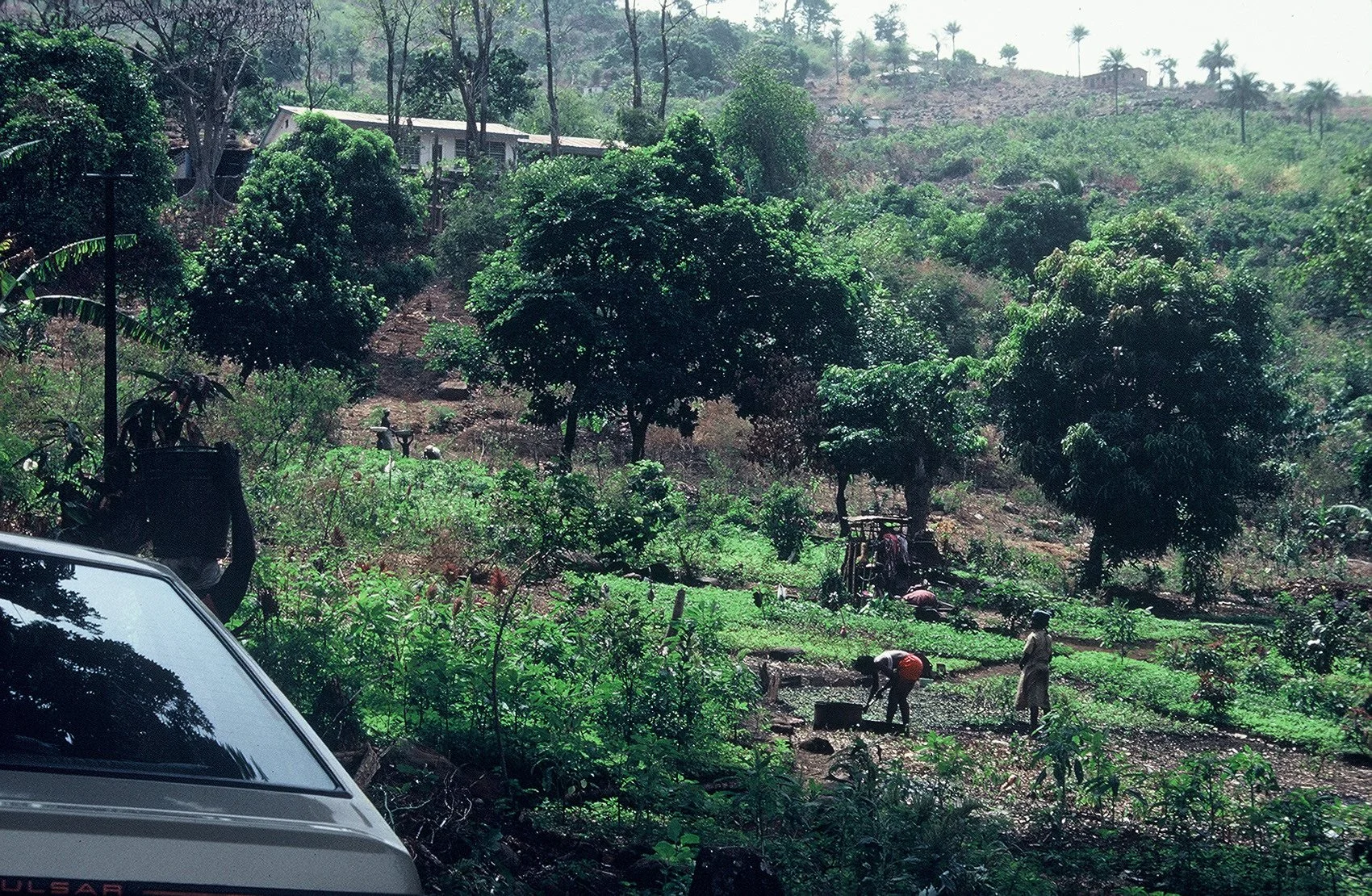
In the photo at the top of the post, you can see the house we lived in, perched as it was on the side of a small mountain in Freetown, Sierra Leone, West Africa. From our house, you could see all the way to the harbor (Freetown has a natural deep water harbor) and the ocean.

Sierra Leonean women carry their burdens on their heads. In the second photo above, you can see the women carrying bundles of firewood, with which they will make charcoal. I’m pretty sure that leafy tree on the left of the photo is a mango tree, though it’s hard to tell.
The reason I point out the mango tree is because of an anecdote I relate in my upcoming book (pre-order!) about something my mom would say to us when we wanted play in a nearby mango tree. I share the excerpt below.
“They’re More Scared of You Than You Are of Them”
When I was a little boy, I lived with my family on the side of a small green mountain in West Africa. Our house on the verdant mountainside was surrounded by mango trees. Mangoes are good for eating and mango trees are good for climbing, and the best mango tree for climbing was the big one at our neighbor’s house. Our neighbor lived across a small, shallow valley from our house, and there were two ways to get there: the long way and the short way. The long way was the road, which curved around the side of the valley in a broad loop. Since boys don’t like taking the long way, we never took the road. It was far better and faster to cut across the valley, following a small dirt footpath that ran directly to our neighbor’s house. This path cut through a shallow bowl of tall reeds and grasses, reeds so tall that once you entered the path, you could see neither right nor left. At times, as my brother and I ran along the path, we’d spot a black form with a red belly rustling and slithering across the path in front of us: a spitting cobra. My love for climbing the good climbing tree at my neighbor’s house made me want to cross the valley, but I always did so with a fear of meeting a cobra. I would run along the path so fast it felt as if my feet barely touched the ground.
Our green little mountain was infested with spitting cobras, which are exactly what they sound like: cobras that rear up and spit venom at the eyes of their prey. Once, my nearsighted dad came around the corner of our house and startled one of these snakes, which swayed up and spit venom at him. Fortunately, my nearsighted dad wears glasses, and when he came sprinting back inside the house, we could see the milky venom dripping off his lenses. I’ve never liked cobras.
My brother and I would whine about the snakes living around us, but my mom adopted her Pollyanna persona and wouldn’t accept our complaints. She would tell us, “Boys, they are more scared of you than you are of them.” I think she got her herpetological information from that scene in The Parent Trap where the gold-digging fiancée is set up by the twins and convinced to tap sticks together to scare off California bears. My mom’s advice was essentially to make lots of noise whenever we ran around outside, certain that our noisemaking would scare away any lurking cobras. Sometimes, as we ran across the valley to that wonderful mango tree for climbing, we’d clap our hands and yell like little idiots, hoping that our mom was right and all the cobras were fleeing before us.
But if I’m honest, even as a small boy I had my doubts about the truth of her claim about the psychological state of our neighborhood cobras— “Boys, they’re more scared of you than you are of them”— primarily because it didn’t seem possible for a venomous, coldhearted reptile to experience terror greater than the kind I felt as an imaginative little boy. Even to this day I do not care for snakes and find it entirely appropriate that the Bible tells us it was a serpent that brought evil into Eden. But now, as an adult, I have decided that my mother was more right than she realized. She may not have known anything about snakes, but her insight is accurate when applied to other people: They tend to be more scared of you than you are of them.
Now, of course, it is not actually true that everyone nearby is walking around in fear of your presence—to say that other people are “more scared of you than you are of them” is a bit tongue-in-cheek. What I mean when I use that phrase is that people are naturally reactive; we observe what others do and how others act before we decide how we will act. To act first, therefore, without regard to how someone else is acting is a radical departure from the natural human tendency. So though other people are probably not shaking in their boots when they see you coming, they are nevertheless naturally inclined to base their actions off whatever you do….
[end of excerpt]
I’m excited about this upcoming book, and I want to get the message out. If you’d pre-order a copy at your preferred bookseller, it would really help, because pre-orders communicate to the booksellers that this is a book they should get behind and really market.
July 4, 1826

I have a new book coming out in October. It’s called Love Goes First: Reaching Others in an Age of Anxiety and Division. The book is about how we can actually move forward and reach the people who disagree with us, even the people who hate us.
(Please pre-order! Here’s the Amazon pre-order page, though you can pre-order at any bookseller you prefer. Every single pre-order sale will help get the message of the book out, because pre-order sales tell booksellers if a book is worth pushing and investing in.)
One of the things I do in the book is include lots of examples that illustrate what it means to go first, including one about July 4, 1826. So, here on the Fourth of July, allow me to share with you a few pages from my book.

Thomas Jefferson and John Adams both died on the fiftieth anniversary of the signing of the Declaration of Independence, July 4, 1826. Jefferson died at Monticello, his Virginia home, at around one o’clock in the afternoon. He was eighty-three years old. That same afternoon, Adams lay on his own deathbed, surrounded by loved ones: “Adams lay peacefully, his mind clear, by all signs. Then late in the afternoon, according to several who were present in the room, he stirred and whispered clearly enough to be understood, ‘Thomas Jefferson survives.’”
Then a few hours later, at about six-twenty in the evening, John Adams died. He was ninety years old. Both men had lived to see the fiftieth anniversary of the Declaration of Independence, and each man died believing the other still survived. The fact that they both died on the same day is amazing. The fact that they died as friends is a miracle.
Both Adams and Jefferson were relatively young men when they were tasked by the Continental Congress with the writing of the document that would enumerate the reasons the thirteen colonies were declaring their independence from King George—when the Declaration of Independence was signed on July 4, 1776, Adams was forty and Jefferson only thirty-three. Although their signatures on the document prove that they were united in spirit and purpose at that point in their lives, as their long and distinguished careers played out, they became bitter enemies and had no contact with each other for years. Both served as president of the United States, but in rival parties, with Jefferson succeeding Adams to the office—two of the great men of the American Revolution implacably estranged from each other.
Their mutual friend—and signer of the Declaration from Pennsylvania—Dr. Benjamin Rush was grieved at the enmity between Adams and Jefferson and tried for several years to get them to reconcile. Then, in December 1811,
just before Christmas, Adams heard again from Benjamin Rush who wished to remind him of a visit Adams had had the summer before from two young men from Virginia. They were brothers named Coles, Albemarle County neighbors of Jefferson’s, and in the course of conversation Adams had at length exclaimed, “I have always loved Jefferson and I still love him.” This had been carried back to Monticello, and was all Jefferson needed to hear. To Rush he wrote, “I only needed this knowledge to revive toward him all the affections of the most cordial moments of our lives.” “And now, my dear friend,” declared Rush to Adams, “permit me again to suggest to you to receive the olive branch offered to you by the hand of a man who still loves you.”
On New Year’s Day 1812, seated at his desk in the second- floor library, Adams took up his pen to write a short letter to Jefferson. . . .
The brief letter from Adams immediately produced a response in Jefferson:
If, as stage-managed by Rush, it had been left to Adams to make the first move, Jefferson more than fulfilled his part. “A letter from you calls up recollections very dear to my mind,” he continued. “It carried me back to the times when, beset with difficulties and dangers, we were fellow laborers in the same cause, struggling for what is most valuable to man, his right of self-government.”
In the fourteen years that followed their dramatic reconciliation, both men exchanged dozens and dozens of letters on every possible topic. Though they were both old men in those years, they recalled and relived the months and moments of that bright time in their lives, decades before, when they were part of the great events of the American Revolution. Their letters are a precious gift to posterity and part of the inheritance of all subsequent Americans.
They are also a testament to the life-changing power of forgiveness and the catalyzing potential of going first. What if, resisting Dr. Rush’s prodding, Adams had refused to send his initial letter to Jefferson? What if Jefferson, nursing decades-old grievances, had refused to reply? I find it fascinating—though not at all surprising—that these great men of American history just needed someone to go first to turn them back toward each other and move them toward reconciliation. They each wanted to be liked by the other. For Jefferson, what moved him was the repetition in his presence of a chance favorable remark Adams had uttered to someone else; for Adams, it was the knowledge that Jefferson still loved him and had said so in a letter to Rush. The whole story is beautiful—a little jewel of American history.
Happy Fourth, everyone.
Note: the block quotations above are from David McCullough’s biography of John Adams.
My One Word for 2025

Longtime (or should it be long-suffering?) readers will be familiar with this exercise: for a over a decade now I have had fun with the idea of adopting one word as a theme for the upcoming year.
For 2014, 2015, 2016, and 2017, I stuck with the same word: early. My emphasis was not on punctuality but was rather about mornings and deadlines.
In 2018 I slightly pivoted and went explicitly with morning. I kept the same word in 2019; that 2019 post is probably my favorite thing I’ve ever written, because in it I was able to talk about how I see the world and why.
In 2020 (poignant now to think about writing that post just a few months before the pandemic) I departed from one word and went with a theme for the decade: “Here’s To the Roaring Twenties.”
In 2021, I went back to one word and picked the word “work.”
That 2021 post was the last one I did in this series—I didn’t pick a word for 2022, 2023, or 2024. In fact, I haven’t written very much in this space these last several years, as I’ve just been too busy with other things. That is going to change in 2025.
One Word and My Job
Each job is difficult in its own way—all professions have their own challenges. I’m a pastor, and the hardest thing about being in pastoral ministry—by far!—is preaching every week. Just imagine having to stand up in front of a group of people every single week and being tasked with saying something
true;
helpful;
and crucially…
interesting.
And then having to do the same thing again in just seven days! In only a few months you’ll have burned through every insight, anecdote, and illustration you have, but the calendar never stops—there is always another Sunday. New content doesn’t just appear because you pray for it—it takes work. Then, on top of that, you are preaching God’s Good News, and so your countenance and heart need to reflect that—you’ve got to preach with JOY, which means you have to work hard to guard your heart and your energy so that you can actually be joyful every Sunday. None of that is easy.
But I’ve stupidly made things more difficult for me at Asbury with these scripture reading guides we publish. We say that Asbury is a Bible-reading church, and since I arrived two and a half years ago, I’ve written these guides to help folks get the most out of their daily readings. The problem is that I don’t know anything! I’ve got to read and study a great deal before I’m able to write anything. So, in addition to each Sunday’s sermon, I have these constant deadlines every couple of months or so to turn in a scripture reading guide to our printer so we can print our guides in advance. It’s like I have two different deadlines always over my head—my weekly sermon, and then these monthly reading guides. That has been stressful! I always feel like I’m behind.
Of course, I have regular tasks to tend to as well—emails and meetings and agendas and strategies, etc. (All email written to me—except from staff members—goes to my assistant. I can’t imagine having to also answer all the email she receives on my behalf!) My temptation is to get to these things first and put off the reading and writing I need to do. I like my work and these days none of it is a waste of time or unimportant—the problem for me is that the most important thing I should be doing every day—reading and learning—is easy to push off and allow other things to crowd it out.
So, my one word for 2025 is about getting to the important task of reading right away, every day. Email, text messages, agendas—that all needs to wait.
My One Word and Marie Kondo
I’m the kind of person who likes clean edges and clear spaces before I can do any kind of deep work. Clutter and mess stress me out. The problem is that I have developed some bad habits that contribute to my own mess! Namely, I will often just put something down rather than putting it away. (Anyone else have that stupid habit?) What this means is that I make double the work for myself in cleaning up clutter, which means I have less time for the really important work that I need to be doing.
One of the things I’m going to do better in 2025 is putting things away rather than just putting them down, and my 2025 One Word will help keep me focused on that goal.
My One Word and The Snoze Button
I’ve written previously just how important early mornings are for me. I begin the day with prayer and then—in theory at least—I hit my morning workout. In 2024 I’ve been extremely inconsistent with my morning workouts, basically for one reason—I hit snooze when my alarm goes off! (My wife is not a fan of this behavior of mine, by the way.) So, what has been happening is that I still get up early, but because I haven’t gotten up quite early enough, I don’t have time to both pray and hit my workout. So, I skip the workout.
My One Word for 2025 is about getting up right away and getting right to those crucial behaviors—morning prayer and morning exercise. Goodbye to the snooze button for 2025. It’s been fun while it lasted, and I’m gonna kinda miss ya.

My One Word and The American Buffalo
One of my favorite animals is the buffalo, and one of my favorite characteristics of the buffalo is that, when a buffalo herd sees a snowstorm on the horizon, it charges into the storm. Why? Because then the storm will pass over more quickly.
I love that, and I want to be that kind of man—if there is a problem to be dealt with, might as well deal with it right away. For me, this is a “growth opportunity” as they say in Corporate America—or, to be more candid, I’m not naturally very buffalo-like, but I want to be!
My One Word for 2025 is about facing problems head on—going right toward the hard thing.
My One Word and My New Book!
I mentioned above that I’ve had two deadlines hanging over my head constantly since I’ve been at Asbury, but that’s actually not the full story—it would be more accurate to say that I’ve had a third deadline hanging over my entire life these past several years.
In 2020 I signed a contract with the book publisher Zondervan to write a book with the working title Love Goes First, and, incredibly, that book will be published this year—the tentative release date is September 16, 2025. For years I’ve had that major project hanging over my head, and it’s hard to believe that I’m very close to actually having a book published.
The idea behind the book is a simple answer to an important question. There is lots of talk these days about polarization, but very little talk about what we actually DO to reach the people that don't like us, the people that might even hate us. My new book is about what to DO. If we want to change the world, we have to go first, because love goes first.
I filmed a 90 second video trailer for the new book:
I open the book with this quotation, one that I think about all the time:
“Every one of us came into the world looking for one thing: the moment we were born we were looking for a face. We were born and in the shock and surprise of birth we opened our eyes and we looked for a face, because until we see a face—until another sees us—we do not know who we are, and we looked for someone who would look at us….Every human being…is looking for someone who is looking for us.” —Andy Crouch
If this is true about people—and I believe it is—then what if we moved toward other people so that they felt like we were actually seeing them?
That’s the idea of the book.
Love always GOES.
And that’s the only way to actually change people—to go first.
My One Word for 2025 is also the theme of my new book. I really believe in its message and I believe that going first is the only way forward for the church in a post-Christian culture—we’ve got to move toward the very people that hate us.
My One Word and The Year Ahead
I’ve got a lot to do this year, but I’m looking forward to it. I’ve never written a book but after going to all this trouble, I really want people to read it because I believe in the message. So, although the good folks at Zondervan have their own marketing plan, as the author I am also responsible for doing everything I can do get the word out about my new book. One of the things I’m going to be doing is blogging more in this space, both about the book and the need for its message and about other things that catch my attention. Who knows, maybe a podcast might be in my future, too. There’s a first time for everything.
My One Word for 2025 describes what I anticipate to be a year of new things for me.
My One Word for 2025 is…
Over the last few days I’ve done a year-end review and had a fair amount of time for reflection, looking back and thanking God for all his blessings on the year past and then looking ahead and asking the Lord to guide me and bless my work in the year ahead. I cast around for the right word to give me focus for this new year, but nothing seemed to stick.
And then this morning, it just hit me, and I knew what my One Word for 2025 had to be.
My One Word for 2025 is
first.
My Election Prediction

Dear reader: I know it’s been a long time since I’ve posted here. Below is a copy of an email I’m sending to my church this evening, and I thought I would share it more broadly here as well. Hope it’s helpful to you.
P.S. The photo above I took outside my polling place this afternoon.
Dear Asbury,
I know what’s going to happen in today’s election.
No, I don’t know who is going to win any particular race. More than that, I have no idea how things will shake out over the next days, weeks, and months. The future is inherently unknown and unknowable, and life is endlessly surprising. So, anything is possible.
But nevertheless, I know what’s going to happen:
God is going to work all things together for good for those who love him and are called according to his purpose. [Romans 8:28]
I’ve noticed some anxiety in our congregation over the outcomes of this election. I’m not going to play Pollyanna and tell you that everything you think should happen will happen—that it’s all going to be fine—since of course I have no idea.
Nevertheless, it’s important to remember that it’s impossible to discern exactly what God is up to from looking at the headlines.
After all, Jesus was crucified. On Friday, it looked like defeat.
But on Sunday it turned into victory!
So, don’t allow yourself to be drawn into the rip currents of either anxiety or certainty—you don’t know enough to be either anxious or smugly certain.
If what you want to happen happens, a victory now may turn out to defeat later.
If what you don’t want to happen happens, a defeat now may lead to a victory later.
Or, maybe not. Who knows?
I waited at my polling place for 50 minutes. Everyone was courteous and friendly, and the whole process was smooth. (This has always been my experience in voting.)
In line I finished reading a memoir by my favorite biblical scholar, Richard Bauckham. It’s called The Blurred Cross: A Writer's Difficult Journey With God, and in it Dr. Bauckham writes of his experience losing and then partially regaining his sight during the pandemic.
As I stood in line, I was struck by this passage near the end of the book:
But can we be thankful for everything? For God’s part in it all, we can, for God has intended nothing but our good. The advantage of the vantage point that old age gives us is that we can see that we were often wrong about what we thought was good for us. We can see how what turned out was really better for us than what we wanted. We can also see how God brought good out of things that went wrong, whether through our own foolishness or fault or otherwise. Undoubtedly things did go wrong, often seriously wrong, but by God’s grace the outcomes were better than they might have been. If that is not always the case, it is probably true more often than we recognize. God redeems our sins by making less of them than they had the potential to be, just as he enhances the good things we do by making more of them than we could do ourselves. All this is involved in tracing the hand of God in our lives and adding the seal of thankfulness and thanksgiving to all these experiences. [Emphasis added.]
There is a lot of wisdom in those words, isn’t there? "The advantage of the vantage point that old age gives us is that we can see that we were often wrong about what we thought was good for us. We can see how what turned out was really better for us than what we wanted. We can also see how God brought good out of things that went wrong, whether through our own foolishness or fault or otherwise.”
Yes. Exactly.
In the magnificent eighth chapter of his Letter to the Romans, the Apostle Paul isn’t offering easy, empty platitudes to the Roman Christians along the lines of “Don’t worry, everything will be fine.”
No. In fact, much of the chapter is about how suffering and difficulty is an inevitable part of a Christian’s life, and more than that, a crucial part of God’s plan to shape every Christian to become more like Christ.
But Paul’s acknowledgement that things don’t always occur in the way we would prefer is what makes his famous statement in verse 28 all the more powerful (and relevant):
And we know that in all things God works for the good of those who love him, who have been called according to his purpose.
Yes. EXACTLY.
This means that whatever the outcome of this election, God is at work weaving all things together for our good and his glory.
Of course we need to work and vote and pray for what we discern is right—we have a responsibility to do so, and we will be held accountable for how we discharge our responsibilities.
But, when evening comes and our work is done (this day and every day), we also rest and rejoice in Jesus Christ our Lord, who is working all things together for good.
Amen.
See you Sunday. Christ is Risen!
Andrew
I'm Starting a Wednesday Morning Communion Service

Starting Wednesday morning, September 13, I’ll lead a weekly Holy Communion service in the Mason Chapel at Asbury Church, 7:15-7:45 AM. (I promise—cross-my-heart-and-hope-to-die promise, Scout’s honor promise—that I will have you on your way out the door no later than 7:45 AM each week.)
I personally really looking forward to this. In a big church it can be hard to make connections with folks. Sunday mornings are tightly-scheduled for me, and I’m not always able to visit with folks the way I’d like; one of the things I like about our 6 PM Thursday service each week is that I feel as if I’m slowly getting to know the regulars. I love that.
So, this brief Wednesday service will be a nice opportunity for me to get to know more folks on a weekly basis. In fact, you’re stuck with me: I’ll be the pastor leading each week, except on the rare occasions when I’m out of town.
The Format
We’ll begin at 7:15 AM sharp.
I’ll lead us in a hymn.
I’ll probably end up giving a brief Bible study and talking about the Bible—I just know I won’t be able to help myself!
We’ll pray the communion liturgy and share the elements.
I’ll dismiss us in prayer.
And then we’ll have grab-and-go Chick-fil-A biscuits available on the way out.
You’ll be in your cars by 7:45 AM.
Who Can Attend?
This service is for anyone who wants to be there. Come every week, come once a year—doesn’t matter. I’d love to see kids and families there, if at all possible. (I know mornings can be difficult for families, so no pressure.) Stop by on the way to work, or if you’re retired, use this as a good excuse to get up and get your Wednesday going. And, of course, you don’t have to be an Asburian to attend—bring friends.
The Reason This Matters
Life is hard at times, and it’s hard to remain faithful. So, we all need to structure our lives around the Truth:
Jesus is Risen!
Bad news is temporary!
We have so many reasons for gratitude!
Etc.
The Lord strengthens his people through Holy Communion. Just like going to the gym regularly, if you show up consistently on Wednesday mornings, God will strengthen your spirit and help you persevere with joy.
Let’s GO.
P.S. Live out of town? First of all, go ahead and move to Tulsa. We’d love to have you. If that can’t happen, find yourself some kind of midweek service or encouragement in your city so that you don’t feel as if you have to walk alone.
P.P.S. See you on 9/13.

Matthew's Gospel and Some Fall Dates

Gospel of Matthew Reading Plan begins 8/21
Our next Bible reading plan at Asbury will be through the Gospel of Matthew; we begin Monday, August 21 and will conclude the Friday before Christmas.
Like the rest of the Bible, Matthew’s Gospel can only be understood through repeated, attentive reading. Accordingly, I’ve parceled out the readings at a slow pace; each particular day’s passage is short (less than 5 minutes!) and very manageable and it is my hope therefore that you’ll have time to go back and re-read a previous day or days and see how it all connects. (The readings are assigned on weekdays only—all the more reason to take your time and read and re-read on the weekends.)
The Shape of Matthew’s Gospel
Matthew can best be understood as being made up of three main sections:
Part 1 – Preparation for Jesus the Messiah [1:1-4:16];
Part 2 – Proclamation of Jesus the Messiah to Israel [4:17-16:20];
Part 3 – Passion and Resurrection of Jesus the Messiah [16:21-28:20].
Our reading plan will be divided up into three books; in Part 1 we will read about both the origins of Jesus—his genealogy and his infancy—and the events that lead up to the launch of his public ministry—the ministry of John the Baptism and the baptism and temptation of Jesus in the wilderness. Part 1 begins on Monday, August 21. Part 2 begins on Monday, September 11; Part 3 on Monday, October 30.
[I’m indebted to David Bauer for this insight about the shape of Matthew, and recommend his book, The Gospel of the Son of God: An Introduction to Matthew.]
How to Get a Matthew Book (Pictured Above)
Asburians can pick up Matthew books all week, and we will be have them for pickup next Sunday, too.
Live out of town but want a book?
Email Sandie Tomlinson ASAP and she’ll mail you however many copies you want. If you live in Dallas, please let Sandie know—we’ll arrange a central pick-up spot in the M Streets (East Dallas) for East Dallas folks.
(Want a soft-copy? Here’s the pdf of Matthew Part 1.)
My Fall Schedule
Though I’m preaching all services this coming weekend, on Friday and Saturday my wife and I will be attending The Middle School Fall Retreat at New Life Ranch—looking forward to getting to know our kids better. It’s a great event—last year I was really impressed with our Student Ministry staff and leadership. Will be a fun weekend, but I’ll be back at church Sunday morning, because:
I start a new series on the Gospel of Matthew next Sunday, August 20—The Temptation of Jesus. (Our next series will begin in September on The Sermon on the Mount.) This is gonna be fun….
Our first (of 4) Churchwide Bible Studies on Matthew will be Wednesday, 8/30, 6:30-8:00 PM. If you live in Tulsa, I’m going to stick my neck out and say that these Bible studies are DO NOT MISS events. The Lord is doing something exciting at Asbury, and the Bible studies we’ve had over the past year on Genesis and Revelation were electric. Please do whatever you can to be present.
If you live out of town, go ahead and move to Tulsa. If that won’t work, then join us on the livestream!
The other remaining Bible studies will be:
September 13
October 11
November 8
I’m teaching The Daniel Project on Friday-Saturday, September 8-9. It’s a weekend seminar in which we address the FAQs of the faith. Because the Daniel Project is really tiring, I’ve learned that I need a guest preacher on those weekends. So…
Sunday, September 10 is World Missions Sunday at Asbury. I’ll be at all 3 services that day, but our guest preacher will be from Voice of the Martyrs. VOM is dedicated to speaking up for the persecuted church around the world, and the things that we’ll hear that day will make your hair stand up and your heart beat fast. That day, we’ll be encouraging folks to sign up for an international mission trip, so go ahead and get your passport application in now.
The last Sunday in October (10/29) is Vision Sunday at Asbury. We’re trying something new, which I’m really looking forward to. Here’s what you need to know.
One service 10 AM only on 10/29;
The service will be held in the UMAC across the street from Asbury! (The UMAC is the “Union Multipurpose Activity Center,” a 5,600 seat arena that we will be taking over for that weekend.)
The purpose of this event is to get our whole church together under one roof and to talk about where we are headed, as well as to HAVE FUN;
Afterwards, we’ll do a big party/Fall Festival and trunk-or-treat event on the grounds.
Lots more info to follow—this is just a save-the-date, so mark your calendars now! (I know folks will have lots of questions—trust me when I say that we’ll make sure everyone knows where to go, and that our older members will have an easy time getting in and out that day. Stay tuned.)

Every breath is proof: the Lord’s not done with us yet.
God has more for each of us.
Let’s GO.
The Fastest Year

Yesterday was my one-year anniversary as the Senior Pastor at Asbury Church in Tulsa, Oklahoma; I started my new job at August 1, 2022.
It’s been the fastest year of my life.

My favorite thing about being a pastor—by far—is knowing people over time. I knew when I left Munger I might never be able to have that same experience again—the great privilege of knowing people over time in such a personal way. At Asbury, I was immediately thrust into a situation in which I had to lead people without being able to know them personally. One of the major lessons I’m learning is how to lead a large group of people, many of whom I have no personal connection with. Asbury is a big church—at least compared to most American churches—and we have a large staff. At Munger, our staff was very small and leadership was always personal for me, both with regard to our staff and even in the congregation, since the congregation grew up over time; though I of course didn’t know everyone, I nevertheless had a personal connection with a sizable percentage of folks on any given Sunday. Here at Asbury, even the staff is too big for me to lead through personal connection. Rather, I’m learning that leadership is about providing clarity, and then asking and inspiring other people to get things done. For someone like me who thrives on personal connection, that could be very difficult, so I’m grateful that folks here have been so eager to follow my lead and run in the direction I’m running.
Right off, I was asked to help us over the finish line of disaffiliation, and it happened! That churchwide vote last August made me nervous—what if folks didn’t trust my leadership? When the total came back that afternoon as overwhelmingly in support of disaffiliation and the direction we were going, I was personally grateful—that result caused me to think, “Maybe this will work!”
The attitude of the Asbury congregation toward what I’m asking us to do and to where I’m asking us to go has been one of eager enthusiasm, particularly in our older members. I’ll never forget asking folks to wear running shoes to church as a sign that we were ready to run, and they did! Or the entire Administration Council showing up to an evening meeting in running shoes to show they were ready to run. Or the Ad Council surprising me in my office on Easter Sunday to pray over me. Or the congregation wearing Hawaiian shirts on Pentecost Sunday, just because I asked them to.
I’m proud of the sermons I’ve preached this past year, starting with that first Sunday. (I do remember one sermon from February in which I was walking around the stage hoping to stumble across the point of my sermon; I’m sorry to say I don’t think I ever found it! My apologies to everyone who had to listen to that one.) I never pulled any punches; in fact, I came to Asbury committed to doing my best to say what’s true, even when I’m afraid. And sometimes, being afraid caused me to double-down and be more bold!
One of the other lessons I’ve been learning is the importance of controlling and capturing one’s thought life. My wife has been on me for not being grateful enough, and she’s right—grateful thoughts don’t come naturally to me. (In fact, I preached a whole sermon in December on the connection between gratitude and happiness—I was definitely preaching to myself that week for sure.) So, looking back over the past year, I want say again just how grateful I am. Grateful to all the kindnesses the Asbury congregation has shown me and my family, and grateful to the Lord who blesses even when we don’t deserve it.
So, here I am beginning Year Two. I came back from summer vacation really excited to be coming back and really fired up at the work ahead—I looked forward all week to seeing folks this past Sunday, which is a great feeling. I’m grateful that the Lord’s not done with me yet, and he’s not done with Asbury yet. And I’m reminded again of that scene from The Hustler (from the blog post I wrote about it one year ago):
Fast Eddie (Paul Newman) and Minnesota Fats (Jackie Gleason) have been playing pool for 25 hours straight, and Fast Eddie has been winning—he’s been wiping the floor with the Fat Man, and is over $11,000 up. There’s a break in the action, and Minnesota Fats goes to the washroom and freshens up. He combs his hair, cleans his fingernails, straightens his tie.
Then he comes out, dries off his hands, slides into his suitjacket—it’s a beautiful three piece suit he’s wearing—fixes his boutonniere on his lapel, and has the steward pour a little bit of talcum powder on his hands.
He looks absolutely magnificent, the picture of masculine elegance, calm, cool, controlled.
And then he looks at Eddie and he says,
“Fast Eddie, let’s play some pool.”
The past is the past—all that matters is now. It’s time to focus, and time to win.
Alright Fast Eddie, let’s play some pool.
Let’s GO.
