
![Can Science and Faith be Reconciled? [part 1 of 3]](https://images.squarespace-cdn.com/content/v1/5d70f59aefca59000162e4e6/1568657672957-TN7837AT19XACFX53KU2/image-asset.jpeg)
Can Science and Faith be Reconciled? [part 1 of 3]

I've been interested recently in some of the questions that 21st century Americans have about the Christian faith. One question that comes up frequently is, "Can science and faith be reconciled?"In researching this question, I've discovered three main answers.Option 1:No, because science and faith are and have been at war.This option is widely-held among modern people. But there is one problem with it: it is historically false.Without the Church, No Science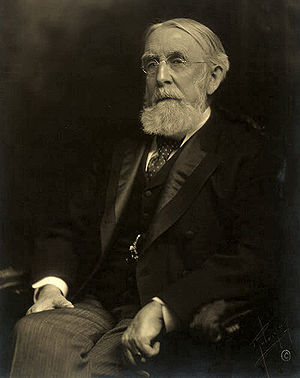 Andrew Dickson White?(1832-1918) was one of the co-founders of Cornell University. In 1896 he published a 2 volume work called?A History of the Warfare of Science with Theology in Christendom,?which put forward the idea that the Christian faith was responsible for interfering and holding back scientific achievement. White's work was extremely influential in the first part of the 20th century, and his argument did much to convince many that faith and science were at war, despite the obvious problems with his argument.The first problem with claiming that science and faith are at war is that, as many historians now argue, the culture of Christianity was directly responsible for the development of science in the West. Christians believe in a rational God who created the universe according to rational principles, a belief that is necessary to science. Rather than being antagonistic to science, the Christian faith allowed it to flourish. The greatest universities of the first 17 centuries of the last 2 millennia were virtually all developed by the Church to be places where faith could seek understanding, and most of the greatest scientific minds up until the Enlightenment were devout Christians.Second, A.D. White had an obvious bias against orthodox Christianity. For some reason, modern people, so quick (and rightly so) to be skeptical of many authoritative claims accept as gospel the claims of those who are obviously biased against the Church; many of us accept those arguments unthinkingly. In a culture that values science (as ours does), you can greatly undermine the faith by claiming the Church is anti-science, and A.D. White and many people have successfully done so. It says a lot about our modern anti-Church bias that we are eager to embrace any arguments that make the Church look badly. But What About Galileo?"That sounds great," some readers are thinking, "but what about Galileo?"
 The Galileo episode is not one that makes the Church look very good and I wish the Church had been wiser. However, I've learned some interesting facts about Galileo.First, the episode was less about science versus faith but more (in David Bentley Hart's phrase) about what happens when two men of "titanic egos" clash. The two men were Galileo Galilei and Pope Urban VIII. They had once been friends, but Galileo had deliberately insulted the Pope and his holiness was miffed. The whole sorry affair was, in some ways, a big personality conflict.Second, the Galileo episode took place within the context of the Protestant Reformation and the Roman catholic Counter-Reformation. It was a climate in which Rome was eager to maintain whatever control it could. Provoked by Galileo, Rome wanted to be sure that the arrogant scientist knew his place.The facts above don't explain away the church's foolishness in the Galileo episode, but they do help show it's not quite as bad as the pop culture version of the story goes. Plus, when speaking of Christianity, it's important for us to have a little humility and remember that the Church has been in existence for 2,000 years. Yes, there have been times in the last 2,000 years when Christians have seemed to be deliberately anti-intellectual and reactionary, but those times are, by far, the exceptions rather than the norm.ConclusionPut simply, Option 1 doesn't work because it's historically false: the Church is not and has never been at war with Science.To be continued in Part 2....
Chris Christie and the Problem With Our Media Culture
(I'm very interested in American politics. This is a new blog, so you should know that though I plan on refraining from telling you why your political opinions are wrong and mine are right, I do plan on writing about trends I see in American politics and culture. Such as the following....) The way our media covers American politics is one of the main problems in American politics, as the coverage of the Chris Christie bridge scandal makes clear.This week, documents were published that show that top aides to the NJ Governor deliberately snarled traffic leading from the George Washington Bridge into Fort Lee, NJ. Christie denies any knowledge of their actions.I'm not concerned with parsing out the truth of the scandal or in Governor Christie's fitness for public office. Rather, I'm much more concerned with how the media has covered this and other political scandals: like spectators at a sporting event.I've read very little coverage of the Christie scandal that addresses the morality of the issue, what it means when public officials use their official positions in unethical ways. Instead, almost all the coverage is interested in questions like:
- how will this hurt Governor Christie's 2016 presidential chances?
- did Governor Christie respond quickly enough to diffuse the situation?
- was the tone that Governor Christie struck in his press conference the right one?
Notice that all these (and many other) angles on the story make the story about how the politician plays the game, not about the substance of the actions of the people involved. This tendency is not unique to this story, but is the way the American media covers modern politics.As a citizen, I'm much less concerned with how our political representatives play the game and spin the story than in the substance of their actions. What about you?

My Not-Too-Impressive 2013 Reading List (& Why You Need a Reading Plan for 2014).

My goal was to read 50 books in 2013 ; I didn't come even close: 23. I had read somewhere about some guy wanting to read 50 books in the coming year, so I decided to adopt his goal, and I'm glad I did, even though I fell so far short. I learned last year that I need to be more intentional in my reading. I've never looked back on an evening spent watching tv or browsing online and thought, "I'm SO glad I spent my time like that," but I have definitely been blessed by turning off my screens and focusing on a book. So, this year, I'm going for it again: I want to read 50 books in 2014. What about you? If you don't set a goal, you are GUARANTEED not to achieve it. Why not try to intentionally read more in 2014?
My 2013 reading list is below. (Reading over it now, I know I'd like to include more fiction and literature in my 2014 reading diet.)
Highly Recommended
What it Takes: The Way to the White House, by Richard Ben Cramer.
Comment: If you love politics (as I do), you must read this. Over 1,000 pages on the 1988 presidential campaign. Cramer had unprecedented access to the 8 leading candidates, and the book is just remarkable. Worth pushing through all the way to the end. I read it on summer vacation, and am so glad I did.
The Dog Stars, by Peter Heller.
Comment: Violent, terrifying, brutal, beautiful. I think about this novel all the time. Highly recommended (but don't read before bedtime--you won't want to put it down, and then you won't be able to sleep).
The Circle Maker, by Mark Batterson.
Comment: recommended for sure, particularly if you are struggling a bit in your faith. His basic argument: we should pray passionately and persistently, asking the Lord for big things. Who doesn't need to hear that?
Mr. Ives' Christmas, by Oscar Hijuelos.
Comment: I read it the weekend before Christmas, after seeing it mentioned on Rod Dreher's blog.
Others, in no particular order
One Word That Will Change Your Life, by Dan Britton, Jimmy Page, and Jon Gordon. Comment: see previous post here.
Scouting the Divine, by Margaret Feinberg.
The Power of Habit, by Charles Duhigg. Comment: really interesting stuff, particularly the historical and social examples. (I'm thinking of the stuff about Paul O'Neil at Alcoa and the kebab vendors in Iraq.) I think the stuff about "keystone habits" is particularly useful. The book is a bit too long, but I recommend it.
Give and Take: A Revolutionary Approach to Success, by Adam Grant.
Who Is This Man? by John Ortberg. Comment: Loved the simplicity and power of Ortberg's central question: "How did an unknown Galilean carpenter, who didn't lead and army, write a book, or rule a kingdom, become the most influential person in history?
24/6, by Matthew Sleeth. Comment: you get the point from the title, but it never hurts to think more about sabbath.
The Forever War, by Joe Haldeman.
Ender's Game, by Orson Scott Card. Comment: I knew nothing about the book, but hearing that the movie was coming out, I wanted to read it. The first 3/4 are excellent. The stuff about his siblings is a distraction, and I don't think the final 1/4 is that great, but I'd still recommend it if you are interested in science-fiction.
Deep & Wide, by Andy Stanley. Comment: If you are involved in church leadership at any level, definitely recommended.
The King Jesus Gospel, by Scot McKnight.
Paris in the Fifties, by Stanley Karnow. Comment: title says it all. Really interesting sketches of French life in a time that will never return. A bit too long, but I enjoyed it.
Entreleadership, by Dave Ramsey.
11: Indispensable Relationships You Can't Live Without, by Len Sweet. Comment: not recommended, though I did get a sermon series idea out of it.
The Treasure Principle, by Randy Alcorn.
The War of Art, by Steven Pressfield.
How Do You Kill 11 Million People? by Andy Andrews.
Willpower, by Roy Baumeister and John Tierney.
The Virtual Assistant Solution, by Michael Hyatt.
Why Men Hate Going to Church, by David Murrow.
What's Your One Word for 2014?
Resolutions don't work. So, rather than focusing on all the ways we want to live differently in 2014, a little book?I read recently suggests we'd be better off focusing on a one word theme for the year and live into it.What's your one word?For 2014, mine is "early."I want to:
- wake up early
- pray early
- workout early
- finish tasks early
- get to appointments early
- finish my sermon early (this would be life-changing!)
- get to bed early
What about you? Leave comments below.