

Early Thoughts on the Election

I went to bed early last night and woke up really early this morning, and even though I like to remind myself that no one knows the future, I was still surprised by the election result. Here are some early thoughts, in no particular order. Donald Trump's victory reminds us once again: no one knows the future. I wrote last year about how the experts always want us to believe that they can predict the future, but that they are?always wrong. None of the experts predicted Mr. Trump's victory in the primaries, and none of the experts predicted his victory last night. I'll say it again:?No one knows the future. Though the inherent obscurity of the future could seem terrifying, I tend to find this truth strangely comforting: it means that there is potential in every situation for the grace of God to be at work.The reason our politics is so bitter is because we don't?believe in the transcendent and the eternal. If naked political power is all there is, then you have to fight tooth and claw to achieve it. Since we've killed off God in the West, we have nothing else to live for.We should pray for Barron Trump. A ten year-old little boy, thrust into the spotlight.I cannot imagine what Hillary Clinton must be feeling this morning. As with any celebrity, it's easy to forget that Mrs. Clinton is a real person. She's been reaching for the presidency for much of her life; the bitterness of her loss this morning must be overwhelming.This election proves how distant the elites that run our country are from millions of ordinary people.? The establishment--including the conservative establishment--was opposed to Donald Trump's candidacy. And yet he won anyway. It cannot be good for America in the long term for the people with power--in the media, in academia, in business, and in government--to be so different from the people without it.We have no shared purpose as a people. I think Rod Dreher's metaphor is helpful:
Here‘s the problem, as I see it. Is the American nation (or any nation) more like:
- The diverse crowd that gathers at the shopping mall on Saturday afternoon, or
- The diverse crowd that gathers at the football stadium on Saturday night?
The difference is that the only thing the first crowd shares is little more than a geographical space, but the second crowd shares not only a geographical space, but a purpose.Our problem is that we want the solidarity and sense of purpose that the football stadium crowd possesses, but without its shared sense of a mission greater than the individuals engaged in it. I don‘t think this is a problem that politics can solve, but it is certainly a problem that politics can exacerbate. As the next four years will demonstrate.Instead of the Stadium as a symbol, I might have used the Cathedral, but of course America, as a foundationally secular nation, is better represented by a stadium. Plus, these days, Cathedrals function more like Malls, in the sense I mean in this post. There‘s?not much shared sense of purpose there, only a diverse group of people gathered in a particular geographical space to pursue private ends. The Mall really is the symbol of our place in this time.
I suspect the Bradley Effect?was in effect yesterday. I wrote about the Bradley effect in yesterday's post.Politics exposes our idols. Millions of people would be in despair this morning had Mrs. Clinton won. Millions of people are despairing because Mr. Trump?has won. Ravi Zacharias has it right: "The loneliest moment is life is when you have just experienced that which you thought would deliver the ultimate and it has just let you down."I'm glad the?Church is "of no party or clique." My job is to be a pastor, a shepherd of people. That responsibility?does not depend on the fortunes of any party or clique, and my calling is to people, regardless of how they vote. I'm glad of that, this morning.As my friend Matt Judkins, a pastor in Oklahoma, puts it:[embed]https://twitter.com/matt_judkins/status/796339315336941568[/embed]
The fox knows many things;The hedgehog knows one big thing.Click?here‘to subscribe to regular updates from this blog.

Brief Thoughts on Voting

I was at my polling place (a beautiful old church in East Dallas) 10 minutes before the polls opened this morning, and there were already 10 people in front of me. Voting always makes me?reflective, and here are some of my thoughts and reminiscences, in no particular order. The sacred solemnity of peaceful voting always strikes me. There is just something about being surrounded by my fellow citizens, who may or may not share my beliefs, as we all line up peacefully and patiently to cast our votes. There is just something sacred about walking into the voting booth as a free man. I think voting represents America much better than fighter jet flyovers at NFL games--that's just a show of power: our real power lies in the peaceful ritual of?Election Day.Nothing is more important than the peaceful transfer of power. There are lots of issues I feel very strongly about, issues I believe matter to God. But I don't think anything matters more than the peaceful transfer of power. This 229 year-old experiment we have with our Constitution is exceeding rare in human history, and unless we are governed by laws with a peaceful transfer of power, nothing else is possible. I lived in West Africa as a small boy, and I distinctly remember watching from the verandah of our house, which was perched on the side of a small mountain, and looking down at the capital city below as the sirens sounded and soldiers shouted: there had been a coup attempt. Nothing is more destructive than chaos. May our system continue long into the future.God bless the election volunteers. I remember the first time I voted (must have been November, 1998). I was home from college and I went with my dad up to our polling place, which was a school I'd attended. In the 1950s era gymnasium/auditorium/cafeteria, we checked in with the volunteers and I was surprised to see I knew all of them--they were ladies from our church. I was impressed then with their civic commitment, and I have been impressed with election volunteers ever since. These people make our freedom possible.The longest line I ever waited in to vote was in 2004. I was living in Richmond, Virginia, off of Monument Avenue. I went to vote around midday, and the line wrapped around the city block. No one complained.It is shameful that I don't know more about the down ballot races and propositions. I am an educated guy. I read the newspaper every day. I care about local issues. And yet there were a few races on my ballot this morning that I knew nothing about. There was also a long and complicated proposition having to do with the pension fund for civilian city employees. I was mortified to read it and realize?I didn't know what I should do. I left it blank. That is unacceptable. I never want to be in that position again. It is my responsibility to be?more informed.But it is also shameful how our media don't prepare us for these important races and issues. I have a good memory and a varied media diet, and yet I walked into the voting booth knowing very little about issues beyond the headlines involving our leading presidential candidates. I know that there may not be a market for journalism devoted to issues, particularly down ballot issues, but I still think it's shameful how little space our media devotes to anything other than the presidential horse race.I wonder if a variation of the "Bradley Effect" will play a role in this election. The Bradley effect derives its name from the 1982 candidacy of Tom Bradley for governor of California. Mr. Bradley, a black politician, was ahead in the polling before the election, but lost the actual election. Why? Political scientists concluded that potential voters were not?honest with pollsters, telling the pollsters that they were going to vote for a black man (the socially acceptable answer), while not actually doing so in the privacy of the voting booth. I wonder if the same thing might happen today with regard to Mr. Trump--are there people who will privately vote for him, even though they'd be embarrassed to say so publicly?I don't know why cell phones are banned at polling places, but I'm glad they are. In Texas, cell phones and other "electronic communications devices" are banned within 100 feet of voting stations. I don't really see the problem with a ballot selfie, but I'm not complaining.Finally, the Presidency isn't going to save us, and our future will not depend on tonight's results. I believe it matters whom we elect--I want good people serving in office, from dog catcher on up to President of the United States. But, our ultimate hopes do not lie with our politicians, and the church does not depend on politics to carry out its mission; our hopes lie with God, and the church depends on him.In other words, Jesus is Lord, today, tomorrow, and forever.
The fox knows many things;The hedgehog knows one big thing.Click?here‘to subscribe to regular updates from this blog.

Does Public Polling Hurt Democracy?

Tomorrow is election day, and all the media organizations are poring over the polls, eager to tell us who's up and who's down and who's going to be the next President of the United States. I'm curious what tomorrow will bring, too, but I worry that our modern obsession with polling presents a problem for our republic. Here's why.
Public Polls are Self-Fulfilling
"Don't throw your vote away." This is the advice we're constantly given. If we vote for the candidate whom the polls say has no chance of winning, we feel as if we're wasting our vote. People want to back a winner. So, when the media tell us that this or that candidate is definitely going to lose, it makes us less likely to vote for the candidate who is behind, thereby reinforcing the polling results. Many American political campaigns are based less on ideas than on the "inevitability" of this or that candidate. I'd argue that inevitability was the main argument of George W. Bush's candidacy in the Republican primaries of 2000 and Hillary Clinton's candidacy in the Democratic primaries this year.
Public Polls Prop-up Our Current 2 Party System
Because the polls tell us that voting for a 3rd party candidate is a futile exercise, many of us reluctantly support the 2 main parties in elections. Unfortunately, this means there are significant parts of the electorate and significant ideas that are not given a hearing. It is telling that so many people appreciated Bernie Sanders's message of economic populism, a message that was relatively unheard in previous Democratic primary campaigns, even though it's clear now there's been an electorate eager to hear it. It is also telling that Donald Trump was the first Republican candidate that I know of to explicitly call the Iraq War a mistake. What if there was another party on the left that was able to make the arguments the Democrats refuse to make, or another party on the right that was able to make the arguments that the Republicans refuse to make? The point is that if alternative political movements and parties were able to gain traction in our system, new ideas would gain traction as well. Competition is good in the public square: it makes each of us refine our ideas and our arguments. Rival parties would make Republicans and Democrats better, which would make our republic better.
Public Polling Perpetuates the Red/Blue Divide
It doesn't seem as if Texas is going to turn blue any time soon, any more than it seems that California will turn red, and I think public polling perpetuates this divide. If people in the minority party in various states weren't convinced that their votes "wouldn't count," then perhaps they'd be more likely to vote, which in turn would require politicians and parties to make more effective arguments in so-called safe districts and spaces, taking no votes for granted.
Public Polling Encourages the Media to Focus on the Horse Race
I've written before (and it's not an argument unique to me) how the media obsession with who is ahead and who is behind--the "horse race"--is bad for democracy. Public polling encourages the media to make every story about how this or that development will hurt or help a candidate, and discourages the media from telling the electorate what ideas the candidate supports, and how those ideas will play out in government. This unhealthy obsession with the political horse race means that we begin to assume that the only thing that matters is winning, and politics becomes a permanent campaign, with actual governing an afterthought.
Okay, Smart Guy, What Should We?Do?
I think there are 2 actions we could take that would begin to undue the malign influence public polling has on our republic. (Note that in this post I've been talking about public polling. I see no problem with candidates and parties conducting polls for their own purposes, as long as they don't make those polls public. And,?I can certainly see the value of exit-polling, because that kind of polling doesn't influence elections results, but rather gives us more insight into the electorate.)First, I think Americans should be encouraged to vote for the candidate we like most. Rather than voting for whom seems most likely to win, or whom we dislike least, if we each began to vote our beliefs, our republic would be better served.Second, I think we should consider legal and Constitutional limits on the publicizing of polling results before elections.? The First Amendment would seem to prohibit any restrictions on the press. I believe strongly in the importance of a free press, but perhaps there might be narrow laws or even Constitutional amendments that?could be passed that would appropriate. (For example, the Supreme Court has ruled that the press does not have the right to publish child pornography.) I'm not sure what the answer is here, but I think it's at least worth exploring, and it might be the case that the Fourteenth Amendment ("equal protection of the laws") could have some bearing on the issue.
Am I Missing Something?
I'm worried about the negative effects of public polling. Am I missing something? Is there a greater public good I'm overlooking? Let me know what you think. (If you'd like to read more on this issue, Jill Lepore had an interesting essay that looks at the historical development of opinion polls in the November 16, 2015 issue of?The New Yorker called "Are Polls Ruining Democracy?"? She was also a guest on?Fresh Air in February 2016. The BBC explored the polling and whether it should be banned before elections here.)
The fox knows many things; the hedgehog knows one big thing.Click?here‘to subscribe to regular updates from this blog.

How to Use the Time Change to Get Up Early

If you win the morning, you win the day. This weekend offers you the perfect opportunity to revise your morning routine. With the time change back to standard time, the extra hour you'll gain could be exactly what you need to start a new morning routine. Here are 4 steps to take so you can start getting that early worm.
1. Go to Bed Early This Saturday Evening.
Don't make the mistake of thinking that the extra hour means you can stay up later. Head to bed at your normal time (or even better, a bit earlier) on Saturday.
2. Don't Sleep In on Sunday Morning
Set your alarm for the new early time you'd like to get up on Monday morning.
3. Begin An Evening Routine
The key to getting up early is preparing the night before. Set out your clothes for the next morning. Shut down your email. Lay out your workout gear. Put out your coffee cup. I find that I need to begin shutting down around an hour before I want to be in bed.
4. When the Alarm Goes Off, Get Your Feet on the Floor ASAP
Once you get your feet on the floor, you've already won. Resist the urge to hit snooze and say "I'll get up in a few minutes." If you roll back over, you're toast; get up immediately on your alarm.
Make "Early" Your Watchword
Greatness starts early in the morning. Anyone can learn to get up early, and this weekend offers you the perfect opportunity. Don't miss it.
Make your inbox more interesting: click?here‘to subscribe to regular updates from this blog.

I Cried When I Saw This Happen

I saw this happen this past Sunday morning as we celebrated our 6th birthday as a congregation at Munger Place Church. I know these people; I know their stories; they are my friends. As I watched them share their cardboard testimonies, I couldn't help it: tears ran down my face. (And I'm not a crier.)
2016 Munger Cardboard Testimonies [VIDEO]
As I watched these people share their stories, I kept thinking, "I am so grateful, God, that I get to be a part of this."2016 Munger Cardboard Testimonies from HPUMC on Vimeo.
Make your inbox more interesting: click?here‘to subscribe to regular updates from this blog.

Brangelina

Brad Pitt and Angelina Jolie are getting divorced. Though I don't know them, I'm grieved at the news: divorce is always painful, and the thought of their 6 children having to grow up without a mom and a dad in the same house makes me sad. This news of yet another failed celebrity marriage has got me thinking.
Our Deepest Problems Are Spiritual Problems
Our deepest problems are spiritual problems. If this were not the case, Brad Pitt and Angelina Jolie would not be getting divorced. If our deepest problems were merely material problems, then money would solve our problems. If money could solve our problems, then rich people would never get divorced.Our culture is obsessed with material reality. We've bought into the self-evident lie that the only reality that matters is that which we can see, taste, touch, and measure. But, this belief is self-evidently false, because material solutions don't actually fix our deepest problems. Spiritual reality matters. Our deepest problems are spiritual problems, and so they can't be solved with material solutions. Spiritual reality is just as real as material reality, but because we can't see, taste, touch, and measure spiritual reality, our culture pretends it's not real.Unfortunately, the effects of spiritual brokenness are quite real, and these effects are all around us:
- War is a result of spiritual brokenness;
- Divorce is a result of spiritual brokenness;
- Racism is a result of spiritual brokenness, etc.
Yes, these problems have material results, but the roots of these problems are spiritual.Again, if our deepest problems were merely material in nature, then we could buy solutions to our problems. This is the false god of wealth. If our deepest problems were merely material, we could solve our deepest problems through technological invention. This is the false god of progress.If our deepest problems were merely material, Brad Pitt and Angelina Jolie wouldn't be getting divorced. What about you? What is the spiritual brokenness in your heart producing in your life?Anxiety?Adultery?Anger?These come from our hearts, and their effects can be seen in the material world. But, they can't be fixed with material solutions.This is the human predicament: our problems all have spiritual roots, and we can't fix ourselves.But...This is the gospel:?the God who is Spirit entered into material reality and fixed our Problem himself. Do you understand?
Make your inbox more interesting: click?here‘to subscribe to regular updates from this blog.

What I *Didn't* Do On Summer Vacation

I just got back from a month-long vacation. (I know, I know: nice work if you can get it.) I also took off blogging, dear reader, so allow me to fill you in on what I did on vacation. Or, to be more specific, here's what I?didn't?do on summer vacation.
I Didn't Feel Guilty
"You're gone for a whole month? [eye roll] Must be nice..... " I'd get this response when I'd tell folks we were taking a month-long vacation. I realize how blessed I am to be able to take that kind of time off (most people in my church are lucky to get a week), and I realize that lots of people don't understand why a pastor needs vacation at all ("I mean, what do you really do anyway?"). But, I'm unapologetic in taking vacation time, because I know that I'm running a marathon in ministry, not a sprint, and if I don't care for my soul and my family, I could lose my ministry, my family, and even my soul.Being a pastor is not like other jobs--my job is to pour myself out for my congregation and my community. I've written elsewhere about the pressure that comes from preaching week after week, year after year. In addition to that, I need to be able to be present to people in all aspects of their lives--joys and sorrows and sicknesses--and, paradoxically, for me to be present with people, I need some regular time away from my community.Being a pastor is also a burden on the pastor's family. We can't take weekend trips. We can't travel on Christmas and Easter. We don't go out on Saturday evenings. My family knows that there are phone calls I get that mean I need to make a late-night visit to the hospital or have a long conversation about a failing marriage. My family sacrifices a lot for my ministry, and I owe it to them to have some time away from the relentless needs of our community.The very?first day of our summer vacation--the very first day--I read a news story about how South Carolina megachurch pastor Perry Noble had been fired from the church he founded for personal issues that included a dependence on alcohol and a failing marriage. I don't know Perry personally, but I've heard him preach several times and was extremely impressed with his ministry from afar. Perry appears to be a talented and faithful leader, and yet the pressures and demands of ministry got the better of him.I'm going to do everything possible to make sure that doesn't happen to me. 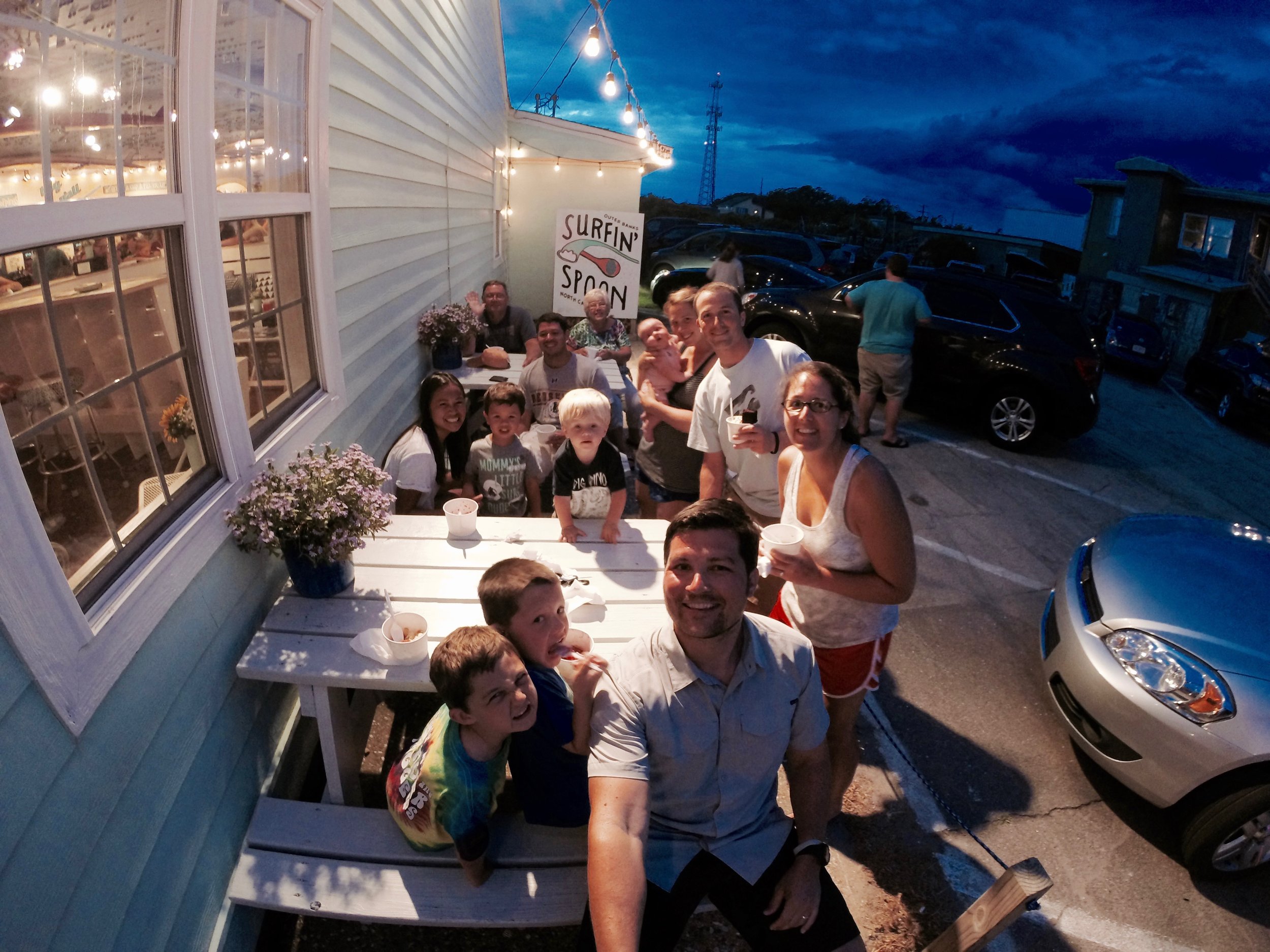
I Didn't Look at Email for 30 Days
I don't need to tell you that to be truly off from work, one needs to be off email. Completely. This summer I had all my work email forwarded to my assistant for the entire time I was gone. I needed to do this for 2 reasons:
- for the health of my soul and my family, I needed to be completely off email and not tempted to check it from time to time;
- I didn't want to return to thousands of unread emails.
I know this arrangement was inconvenient for some people who needed a timely response from me, but I also know that I'm not able to be present on vacation if I'm still virtually in the office.
I Didn't Check Facebook
I'm not a fan of social media, but I use it. I've found, however, that for me social media is not life-giving. So, I decided to completely stay off Facebook for 30 days. I can honestly say I didn't miss it at all. ![[And with my family on Cape Cod, Massachusetts.]](http://static1.squarespace.com/static/5d70f59aefca59000162e4e6/5d7fcef39f682762992c8aca/5d7fcf0b9f682762992c8e32/1568657163861/G0722168.jpg?format=original)
I Didn't Skip Church
I tell my congregation that I believe that they should be in church every Sunday unless they are sick or out of town, but honestly, I should really tell them that they should be in church every Sunday even when they are out of town. Whether I am at home or on vacation, I need to be in worship every Sunday.
- church reminds me that life is not about me;
- church reminds me that God is in control;
- church reminds that Jesus rose from the grave;
- church reminds me that all I?have comes from God;
- church reminds me that I have a reason to be grateful in every circumstance.
So the four Sundays we were gone from Munger, we were at church. We attended:
- Church of the Outer Banks (an Anglican church start that meets in a YMCA in Kill Devil Hills, NC);
- Redeemer Presbyterian Church (their downtown location on W. 14th Street in New York City);
- Brewster Baptist Church, twice (an American Baptist congregation on Cape Cod, Massachusetts).
There are lots of dead churches in America, but I do my best to avoid these. Instead, I like attending churches (big or small, traditional or contemporary) that are full of LIFE and the Holy Spirit. The churches we attended on vacation this summer were all very different from each other, but each was alive and reminded me that God is active in the world, and that the Lord has faithful witnesses everywhere. ![[Redeemer's downtown location is the Salvation Army building on W. 14th St.]](http://static1.squarespace.com/static/5d70f59aefca59000162e4e6/5d7fcef39f682762992c8aca/5d7fcf0c9f682762992c8e39/1568657164285/FullSizeRender-34.jpg?format=original)
And I Didn't Not Want to Come Home
I know that's a double negative, so let me explain. The first couple weeks we were away, I did my best not to even?think of home. I love Dallas and I love our church, but the worry that comes from being a pastor never stops, and it took several weeks of being away before I could feel relaxed. However, with about a week left in our vacation, I began to feel eager to return. I think that eagerness was a gift from God, and although I was sad for our time away to come to an end, I wasn't sad at all to be returning home.And now, I can't wait to see my church on Sunday.
I write about everything and always about The One Big Thing. Sign up to receive future posts: it's free, and scientifically proven to help you sleep better.

The Hard Questions Have Already Been Asked

As I wrote on Wednesday, I believe strongly that Christians?do not need to?be afraid of hard, honest questions about the Faith. One reason is?because‘the hardest questions have already been asked, by Christian theologians themselves. Often, in fact, the people asking those questions were the theologians of the ancient church, people like Origen and Augustine. (Origen, to cite one example, took on the opening chapters of Genesis and wondered--15 centuries before Darwin--whether the biblical account was meant to be taken literally.) There are many good, hard questions that you and I haven't ever considered, but I guarantee you that someone else has considered them. So the?next time someone asks you a hard question about faith, don't panic, but say, "I don't know, but I'll find out." Then, hit the library and find out what the ancient church had to sat about the matter.
Make your inbox more interesting: click?here‘to subscribe to regular updates from this blog.

A Faith Unafraid of the Hard Questions

I believe very strongly that the Christian faith has nothing to fear from hard questions. If what we believe is True, then it can withstand even the most intense cross-examination. In fact, I think we ought to welcome hard questions, because hard, honest questions are often used by God to bring people to faith. This was certainly the belief of the great missionary and evangelist E. Stanley Jones (1884-1973), friend to Gandhi and missionary to India. In his missionary work Jones often fearlessly debated with people who were hostile to Christianity, and in his most famous book he explains how he came to be unafraid of even the hardest questions about faith. Facts, he realized, are faith's friends. In his best-selling book The Christ of the Indian Road?(1925), Jones writes:
?I have found a good many nervous Christians since coming home who are afraid that this whole thing of Christianity might fall to pieces if someone should get too critical, or if science should get too scientific. Many of the saints are now painfully nervous. They remind me of a lady missionary with whom I walked home one night after a very tense meeting in a Hindu theater. She said, Mr. Jones, I am physically exhausted from that meeting tonight. When I asked her the reason she said, Well, I didn‘t know what they were going to ask you next, and I didn‘t know what you were going to answer, so I‘ve been siting up there in the gallery holding on to the bench with all my might for two hours, and I'm physically exhausted!? There are many like our sister who are metaphorically holding to their seats with all their might lest Christianity fall to pieces under criticism!I have a great deal of sympathy with them, for I felt myself in the same position for a long time after I went to India. The whole atmosphere was acid with criticism. I could feel the acid eat into my very soul every time I picked up a non-Christian paper. Then there came the time when I inwardly let go. I became willing to turn Jesus over to the facts of the universe. I began to see that there was only one refuge in life and that was in reality, in the facts. If Jesus couldn‘t stand the shock of the criticism of the facts discovered anywhere, if he wasn‘t reality, the sooner I found out about it the better. My willingness to surrender Christ to the facts was almost as great an epoch in my life as my willingness to surrender to him?. I saw that [Jesus] was not a hothouse plant that would wither under the touch of criticism, but he was rooted in reality, was the very living expression of our moral and spiritual universe?he was reality itself?.The only way to kill Christianity is to take it out of life and protect it. The way to make it shine and show its genius is to put it down in life and let it speak directly to life itself. Jesus is his own witness?.I am therefore not afraid of the question hour, for I believe that Jesus underlies our moral and spiritual universe deeper than the force of gravity underlies our material universe.from?The Christ of the Indian Road, by E. Stanley Jones
Make your inbox more interesting: click?here‘to subscribe to regular updates from this blog.

"By The Waters of Babylon"

In 1937 warplanes bombed and destroyed the Basque town of Guernica in northern Spain. The bombing was carried out by the German and Italian air forces at the request of the Spanish Fascist government during the Spanish Civil War. Several years before the horror of the Second World War, the bombing of Guernica was one of the first in which modern warplanes bombed a defenseless civilian population. Pablo Picasso painted his anti-war masterpiece Guernica?as a response to the atrocity; the American writer Stephen Vincent Ben‘t did something else: he wrote a haunting short story. You should read it.When you read the story, note that Ben‘t wrote it in 1937: before World War II, before incendiary bombing (practiced by both the Axis Powers and the Allies) became one of the facts of the war, before nuclear war was even an evil dream (in fact, before even the discovery of nuclear fission), before Hiroshima, before Planet of the Apes and?The Road and?The Walking Dead.(The title is an allusion to Psalm 137, written by the Israelite exiles in Babylon after the destruction of Jerusalem in 586 B.C.)Click here to read?Ben‘t's post-apocalyptic short story.

Why Is the Bible So Difficult?

Why is the Bible so difficult to understand? Anyone who has ever tried to read the Bible has probably wondered why God didn't just make the whole thing a lot clearer. The great Christian writer C.S. Lewis wondered the same thing, so you and I are in good company. Here's his answer. In his fine little book?Reflections on the Psalms, Lewis writes:
"We might have expected, we may think we should have preferred, an unrefracted light giving us ultimate truth in systematic form--something we could have tabulated and memorised and relied on like the multiplication table...."[However] we may observe that the teaching of Our Lord Himself [i.e., Jesus], in which there is no imperfection, is not given us in that cut-and-dried, fool-proof, systematic fashion we might have expected or desired. He wrote no book. We have only reported sayings, most of them uttered in answer to questions, shaped in some degree by their context. And when we have collected them all we cannot reduce them to a system. He preaches but He does not lecture. He uses paradox, proverb, exaggeration, parable, irony; even (I mean no irreverence) the "wisecrack." He utters maxims which, like popular proverbs, if rigorously taken, may seem to contradict one another. His teaching cannot therefore be grasped by the intellect alone, cannot be "got up" as if it were a "subject." If we try to do that with it, we shall find Him the most elusive of teachers. He hardly ever gave a straight answer to a straight question. He will not be, in the way we want, "pinned down." The attempt is (again, I mean no irreverence) like trying to bottle a sunbeam.Descending lower, we find a somewhat similar difficulty with St. Paul. I cannot be the only reader [He's definitely not alone in this, as I have asked this EXACT same question many times! --AF] who has wondered why God, having given him so many gifts, withheld from him (what would to us seem so necessary for the first Christian theologian) that of lucidity and orderly exposition...."Since this is what God has done, this, we must conclude, was best. It may be that what we should have liked would have been fatal to us if granted. It may be indispensable that Our Lord's teaching, by that elusiveness (to our systematizing intellect), should demand a response from the whole man, should make it so clear that there is no question of learning a subject but of steeping ourselves in a Personality, acquiring a new outlook and tempter, breathing a new atmosphere, suffering Him, in His own way, to rebuild in us the defaced image of Himself." [My emphasis. --AF]from?Reflections on the Psalms, by C.S. Lewis, pp. 112-114
In other words, the Bible is not so much to be learned as to be experienced. Perhaps the truth that the Scripture conveys can't be truly learned in any other way. Perhaps the difficulty is part of the point.So, the next time you stumble across something in the Bible you don't understand, don't give up: God is trying to tell you something important.
Click?here‘to subscribe to regular updates from this blog.
Dallas Cops: Freedom's Martyrs

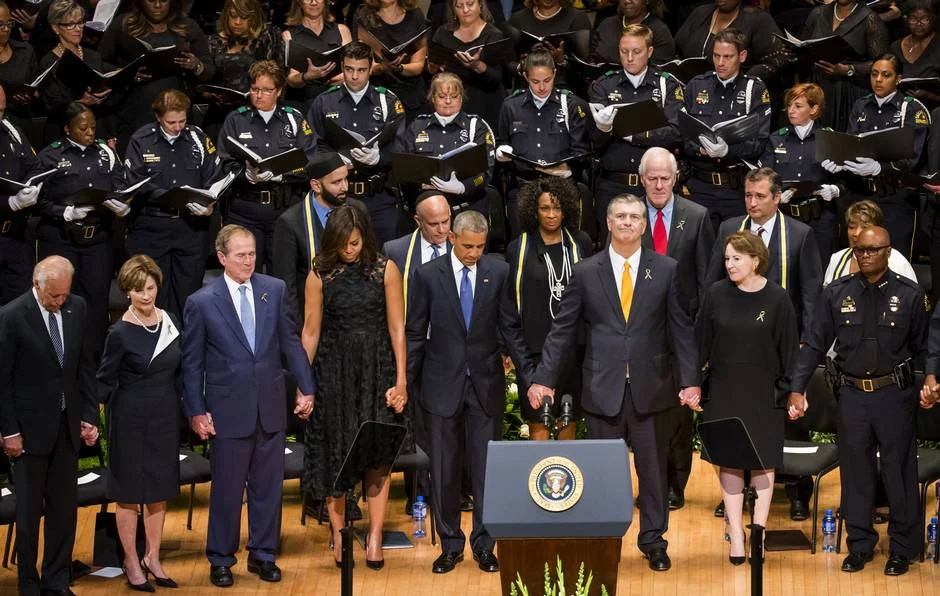
We live in a culture of overstatement in which the words "freedom," "hero," and "tragedy"--among other words--are overused to the point that they are almost meaningless, but I don't think it's an overstatement to say that the?five Dallas police officers murdered last Thursday are freedom's martyrs. Here's why. Martyr is a Greek word that means "witness." The early Christians used the word?martyr to refer to those believers?who refused to compromise their faith in the face of the hostile Roman Empire. In their refusal to apostatize, they were witnesses to their belief that Jesus was Lord, and not Caesar, and they were witnesses to the power of sacrifice. Rather then killing the church when they killed the Christians, the Romans found that the church actually grew when it was persecuted. In fact, Tertullian, one of the early church fathers, famously said that "the blood of the martyrs is the seed of the church."The Dallas police officers are martyrs--witnesses--because of the circumstance of their deaths, which, though I've had several days to think about it, still strikes me as extremely powerful. The police officers who were killed were killed because they were protecting the protesters who were there to criticize the police. When shots were fired, the officers ran toward danger, not away?from it. I think it's fair to assume that most of the police officers in downtown Dallas last Thursday disagreed with the claims and conclusions of the Black Lives Matter activists, and yet they were there to ensure those activists' right to peaceful protest. The murdered police officers are freedom's martyrs, because in their deaths they bear witness to the freedom so many of us take for granted, namely the freedoms specified in the First Amendment.Tertullian thought that the deaths of the early Christian martyrs caused the church to grow stronger. It remains to be seen if the deaths of the Dallas police officers will cause our society to do the same. We could choose to use their deaths to further our own partisan?purposes, in which case the murdered men will have become propaganda. Or, their deaths could wake us up and cause us to?dedicate ourselves to working towards a society worthy of their sacrifice and of the freedoms they died protecting.Which will it be?
Click?here‘to subscribe to regular updates from this blog.
A Brief Thought on Suffering

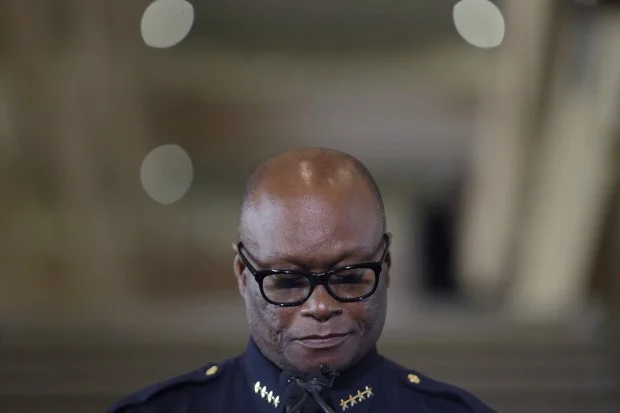
I woke up early Friday morning to the news that five Dallas police officers had been murdered, and I immediately started frantically texting the?cops who are part of my church to see if they were safe. When the first response came back--"I am here on the scene, but I am okay"--I was overwhelmed with gratitude. And then I felt guilty that I felt grateful, because the fact that my friends were safe necessarily meant that someone else's weren't. But that's the way it always is, isn't it? We are all so nearsighted when it comes to suffering.
General McChrystal and the Butterfly Effect
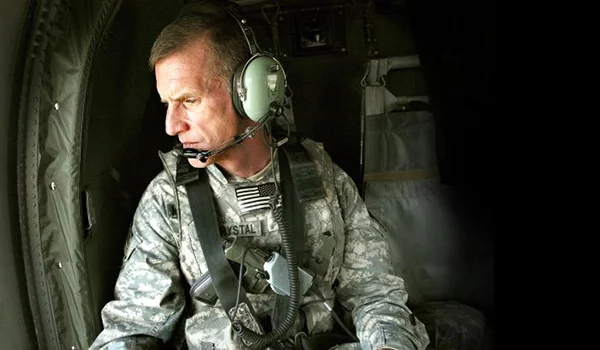
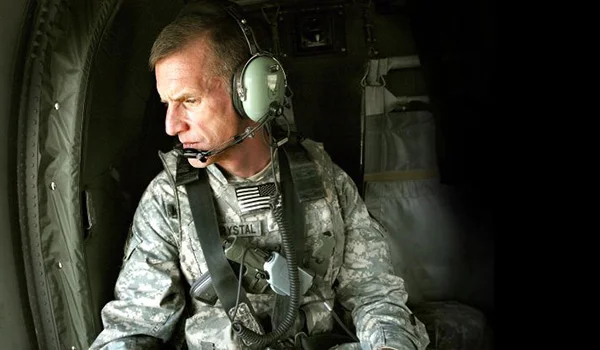
In fall 2003, General Stanley McChrystal?was appointed the commander of the Joint Special Operations Command, giving him authority over what were the best-trained, best-equipped, and most-lethal special operators in the history of the world. And yet, these elite soldiers (Navy Seals, Delta Force commandos, etc.) were unable to stop impoverished jihadists from using the most basic technology to create mass murder in Iraq. Why? McChrystal's answers have a lot to do with the realities of leadership in the 21st century.
Stan McChrystal
Like most Americans, I'd heard of General Stanley McChrystal from his time in the headlines during the wars in Iraq and Afghanistan. I'd seen a TED talk he'd given on leadership, but a few months ago I stumbled across a couple of interviews with General McChrystal on the Tim Ferris podcast that made me think: "This guy is impressive." (You can find the long interview here and the much shorter follow-up here. Recommended.) On the podcast, General McChrystal and his former aide-de-camp Chris Fussell mention a book they'd written called?Team of Teams: New Rules of Engagement for a Complex World. I read the book, which confirmed my impression: these are?impressive guys.
The Problem with Al-Queda
When General McChrystal became commander of the JSOC in 2003, he was frustrated by his force's apparent inability to defeat Al-Qaeda in Iraq (AQI), led by?Abu Musab al-Zarqawi. McChrystal may have had enormous resources at his fingertips, but his special operators always seemed one step behind AQI's terrorists, and the result was a bloodbath in Iraq, exemplified by the September 30, 2004 bombing of an opening ceremony at a brand new water treatment plant in Baghdad that killed 41 people, including?35 children.The U.S. military easily defeated Saddam Hussein's army during the invasion, but, in the occupation, a small number of impoverished terrorists were literally destroying the country. How?The answer, General McChrystal learned, had to do with complexity.
Complexity and the Butterfly Effect
In everyday usage, we tend to use the words?complicated and complex interchangeably, but in?Team of Teams General McChrystal points out that in chaos‘theory?complex refers to situations that are made up of innumerable possible causes and effects such that correctly forecasting or planning for an outcome is literally impossible. Weather, for example, is an example of a complex system.The famous butterfly effect refers to the idea that, in a complex system, a very small change in input can produce a great difference in output: the flap of a butterfly's wings in Africa might?(but not necessarily) result in a hurricane in Brazil. The weather man can forecast the next hour's weather with relative accuracy, but forecasting weather a week from now is just a guessing game, because weather is a complex system: there are just too many variables.The modern world is a complex world, which means that small inputs can make a great difference. The problem for McChrystal and the U.S. was that AQI was set up to thrive in a complexity, whereas JSOC, for all its power and wealth of resources, was not.
Team of Teams
On the small level, the individual SEAL and Delta Force and intelligence teams at McChrystal's disposal were excellent, but the organization of JSOC itself hindered cooperation and made adaptability impossible. The main strategic advantage of?AQI, on the other hand, was precisely in its ability to adapt. McChrystal's insight was that if JSOC was going to defeat AQI, it would have to become as adaptable as its enemy.The individual SEAL and Delta Force and intelligence teams were already capable of adaptability, which is why there were so effective; McChrystal's reform was to get them working together as a team of teams. He did this by constantly pushing authority?down the chain of command, even when that meant relatively junior officers were making decisions with huge national security implications. He required each of the various groups in his command to send one elite operator to work with the other groups, so that trust began to be built between teams. He conveyed a daily briefing that involved hundreds of participants (via video) from all over the world so that information could be shared as widely as possible. Over time, these and other reforms began to enable the JSOC to effectively adapt to AQI's tactics, and one of the stories McChrystal tells in the book is how these reforms enabled JSOC to track and kill Zarqawi in 2006.
Conclusion
Team of Teams is an interesting, thorough book (I've only referenced a very small part of its content here), but I'm not totally convinced by its argument. General McChrystal and his co-authors argue that in our complex world, a?great team or team of teams is a greater strategic advantage than a great leader. I agree with that, as far as it goes, and I think the insights in the book about how to create an organizational culture that is adaptable and resilient are helpful. But, I can't help thinking that part of the story of the book is also that it takes a great leader to create that kind of organizational culture. Maybe the kind of leader who could lead that kind of change would end up thriving in any situation, complex or not. The Admiral Nelsons of the world might just make any team successful. A team is important, but a team requires a leader. As Bill Hybels likes to say, "Everything rises and falls on leadership." As I said, the more I read General McChrystal's book, the more I thought,?"This guy is?impressive." Team of Teams: New Rules of Engagement for a Complex World,?by General Stanley McChrystal, Tantum Collins, David Silverman, and Chris Fussell???? worth reading
Click?here‘to subscribe to regular updates from this blog.

English Lesson: "Disinterested" vs. "Uninterested"

One of my?concerns here in Fox and Hedgehog land is language. Language matters, because language expresses and enables thought. The right words used in the right way can help us express?exactly what we want to express. One of our occasional features here on the Hedgeblog will be about the proper use of words; I want to help you avoid the mistake of using one word when you ought to use another. In our first installment, I'm talking about the words "uninterested" and "disinterested." What's the difference? Today, people often use the word "disinterested" when what they really mean is "uninterested." The two words should not be interchangeable: disinterest means something different than uninterest. Disinterest does not mean a?lack of interest or curiosity; rather, a disinterested party is one that is impartial, that has no stake or interest in the argument.So, e.g., I am uninterested in the outcome of?The Bachelorette: i.e., I don't care and I don't want to care.To cite another example: a judge in a courtroom should be disinterested but not uninterested.Make sense?
Hillary Clinton and James Comey
FBI Director James Comey was clearly not uninterested in Hillary Clinton's emails; a better question: was Director Comey disinterested?See why language matters?
P.S.
I'm not picking on the Democrats; I don't know anything about indictments and security clearances and the like--the Clinton email example is just one picked from today's headlines.
Click?here‘to subscribe to regular updates from this blog. Your English teacher will love you for it.

"If You Can Keep It"

As Benjamin Franklin left the deliberations at the end of the Constitutional Convention in 1787, a Mrs. Powell of Philadelphia stopped and asked the old man: "Well, doctor, what have we got? A republic or a monarchy?" To which Franklin replied, "A republic, madam--if you can keep it." This republic that Franklin and the other founders gave us isn't inevitable: it is a precious gift that must be tended and cultivated, like a garden. On this Fourth of July, I'm thinking about the gift I've received to be a citizen of this republic and the stewardship?of the people who passed that gift on to me, and I'm thinking about my responsibility in turn to pass it on to the children?who will come after me.A sacred responsibility.
Click?here‘to subscribe to regular updates from this blog.
The Somme Began 100 Years Ago Today

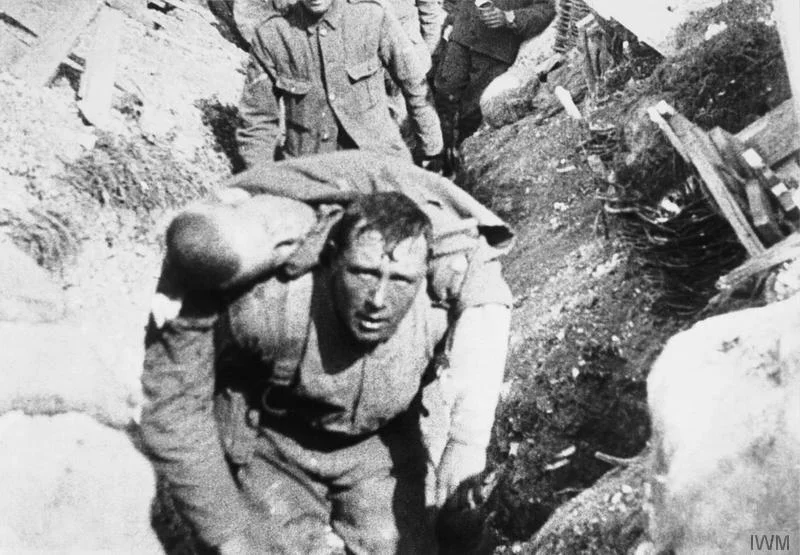
The Battle of the Somme began exactly 100 years ago today, July 1, 1916. By day's end, the British Army alone would suffer over 57,000 casualties, and 20,000 of His Majesty's young soldiers?lay dead in the filthy mud. That obscenity is worth reflecting on today.
Progress is a Lie
We modern people are so arrogant. We believe that because we can split the atom and transplant the kidney that we are more advanced than the people who came before us. We believe in Progress. In fact, we worship it.But Progress is a lie. The Somme is the result of Progress.At the beginning of the Twentieth Century, all the right sort of people--cultured and cosmopolitan--knew that man was progressing toward a glorious future, and that scientific knowledge would enable us to obtain greater and greater mastery over the physical world. However, in their Promethean arrogance the smart set overlooked the stubborn fact that‘scientific knowledge might give us mastery over the physical world, but it does nothing to give us mastery over ourselves; splitting the atom and transplanting the kidney doesn't make us wise.
Modernity Began at The Somme
The late literary critic (and decorated WWII combat veteran) Paul Fussell believed that modernity began on July 1, 1916. That first day of slaughter at the Somme was the beginning of a century of slaughter. Mass graves, pointless killing: that's Progress, and that's who we are.
The Somme, 100 Years Later
100 years later, we have the iPhone and the Global Positioning System and the defibrillator. Today, all‘the right sort of people know that humankind is progressing toward a glorious future, and that death and disease will find their end in Silicon Valley. The inconvenient history of the Somme, if we choose to acknowledge it at all, is just one more example of the pitiful ignorance of past generations. Unlike them, however, we have Progress, and Progress?will make us perfect. Progress is our God.So much for progress.
Click?here‘to subscribe to regular updates from this blog.

Grammar Lesson: i.e. & e.g

"Be thankful you don't have to read resum‘s everyday: it's depressing." So said an HR professional to me today. What she meant was that very few of the resum‘s she reads come without grammatical and spelling errors. Our lack of grammatical precision bothers me because I don't believe grammar is just a series of arbitrary rules; I believe grammar affects thought. So here, in the first of what may very well be a long-running (and doubtless highly popular) segment in Fox and Hedgehog land, is a brief lesson on?grammar and the proper use of i.e. & e.g.
Why Grammar Matters
One of my literary heroes is the stubborn English socialist writer George Orwell. I admire Orwell because of his insistence that language matters, because, as he argues in his essay "Politics and the English Language," language either obscures or provides clarity. Insisting on precision?in language and grammar is not just pedantry, and Orwell writes that he objects to‘the idea that "any struggle against the abuse of language is a sentimental archaism, like preferring candles to electric light or hansom cabs to aeroplanes." Rather, language shapes our thoughts so that
an effect can become a cause, reinforcing the original cause and producing the same effect in an intensified form, and so on indefinitely. A man may take to drink because he feels himself to be a failure, and then fail all the more completely because he drinks. It is rather the same thing that is happening to the English language. It becomes ugly and inaccurate because our thoughts are foolish, but the slovenliness of our language makes it easier for us to have foolish thoughts. The point is that the process is reversible. Modern English, especially written English, is full of bad habits which spread by imitation and which can be avoided if one is willing to take the necessary trouble. If one gets rid of these habits one can think more clearly.... [my emphasis]from "Politics and the English Language," by George Orwell
Grammar matters because grammar is about clarity. It is important to say exactly what you want to say, and not to say what you don't want to say. Grammar helps us‘say what we want to say.I.e., it matters that we get right the difference between i.e. and e.g.
The Slave Who Invented Abbreviation
Several of the grammatical abbreviations we use today were invented over 2,000 years ago by a brilliant Roman slave named Marcus Tullius Tiro. Tiro was born a slave in the household of the Roman statesman Marcus Tullis Cicero, and was Cicero's close confidante and personal secretary until Cicero's assassination in 43 B.C. Cicero was a great orator, and Tiro would take notes of Cicero's speeches in the Roman Forum so they could be published around the Roman Republic. (In recognition of Tiro's devotion and service, Cicero gave him his freedom in 53 B.C.) To make note-taking easier, Tiro invented a shorthand method that was still used by European monks until the 18th century, and part of that method included the abbreviations that we still use today, e.g., i.e. and e.g., as well as an early version of the ampersand, &.
i.e.
i.e. is Latin for?id?est,?"that is." When you see i.e. in a sentence, say "that is."
e.g.
e.g. is Latin for?exempli gratia, "for the sake of an example." When you see e.g. in a sentence, say "for example."
i.e. vs. e.g
These 2 Latin abbreviations do not mean the same thing. E.g.:
There are lots of ridiculous shows on television, e.g., The Bachelor.
means something different than
Last night I saw a commercial for the most ridiculous show on television, i.e., The Bachelor.
In the first example, The Bachelor is just?one of the many ridiculous shows on television, whereas in the second example, I want to say that The Bachelor is?the most ridiculous show on television.See the difference?
Click?here‘to subscribe to regular updates from this blog: your English teacher will love you for it.

The Long Game

Almost everything that really matters takes time. Marriage, friendship, family, character, wealth, legacy--these things take decades. Play the long game.

Social Media: Soda, Wine, Oxycodone, or Heroin?

The following is a guest post (my first ever) from my friend and fellow Mungarian Mike Pratt. Mike and I have been having a friendly argument about social media: is it mainly helpful, harmful, or neutral? I'm increasingly of the opinion that it does more harm than good, but Mike doesn't agree. Here's what Mike thinks. Andrew asked me to write a guest post on this blog in response to my taking issue with his argument. It‘s not that I think his points in his first post and subsequent follow-up post are entirely wrong, but I’ll argue they have omissions and thus fail to convince. I will counter his argument and offer an alternative framework for viewing this thing called social media.Before I start I?d like to make one side point: I also think Andrew's‘statement:
?What has your attention is what has your worship. What you think about in your free moments, the topics and places to which your thoughts tend to go, those are your gods.
is gross generalization of the meaning. As Keller puts it
?What is an idol? It is anything more important to you than God, anything that absorbs your heart and imagination more than God, anything you seek to give you what only God can give??
To simply have your attention is not necessarily bad or false worship. When it has all of your attention, in place of other, more important things (first and foremost, God) then it becomes an idol of worship. Thoughts can go to many things and not render those things worship. Thank God or my daydreaming is convicted!
Now to the Main Topic
This analogy is by no means perfect but I think it‘s a decent framework to look at the issue. As you read each blurb on these four substances, ponder in your mind which one you think is most analogous to social media.
Soda
With a few exceptions, soda is viewed as a relatively benign substance to be enjoyed. In small quantities, it‘s clearly harmless and even for regular users, there have been few, if any, documented cases of extreme adverse health consequences. It is accepted that soda is not even remotely hazardous like any of the other 3 substances in this analogy.
Wine
Given the alcohol contained in wine, it‘s a step up from soda in that it can be abused and in extreme use cases, is addictive and can have serious health consequences. The Bible celebrates wine in measured doses (wedding at Cana) and also condemns its abuse (drunkenness.) Many people drink wine. Many choose not to.
Oxycodone
This seriously addictive and controlled substance is a ruiner of lives when abused. It is also extremely beneficial in tightly controlled use cases (post surgical pain relief) It is highly controlled because it is so addictive as well as misused (leading to abuse).
Heroin
There are no beneficial uses. Highly addictive. Bad bad bad. So what is Facebook, then?One man‘s opinion:It‘s not soda. I think, to Andrew‘s point, there are many people who are hooked on the stuff. Hooked? in this case being defined as they use it so much that it takes away from the lives they normally led in a detrimental way or at the expense of basic things?It‘s not Oxy. That implies a very limited, positive use case like Oxy which is just not true. A significant number of social media users engage on their platform(s) of choice in positive and beneficial ways. The government does not (nor should) control use of the platforms to prevent a possible mass wave of harmful addiction because with free use, the facts are that only a minor set of users qualify as harmfully addictive.It‘s not Heroin. That presumes there are NO beneficial uses of social media and while many do think that, those folks probably think all soda is a mind-control beverage that Pepsi uses in cahoots with the government.It‘s wine. There are plenty of beneficial, everyday uses of Facebook. Can it get out of hand? Sure. Can you drink too much?? Sure. Should some people give up drinking? Definitely. The key is to look at what you drink? and why. Does it rule your life? Are you grumpy without a drink? or do you love a glass? with a good meal or when out with friends? Andrew posted a picture of everyone in line at an airport on their phones (presuming that it was a wrong? state of the world) Replace everyone in that picture with a paperback (Google search images and you will find plenty pre-Facebook!) The devices were simply being used as boredom elimination devices. I don‘t think that picture was indicative of the eroded state of the world.
A Word on Facebook's (or Coke's) Intentions
Coke wants you to buy Coke Zero. Coke Zero is not medically addictive. You may think Coke wants to addict? you but it doesn‘t matter. They can‘t. They will do everything they can to get you to buy it. They should. That‘s their business. Blaming Facebook for not caring about the consequences? is like blaming <insert your favorite brewery or winery> for not caring about the consequences of having a glass. They inform you to drink responsibly and it can be argued that Facebook should not need to place a warning label that you might spend too much time in their web app.So, I’ll leave you with sage advice: Don‘t drink and post!
The above was a guest post by Mike Pratt. (Click?here‘to subscribe to regular updates from this blog.) Mike is:
- A Mungarian! (Member of Munger Place Church.)
- The CEO of technology startup Panamplify
- Founder & President of professional org Digital Dallas
- A former soldier, wall street trader, marketing exec and non-believer
- Check out Mike on LinkedIn: https://www.linkedin.com/in/mikepratt
- Email Mike:?mike@mikeratt.tv