
"The Kind of Woman You Should Marry"
It's one of those things my dad said that I'll never forget: "That, boys, is the kind of woman you should marry."
My Dad's Life Lesson About Marriage
My dad isn't the kind of guy who sits his sons down and says, "I'm going to share with you a life lesson, so be sure to pay attention." But, from time to time over the years, he would say something about life in an offhand way,and because it didn't happen very often and never seemed forced or planned, I'd remember what he said. This is what he had to say about marriage.
The Run on the Savings and Loan
We were watching?It's a Wonderful Life;?I was probably in my early twenties and home for Christmas. In the movie, George Bailey wants to travel and see the world, and he and his new bride Mary have scraped and saved to make it possible. It's their wedding day, and George and Mary are about to leave Bedford Falls for their honeymoon when George gets word that there has been a run on the bank his family?owns, Bailey Bros.Building and Loan. (It's during the Great Depression.) Banks are?closing right and left, but if the Savings and Loan closes it will be a social disaster, because Bailey Bros. Building?and Loan is the only bank in town not run by greedy Mr. Potter. Mr. Potter wants to keep the poor and the immigrants in debt; Bailey Building?and Loan offers the poor and the immigrant a way out of poverty and into home ownership. If the old Building?and Loan goes under, Bedford Falls will be a worse place to live
Here's the Scene
Watch the whole 6:44 clip--it's worth it.[embed]https://www.youtube.com/watch?v=lbwjS9iJ2Sw[/embed]
"That's the Kind of Woman You Should Marry"
Mary Bailey spontaneously offers their honeymoon funds for the purposes of keeping the Savings and Loan open. She displays a beautiful, simple, great-hearted generosity.After that scene, my dad said to us, in an off-hand way, "Boys, that's the kind of woman you should marry."And I did.

The Advent Conspiracy

After such a week, after such a year of violence, rape, murder, hate, falsehood, and war, J.D. Walt says what I want to say:
Come, Holy Spirit, and inaugurate Advent in our midst. Come and open up the book of a new year of our Lord. Lift our hearts to long for your coming and deepen our longing to imagine your kingdom.We confess? Advent, the season of holy anticipation, has become for us a sign of anxiety. Like Martha, we busy ourselves with so many things, preparing for a celebration of our own design. We confess? our attention has become distraction. Our hearts, minds, and souls are divided as we literally surf the channels of our?consumeristic culture. Yet, O LORD, you are our Father; we are the clay, and you are our potter; we are all the work of your hand? (Isa. 64: 8). Begin anew this Advent to shape us. Make us like Mary to sit at the feet of our Lord Jesus and discover the only necessary thing: your Presence. Restore us, O God; let your face shine, that we may be saved. Shape these days of Advent into a season of undivided attention, of holy anticipation.As we sing of peace on Earth and goodwill to all people, open our ears to hear the mournful songs of a war-torn world: the unquenchable cries of ordinary families like our own whose losses are beyond our ability to comprehend. As we prepare to wrap the countless gifts our children will open on Christmas morning, open our hearts to the countless children for whom Christmas morning will be yet another day to survive. Lead us to respond to you in remembering those who will otherwise receive nothing, who are orphaned, whose parents are dead, distant, or imprisoned. Open our eyes to see those neighbors nearest to us who are lonely, afraid, sick, and suffering. We confess? our lifestyles have become enclaves of escape from the pain and suffering that surrounds us. Yet, O LORD, you are our Father; we are the clay, and you are our potter; we are all the work of your hand? (Isa . 64: 8). Let this year be different, Lord. Shape our attention in these days of Advent into a lifestyle of love for neighbor and the needy.?Give ear, O Shepherd of Israel, you who lead [your people] like a flock! You who are enthroned upon the cherubim, shine forth? (Ps. 80: 1). O that you would tear open the heavens and come down, so that the mountains would quake at your presence? (Isa.64: 1). As we remember and celebrate the birth of the baby in Bethlehem, let us not forget that the King is returning. We confess? we have made ourselves at home in a world that is not our home. We know a time is coming when the sun will be darkened and the moon will not give us light, when the stars will be falling from heaven, and the powers in the heavens will be shaken. We know the Son of Man will come on the clouds with great power and glory and he will send out his angels to gather his elect from the ends of the earth to the ends of heaven (see Mark 13: 24? 27). Stir in our hearts a holy anticipation for the world to come, and an undying urgency for the world that is passing away. By your Spirit, make us watchful and wakeful. For, O L ORD, you are our Father; we are the clay, and you are our potter; we are all the work of your hand? (Isa. 64: 8).Come, Holy Spirit, and inaugurate Advent in our midst. Come and open up the book of a new year of our Lord. Hear us as we pray:Our Father in heaven,hallowed be your name,your kingdom come,your will be done, on earth as it is in heaven.Give us today our daily bread.And forgive us our debts,as we also have forgiven our debtors.And lead us not into temptation, but deliver us from the evil one.(Matthew 6:9-13)"A prayer from from?Not Yet Christmas: It's Time for Advent, by J.D. Walt
Come, Lord Jesus
Here's what I want to say about Ferguson: Come, Lord Jesus.Here's what I want to say about Eric Garner: Come, Lord Jesus.Here's what I want to say about Syria: Come, Lord Jesus.Here's what I want to say about Ebola orphans: Come, Lord Jesus.Here's what I want to say about rape, about divorce, about broken families, about our epidemic of fatherlessness, about all the terrible, ugly things that are a part of our daily world: Come, Lord Jesus.
This Is Why Advent Matters
It's more important than buying the presents, attending the Christmas parties, sending out the Christmas cards, or decorating the Christmas tree. It's‘the only way to avoid getting caught up in the soul-destroying getting and spending of the season. And, if you have kids at home, it's a way you can be deliberately counter-cultural and push back against the messages of materialism to which our kids are incessantly subjected.What's more important than all those things is to prepare spiritually for Christmas by observing Advent. Advent is the time of the church year that leads up to Christmas. It's the way we remind ourselves of why we celebrate and what we truly need.And, in the midst of the heavy headlines these past few weeks, Advent gives voice to the deepest need we have: for a Savior. Liberals and conservatives; black and white; rich and poor--we may not agree on many things, but we can all agree on this: our world is a broken, hurting world. Come, Lord Jesus.
One Simple Way to Let Advent Shape Your Soul
At my church, we've selected a series of Advent readings to help you prepare for Christmas; one chapter of scripture a day, leading up to Christmas Eve, that tells the grand story of salvation, Genesis to Jesus. You can find the list of readings here and a family plan here.Read a chapter a day. If you have kids, you might want to read the chapter before opening that day's box on your Advent calendar.
It's Not Too Late to Catch Up
The reading plan started Monday, December 1, but you can catch up easily this weekend.
I'll Be Blogging About Each Day's Reading
I'll offer a short blog post each day to put the reading in context. Because I've already missed a few days, I've added them below.
Genesis 1: Creation's Song
How things begin matters. We see God's intention for creation from the beginning: an integrated whole, in which all the parts are good and all the parts fit together to give glory to God. The Hebrew word for this is shalom: peace, wholeness, harmony.One other quick thought on Genesis 1. The author talks of days and nights from the very beginning, but the sun and the moon aren't created until the fourth day. Ancient peoples were more connected to sun and moon than we are, now that we have electricity and night doesn't mean dark. Ancient peoples certainly knew that the sun and the moon are required for their to be "days" and "nights." Here's the point: Genesis 1 is a beautiful theological treatise on creation, and for me, I don't see it contradicting physics and cosmology; I see physics and cosmology providing the fine details and Genesis 1 the broad strokes.The connection with Advent: God's purpose for creation is?shalom. That's what we're waiting for.
Genesis 3: The Problem?Starts Here
Why does sin enter God's good creation?I don't know, and neither does anyone else. What we do know is that this creation that God created good is marred, every part of it. There are no problem-free situations. Sin has ruined everything. Because of sin there is racism, rape, war, divorce, cancer, etc.Note that sin means that deceit and blame are now a part of human relationships.The connection with Advent:?This is why we need a savior. This explains why the world is the way it is.
Genesis 12: The Conspiracy Begins
It's the strangest plan in the world: the Lord's plan to redeem and heal all of creation begins with one lonely Mesopotamian nomad named Abraham. Through Abraham, the Lord will do something amazing: "in you all the families of the earth shall be blessed" (Genesis 12:3b).One of the things I love about the Advent Conspiracy is how it begins so small: one man; one family; one manger.The?connection with Advent: This is where the conspiracy begins.
Genesis 24: The Next Step
The plan won't work if the family line dies out. Abraham is miraculously blessed with a son named Isaac, and now Isaac meets his wife, Rebekah.The connection?with Advent: The conspiracy continues.
Genesis 25: The Strangeness of the Conspiracy
Rebekah is pregnant with twins, and she receives a puzzling word from the Lord:"Two nations are in your womb,and two peoples born of you shall be divided;the one shall be stronger than the other,the elder shall serve the younger."? (Genesis 25:23)This strange conspiracy is overturning the way things work. Everyone knows that older brothers are more important than younger: this is how society works. And yet in this conspiracy, the elder shall serve the younger.The connection with Advent:?don't expect things to work the way you think they should. The Lord's ways are not our ways. Thank God.
Genesis 37: The Conspiracy Begins to Unravel
That younger brother mentioned above is Jacob. Jacob fathers a whole bunch of kids (12 sons; 1 daughter) with four different women. You don't have to know much about human nature to know that this is going to be messy. The 2nd youngest son, and Jacob's favorite, is named Joseph. The family drama is so modern:
This is the account?of Jacob‘s family line.
Joseph,?a young man of seventeen,?was tending the flocks?with his brothers, the sons of Bilhah?and the sons of Zilpah,?his father‘s wives, and he brought their father a bad reportabout them.
Now Israel?loved Joseph more than any of his other sons,?because he had been born to him in his old age;?and he made an ornate?robe?for him.When his brothers saw that their father loved him more than any of them, they hated him?and could not speak a kind word to him."Genesis 37:2-4
Jacob's sons fake the death of Joseph and sell the boy into slavery. (You really should read the Bible--very interesting.)The?connection with Advent: Just because we can't see how the conspiracy is going to work, doesn't mean the Lord isn't working....

Come Work With Me

If you are looking for your dream job, look no further...Because your dream job doesn't exist. But, my church is hiring in our kids ministry: know anyone who'd be a good fit?*
Director of D6 Family Ministry
Munger Place Church is growing, and we are expanding our staff!? This full-time position is responsible for working with the Director of Discipleship and volunteer team to define, implement and oversee Christian education for children from birth through fifth grade, including Sunday morning programs, Vacation Bible School and much more. This position will also collaborate with other Munger staff on general Discipleship and churchwide programs and matters.D6 attendance on Sunday mornings currently averages about 175 children, with approximately 67 adults in D6 volunteer service.The Director of D6 Family Ministry is expected to maintain high Christian values and professional integrity in order to provide an example for the children and families of our community. His/her job is also to encourage all children and families of the community to strive for the same standards.Usual working hours?are Monday - Thursday 9 am - 5 pm, Sunday 8 am - 1 pm, an evening small group, and meetings/events at various times.Location:? Dallas, TXEssential Responsibilities include:Pastoral:? Influence and lead children and their families to Jesus Christ, being available to them in crisis situations and for concerns/questions, making pastoral care visits.Leadership:? Supervising, evaluating, recruiting, coordinating, training and supporting the D6 Ministry volunteer teams.? Selecting, supervising and directing paid, part-time nursery/childcare workers and art hour coordinator.? Attending/helping lead adult leadership retreats and meetings.? Participating in the research, design, and implementation of a ministry to the parents of children 0-18.Administration? Evaluating, planning, coordinating and overseeing all planning for regular ministries to children and their families, which includes D6 Sunday School, 4th and 5th grade ministry, childcare, Confirmation, family fight nights, parent classes/meetings, and any programming added to Children and Family Ministry.? Updating D6 webpages.? Helping plan and lead special children and/or family events (i.e. Back to School Sunday, 3rd Grade Bible Sunday, Christmas Eve Family Service, etc).? Planning and executing summer Vacation Bible School.Stewardship? Consistently evaluating the effectiveness of D6 programs and events and reacting accordingly.? Managing the D6 budget.? Collaborating with D6 and family ministries at HPUMC.Other? Attending church staff meetings, professional development/continuing education events and other meetings/events as necessary.WE REQUIRE a Christian (preferably United Methodist) committed to living a life that reflects the Gospel who is comfortable working in a United Methodist church and has the following qualifications:
- Bachelor's degree in a related field strongly preferred
- Seminary or other formal religious education preferred
- At least 3 years experience in church ministry as staff or lay leader
- Supervisory experience required
- Ability to build, lead and empower volunteer teams
- Ability to adapt and evaluate curriculum
- Ability to implement a ministry vision
- Proficient computer skills, using applications such as MS Word, Excel, PowerPoint, database, email, Internet and social media. Should also be comfortable updating website pages.
- Excellent organization, communication (verbal and written) and listening skills, with a high degree of initiative and accountability
- Exceptional interpersonal and relational skills, with sensitivity to church members and visitors
- Familiarity with United Methodist doctrine; must be comfortable teaching it and representing the church
- Understanding and enjoyment of children and families and guiding their spiritual development
- Familiarity and comfort with special needs children and with diverse socioeconomic populations
- Physical demands include sitting, standing, walking, seeing, hearing, lifting approx. 10 lbs.
We provide?competitive pay and full benefit package, generous holiday schedule, and a fun, collaborative and supportive work environment!To apply, please email the following to?jobs@hpumc.org, specifying D6 Director/Munger in subject line:
- Resume & cover letter/email
- Your pay requirement
- Your religious/church affiliation
No calls, please. * For those of you Mungarians who are wondering, Amanda Grubbs is NOT going anywhere. Instead, she'll become Director of Discipleship at Munger and will be responsible for D6, youth, and adult discipleship, i.e., she'll be overseeing the aspects of ministry at Munger that do not involve worship. Amanda is a talented, faithful leader, and I think she'll be a rockstar in this new role.?If you see her around, be sure to tell her congratulations on her promotion (which is what this essentially is). I'm personally grateful to have her as a colleague.
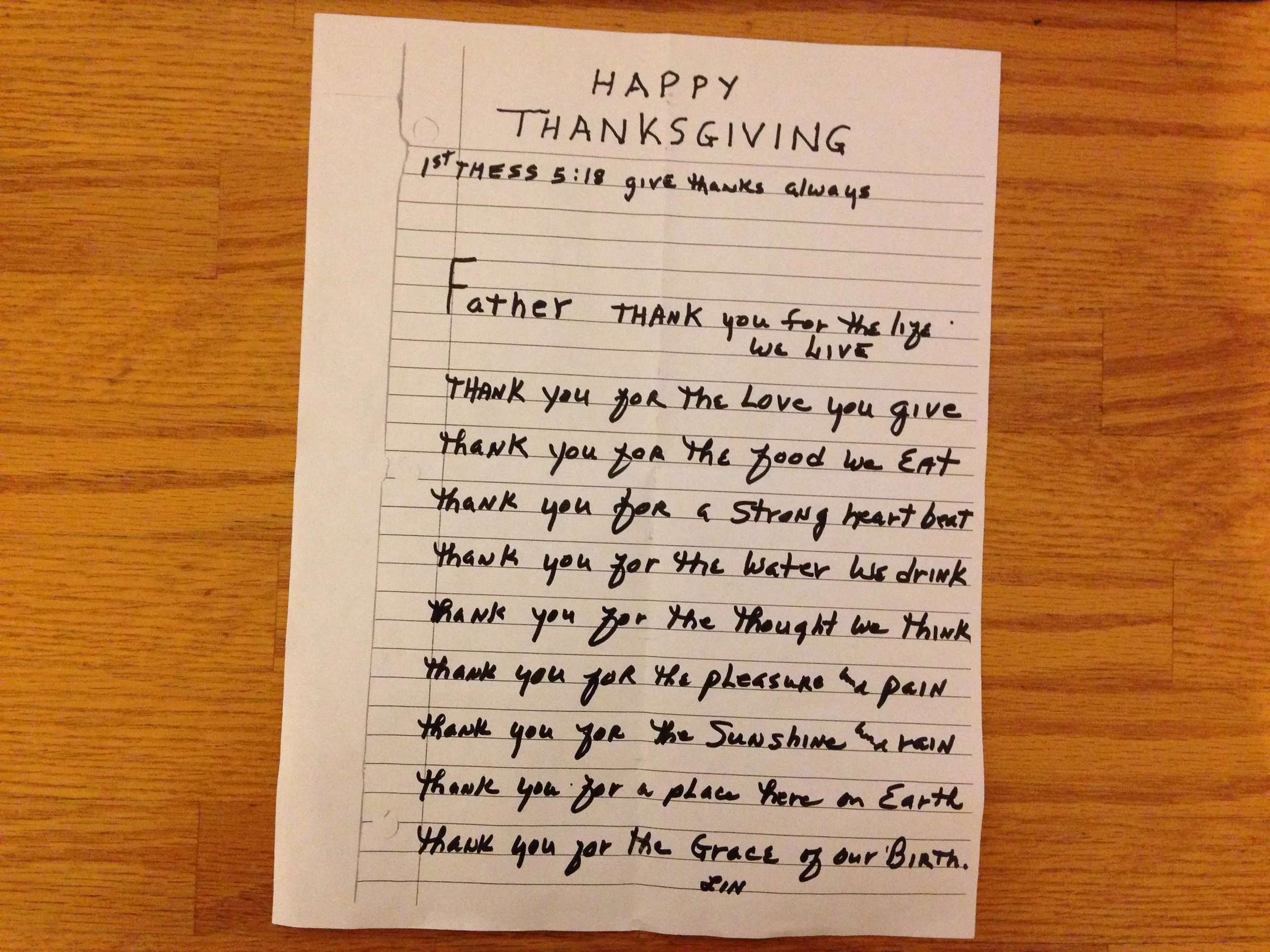
You Need to Know the Background to This Prayer

My friend Lin Thomas is blind. He was diagnosed a few years ago with irreversible glaucoma; the doctor who evaluated him told him, "You'll never work again."Lin can't work, but he's busy. He rides up and down on the DART train in Dallas making connections with troubled young men who remind him of himself when he was younger. His disability has given him the time to do that sort of thing.Lin lives on a disability check. Even in straitened financial circumstances, he tithes--gives 10%--to our church.Last Sunday, Lin gave me a prayer he'd written, and I asked him to read it in church today. Here's his prayer (text below the video):https://www.youtube.com/watch?v=CVzl2uDub-w&feature=youtu.be
Lin Thomas's Thanksgiving Prayer
(1 Thessalonians 5:18: Give Thanks Always)Father, thank you for the life that we live;Thank you for the love that you give;Thank you for the food that we eat;Thank you for a strong heartbeat;Thank you for the water we drink;Thank you for the thought we think;Thank you for the pleasure and pain;Thank you for the sunshine and rain;Thank you for a place here on Earth;Thank you for the grace of our birth.In Jesus' name, Amen.
One Word That Will Change Your Life
What if there were one word that had the power to change every aspect?of your life? What if one word could affect your health, your finances, your marriage, your career? What if applying one word to your everyday life could really have that much of an effect?
The Power of Habit (which isn't our "one word")
Charles Duhigg wrote about habits in his 2012 book?The Power of Habit, which I briefly reviewed here. As Mr. Duhigg explains, your brain develops habits so you don't have to spend energy thinking through decisions--you just act without thinking. An important part of that process is the "habit loop," which works like this:First, there is the?cue‘that triggers the habit;Second, there is the routine?itself;Third, there is the?reward from the routine.
This Is Why You Are Addicted to Your Phone
In practice, the habit loop might work like this:1. Your phone buzzes. That's the?cue.2. You take your phone out and look at it. That's the?routine.3. You get a dopamine hit from the new email. That's the?reward. Note that sometimes the email or notification you get isn't meaningful to you. But, because?sometimes the notification might mean something, your brain still perceives it as a potential reward. The power of the habit loop is evident in the way many of us will interrupt virtually anything else going on in our lives to look at our phones when they buzz. And it's all because of the simple habit loop of?cue, routine, and reward.
Change Your Habits, Change Your Life
Knowing this about habits, we are able to manipulate them to get the results we want. In some ways, for example, Alcoholics Anonymous is all about replacing destructive habits with healthy ones. (This is why coffee is an important part of so many AA meetings. Coffee becomes part of a replacement habit loop.)Here's the truth: if you are intentional about your habits, you can change your life.
The Power of a?Keystone Habit
 The really interesting part of?The Power of Habit?is the discussion about so-called "Keystone Habits." A keystone habit is a simple habit that has effects that cascade into other aspects of an individual's or a group's life.So, a keystone habits might be:
- Exercising every morning;
- Making your bed every morning
- Having all?players on the team put on their socks in a certain way;
- Putting safety concerns on the top of your corporate agenda.
To think of it another way, a keystone habit is the first domino that falls and knocks down all the others with it.So, a keystone habit in healthy families is having dinner together at home every evening. That simple practice affects the relationship between the mom and the dad and the kids' behavior in school and even their reading level. It's one domino that falls, knocking over a bunch of others.
A One Word Keystone Habit Guaranteed to Change Your Life
Very early in the morning, while it was still dark, Jesus got up, left the house and went off to a solitary place, where he prayed." (Mark 1:35). [My emphasis.]
![[wikipedia.com]](http://static1.squarespace.com/static/5d70f59aefca59000162e4e6/5d7fcef39f682762992c8aca/5d7fcefd9f682762992c8c01/1568657149862/Dawn_Xepon_Laos.jpg?format=original) "Early"?is a word that can change your life.Early?is about intentionally spending?the first 15 minutes of your day--before doing anything else--in silent prayer and scripture reading.Early?is shorthand for a keystone habit that will affect every other part of your life. Guaranteed.
"Early"?is a word that can change your life.Early?is about intentionally spending?the first 15 minutes of your day--before doing anything else--in silent prayer and scripture reading.Early?is shorthand for a keystone habit that will affect every other part of your life. Guaranteed.
Don't Start Your Day Being Reactive
Most of us start our day in this way:1. The alarm goes off. (The?cue.)2. We pick up our phone and check our email, or our Facebook or Twitter accounts, or turn on our preferred news channel, or check on an overnight sports score. (The routine.)3. We get a hit of dopamine as we feel more connected and assure ourselves we haven't missed out on anything. (The?reward.)What's so problematic about this habit is that?it means‘that we are spending the first minutes of our day in a reactive rather than an active pose.![[http://larrycuban.wordpress.com]](http://static1.squarespace.com/static/5d70f59aefca59000162e4e6/5d7fcef39f682762992c8aca/5d7fcefe9f682762992c8c05/1568657150073/andertoons-check-email.jpg?format=original)
No Wonder We Are Such Anxious People
Do you really want to spend the first minutes you have every day seeing what someone else had for dinner or hearing another depressing headline about the world or worrying about your boss's latest request? Rather than being in control of your day, starting your day by checking headlines or email or social media accounts means you are immediately ceding control to someone or something else.
The Power of the First 15
Now, imagine the alternative.1. The alarm goes off.2. You get up and settle into your favorite chair or sit at the kitchen table or go on your front porch. You deliberately cultivate a sense of gratitude at another day of life. You think over the coming day's appointments and pray for each of them. You read a psalm or a portion of a scripture reading plan. You pray for your family, your colleagues, your city.3. You shut your Bible, close your journal, take a deep breath, and start your day.Can you imagine what could happen if you intentionally started every day like this?Can you imagine how much more control and how much less anxiety you'd have throughout the day?
Don't Worry If You're Not a Morning Person
Everyone has to get up sometime. Even if you aren't a morning person, you can still wake up 15 minutes earlier than you would normally. "Early" means to be deliberate about your first 15 minutes. It doesn't really matter when that 15 is. If you work the night shift, your first 15 could be 4:00 PM. What matters is that you spend your first 15 minutes in silence and scripture.
Don't Worry If You're Not a Religious Person
Even if you don't believe in prayer or scripture, you can still do this. Spend the first 15 minutes of your day thinking of all you have to be grateful for.
5 Steps to Life Change
- Create a morning routine. Think deliberately through your cue, your routine, and your reward. Maybe you need to set the coffee machine to be a part of your First 15. For me, marking a big fat "X" on a paper calendar is surprisingly satisfying.
- Create an evening routine. You need to prepare the night before for how you'll spend your First 15 every day. Lay out your Bible; set out your cereal bowl. Whatever it is, your morning routine begins with an evening routine.
- Plan your time. Don't just get up and see what you want to do. Rather, make a plan to follow a certain reading plan or to pray over a certain list of names or read an online devotional or to deliberately list all the gifts?for which you are grateful that day, etc.
- Commit for 21 days. Anyone can commit to the First 15 one day, but that's not enough for the habit loop to affect your behavior. Commit for three week?no matter what and see what happens.
- Evaluate. What's working? What's not working? If you are struggling to make the First 15 a habit, then you should reexamine your habit loop. Is the cue not clear enough? Is the routine not smooth enough? Do you need a better reward?
Pushups Over Time
Following a habit once doesn't make any difference; following a habit for weeks and months and years will change your life. Doing 20 pushups today is irrelevant; doing 10 pushups a day for 100 days will radically alter your health.Being deliberate with your First 15 once might not make a big difference, but even 3 weeks of practicing the "early" habit will make you into a different person.
What do you have to lose?
P.S. Folks in my church are currently following a scripture reading plan called "Eat This Book." Today is the first day of a new book--we're beginning Luke's Gospel today. Why not make a chapter of Luke's Gospel part of your First 15 for the next 3 weeks?
What Trade-Off Do You Need to Make This Month?
As I've blogged about before, I use a paper calendar and a Sharpie marker to keep myself getting up early every morning and getting a workout in. But since the end of August, I now use two calendars(!): one's still my workout calendar, while the other is a scripture-reading calendar that's part of the "Eat This Book" campaign in my church. Here's my scripture calendar for September: Pretty good, right? (It doesn't hurt that I'm trying to blog about the Eat This Book reading every day. I did end up missing a few days last week; maybe I need a blogging calendar, too....)
September Is the Cruelest Month
Unfortunately, I've not been as consistent in working out. In fact, September was my worst month so far this year. Here's my workout calendar for September: What happened? You could say that I became a lazy slob (and you wouldn't be far wrong), but more specifically, here's the truth: I didn't make the trade-offs necessary to get a workout in every morning.
There Are Always Trade-offs
I read a book this summer that reminded me of a principle that I already knew but often choose to ignore: everything in life comes with a cost; everything requires a trade-off. If you say "Yes" here, it means saying "No" there. This principle obviously applies to time management, but it also applies to much bigger life choices. And it's a principle that the Israelites learned at the foot of Mount Sinai and that we can read about in Exodus 33.
What's the Problem With A Little Jewelry?
While Moses is on Mount Sinai receiving the Ten Commandments, the Israelites are having an idolatrous revel?[Exodus 32]. They even make a golden calf and begin to worship it. On returning, Moses is furious, has the golden calf melted down and ground into dust, and then collects all the jewelry that the Israelites possess and forbids jewelry among the Israelites from that point forward [Exodus 33:4-6]. Why? What's the problem with Israelite jewelry?
Every "Yes" Requires a "No"
The Lord knew that if the Israelites kept their pagan gold and other jewelry, they would be tempted over and over again to idolatry, because the original golden calf was made out of the jewelry and ornaments the Israelites were wearing [cf. Exodus 32:1-3]. If the Israelites were going to turn from idolatry, they needed to make a clean break, and apparently even their jewelry might have been an occasion for sin and idolatry.
No Exceptions
There are?always trade-offs, without exception.
- Saying yes to your spouse means saying no to everyone else. Marriage requires exclusivity and priority, or else it doesn't work.
- Saying yes to financial freedom at age 60 means saying no to the kind of expenses your friends are racking up in their 30s.
- Saying yes to sobriety means saying no to hanging out with your bar-hopping friends.
There is no exception to the trade-off principle. There are no short-cuts.
It's a New Month
Today is October 1. What new beginning can you make this month? What trade-off can you intentionally make? What are you going to have to give up in order to get something better? Maybe it's time to take off your pagan jewelry and throw it in the fire. (You do understand that's a metaphor, right?)
P.S.
I got to bed really late last night and really didn't want to get up at 5:00 AM this morning. But more than I wanted to stay in bed, I wanted to have a series of black "X's" in my calendar, and I wanted the first day of the month to be a good one. So I traded a bit more sleep for something better this morning. And here is what I have to show for it: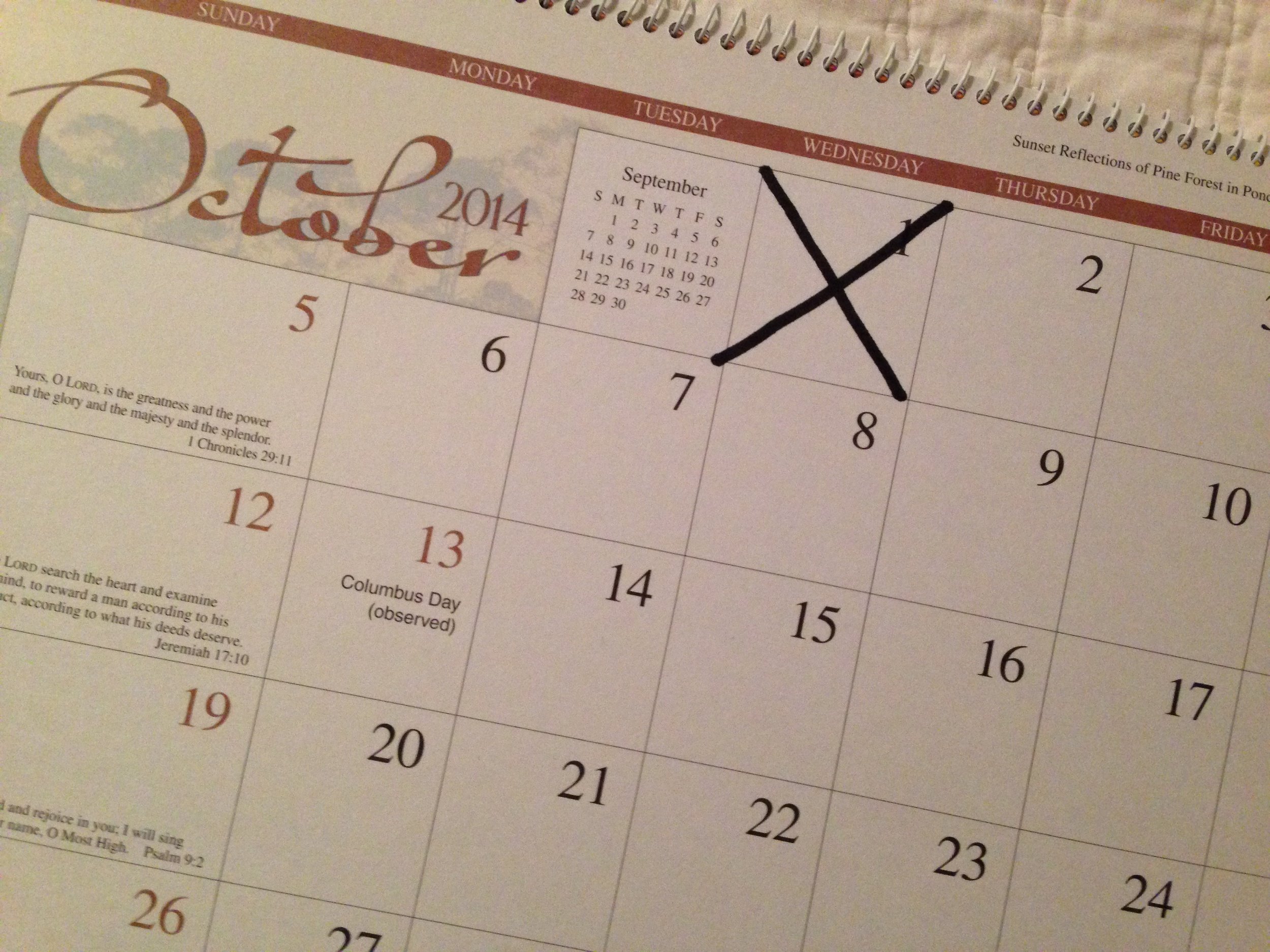 So far so good.
Quiz! What's Your Favorite Idol?
Are we modern, Western people really more advanced than the ancients? We certainly believe we are. This arrogance is one of the reasons modern Americans have such difficulty with the Bible; after all, we are advanced and advancing, and the Bible--particularly the Old Testament--is backwards and primitive.It is true that we are an advanced people technologically--think of all the ways we can kill or display pornography!--but when it comes to idolatry, we are as prone to idol worship as the ancients. Or more so.
Israel and the Golden Calf
We read in Exodus 32 of the golden calf that the Israelites made and worshipped while waiting for Moses to return from Mount Sinai. Like so many of the stories in the Bible,‘the account of the golden calf seems remote and distant. But that's because we don't understand what an idol is.
The Definition of an Idol
In his book Counterfeit Gods,?Tim Keller describes idolatry in this way:
What is an idol? It is anything more important to you than God, anything that absorbs your heart and imagination more than God, anything you seek to give you what only God can give.A counterfeit god is anything so central and essential to your life that, should you lose it, your life would feel hardly worth living. An idol has such controlling position in your heart that you can spend most of your passion and energy, your emotional and financial resources, on it without a second thought. It can be family and children, or career and making money, or achievement and critical acclaim, or saving 'face' and social standing It can be a romantic relationship, peer approval, competence and skill, secure and comfortable circumstances, your beauty or your brains, a great political or social cause, your morality and virtue, or even success in the Christian ministry. When your meaning in life is to fix someone else's life, we may call it 'co-dependency' but it is really idolatry. An idol is whatever you look at and say, in your heart of hearts, 'If I have that, then I'll feel my life has meaning, then I'll know I have value, then I'll feel significant and secure.' There are many ways to describe that kind of relationship to something, but perhaps the best one is worship." [Emphasis mine.]
Be Proud, O Modern
Idolatry isn't something that we've grown out of; idolatry is something modern Western culture is perfecting. The ancients would be astounded at the brazen boldness of our idolatry: we are worshipping idols of which they never dreamed.
Which Idol Did You Get?
J.A. Medders has a nice summary of Keller's material on his blog, which I've excepted below.
Life Only Has Meaning/I Only Have Worth If....
- I have power and influence over others. (Power Idolatry)
- I am loved and respected by _____. (Approval Idolatry)
- I have this kind of pleasure experience, a particular quality of life. (Comfort idolatry)
- I am able to get mastery over my life in the area of _____. (Control idolatry)
- People are dependent on me and need me. (Helping Idolatry)
- Someone is there to protect me and keep me safe. (Dependence idolatry)
- I am completely free from obligations or responsibilities to take care of someone. (Independence idolatry)
- I am highly productive and getting a lot done. (Work idolatry)
- I am being recognized for my accomplishments, and I am excelling in my work. (Achievement idolatry)
- I have a certain level of wealth, financial freedom, and very nice possessions. (Materialism idolatry)
- I am adhering to my religion‘s moral codes and accomplished in its activities. (Religion idolatry)
- This one person is in my life and happy to be there, and/or happy with me. (Individual person idolatry)
- I feel I am totally independent of organized religion and am living by a self-made morality. (Irreligion idolatry)
- My race and culture is ascendant and recognized as superior. (Racial/cultural idolatry)
- A particular social grouping or professional grouping or other group lets me in. (Inner ring idolatry)
- My children and/or my parents are happy and happy with me. (Family idolatry)
- Mr. or Ms. Right? is in love with me. (Relationship Idolatry)
- I am hurting, in a problem; only then do I feel worthy of love or able to deal with guilt. (Suffering idolatry)
- My political or social cause is making progress and ascending in influence or power. (Ideology idolatry)
- I have a particular kind of look or body image. (Image idolatry)
The Only Known Cure
The only known cure for idolatry: faith, hope, and love.
Some New Music for You to Check Out
How could you not take to a guy like this? Meet David Crowder, in his own words:
I was born half Baptist (the East Texas, King James carrying, pipe organ, hymnal singing, Southern, type Baptist) and half Pentecostal (the Holy Ghost, jumpin? and shoutin?, hand-waving, prophecying, Southern, type Pentecostal). Later, I was born again.

Crowder Math
I've been a fan of David Crowder's music for over a decade; nobody sounds like him. Here's my summary of his unique style:Texas gospel rockabilly+Electronic dance beats+simple, piercing lyrics
= David Crowder
Hee Haw, Aqua Net, and Olivia Newton John
[embed]http://www.youtube.com/watch?v=AUwXo0jgORI[/embed]David on his musical influences:
The son of an insurance salesman and a social worker, fructifying in the piney woods of Texarkana, I was as muddled as the name of my town. We drove a light blue Ford Thunderbird; not the old, classic kind, but a brand new one that had a sticker on it. The one with the electric windows and mirrors and the headlamp covers that flipped open when you turned on the headlights and an in-dash eight-track player. My dad and mom both used Aqua Net hair spray. He parted it on the right side and always carried a comb. She got permanents and had curlers that heated up every Saturday night while we all watched The Lawrence Welk Show and Hee-Haw. The eight-tracks in rotation were Elvis, Willie Nelson, Olivia Newton John, and Bill Gaither. Everything I‘ve ever done musically can be traced back to there that Ford Thunderbird, those sounds, the view out of those windows, and my brother punching me in the arm on the way to Sunday morning Church. That is all metaphor and all true.
After 6 albums, the David Crowder* Band broke up in 2012. But, David has kept making music under the name Crowder? and released his first solo album, Neon Steeple, in May 2014.
Neon Steeple
Like previous David Crowder albums,?Neon Steeple has a story to tell from start to finish. Although there are a few standout songs that work well on their own, the best way to listen to the album is in one sitting, beginning to end.Here's David describing his work on the album:
Neon Steeple is a collection of songs and sounds looking forward to the past and counting the present as sacred. It is a longing for belonging, a search for home. It is a collection of choruses that believe that this is not all there is. There is more, there must be. It is the sound of the Appalachians and Ibiza. Folk music and EDM. The music of the People. Folktronica. Digital and Analog. The Ones and Zeros and the Handshake. The Banjo and the 808.
Four Year-Old Dance Party, etc.
Neon Steeple is a beautiful album that tells a beautiful story in an unsentimental and creative way. It's also a lot of fun.The song My Beloved? is a favorite of a four year-old in my household. (The video is embedded above, but the album track is a much better version.) It‘s a clap-your-hands-stomp-your-feet happy hoedown.One of my favorite tracks is Come As You Are? (embedded below) that is an invitation to the weak, weary, broken-down to lay down their burdens and shame.[embed]http://www.youtube.com/watch?v=PE6QXWFL6jY[/embed]Another standout track is the southern throw-down Lift Your Head Weary Sinner (Chains). It‘s an aggressive, growling song.But to pick out those three tracks is to give the impression that the rest aren‘t worth hearing, an impression I don‘t want to give.?I Am? is another favorite of mine; I love the ambiguity in the central hook:
"I am holding onto you;In the middle of the storm,I am holding on...I am."
Who's holding whom? That's the question, isn't it?Another great track is the duet with Emmylou Harris (?My Sweet Lord?): just achingly beautiful.
?Blind is the fool, I see that now;I broke the rules, and let ya down.I walked alone; now I have run dry:I need my sweet Lord to help tonight.
The entire album is really strong: I recommend it.
"Making Dead People Alive"
As much as I appreciate David Crowder the musician, I think I appreciate David Crowder the writer and theologian even more:
Neon Steeple is both a critique and a hope. The meta-narrative of scripture is about innocence lost, it is about displacement, about things not being right and a search for belonging and home and forgiveness and reconciliation, the tension of death and life, what it means to be alive. The story is not about making bad people good, it is about making dead people alive. The story sold is rarely that.What if we started believing??
What if indeed?
3 Steps To A Better job
We spend the majority of our time--our most precious resource--working. And yet many people live for the weekends, feel unfulfilled in their work, and go to bed at night wondering, "What did I really accomplish today that actually?matters?"[embed]http://www.youtube.com/watch?v=Fy3rjQGc6lA[/embed]I don't believe work has to be like this.What if you could have work that matters and that you love, without (probably) changing jobs?
For a Better Job, Ask These Three Questions
1. "Where Can I Best Serve?"
If we are honest, most of us end up in the jobs we have because our first question is "How can I get earn the most respect and the most money?" That question won't lead you to fulfillment in your work. Instead, you'll be working for yourself--a sure way to gain the whole world while losing your own soul.It may be the case that asking the question "Where Can I Best Serve?" will lead you to change jobs. You may be in finance and you ought to be a chef, or you may be a musician and you ought to be a school principal. It may be that you are in the field you are in not because it bests fits your gifts, but because you thought it would get you the most money or most please your parents.But, it may be that you just need to change your mindset and not your job. You can serve others in almost any field:
- Football coaches serve by helping their players learn how to play as a team;
- Litigators serve by helping their clients work through the difficult, scary, but necessary facts of business in America;
- Entrepreneurs serve by creating products and services that meet needs in society.
Blessed By Nest
 I bought and installed the Nest learning thermostat at home about a year ago. It sounds funny to say it, but the whole experience was a blessing to me. Someone clearly thought through every aspect of the product: the thermostat, the packaging, and the instructions. Some entrepreneur conceived of the idea, and that idea met a need I had in my living room.One thing I know for sure: God created you to serve the world. You may be in the wrong career, or it may be that you've been thinking of serving your bank account rather than the world. The first step to work that matters is to consciously think of work as a means to serve others.
2. "Am I Willing To Get Fired?"
Work matters, but it's not what's most important. If you hold your work too tightly, it will restrict your life and your integrity. You'll care more about meeting the numbers than about meeting your husband for dinner or meeting your wife's needs or meeting your kids at their soccer games. But, if you're willing to hold your work in an open hand, paradoxically, work will matter more to you in the ways that matter. Be willing to lose your job. And be grateful to have it.
3. "Who Can I Bless Today?"
If you are feeding hungry children, it's obvious how you can bless someone today. But, we can bless others in lots of other, more mundane ways. For example, you can bless others through:
- Running a meeting with competence and efficiency;
- Caring about the person on the other end of the sales call as more than a potential commission;
- Deliberately trying to help your boss succeed (even if your boss isn't your favorite person).
 If you see your everyday work responsibilities as a way of intentionally blessing others, your work will take on a whole new understanding.
Your Work Is Your Ministry
I'm in the pastoral ministry, but the people in my church are called into ministry, too. Their ministry might involved fixing cars or selling mortgages or investing in start-ups, but it's ministry. My job is specialized: to equip the folks in my church to be better ministers. But, there is no Christian who isn't called to ministry.
On a scale of 1-10, how satisfied are you with the work you are doing?
What needs to change for you to see your work as your ministry?
(We're talking about topics like this--topics that matter to men--at 7, a men's gathering at Munger Place Church every Friday morning at 7:00 AM, September 26-November 7. More info here. Either you are a man, or you know one--either way, we'd love to have you.)
Is God Nice?
The conventional?wisdom is that God?is just like a religious Santa Claus: nice, gentle, and tame. In other words, a God totally unknown to the Israelites.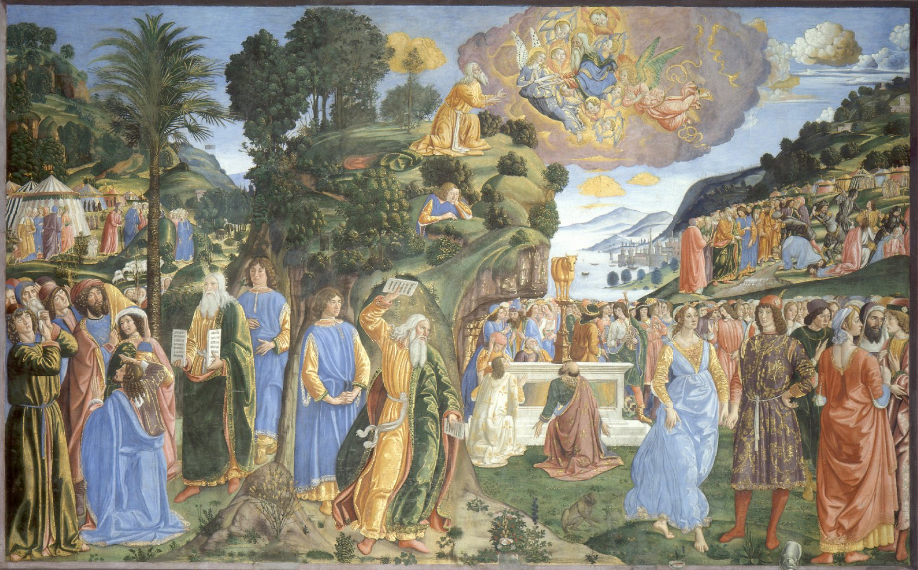
The Israelites Were Afraid at Sinai
In Exodus 19 we read of the intense preparations the Israelites take before the theophany on Mt. Sinai. This is the first contact the ordinary Israelites have ever had with the Lord, and they are terrified.
And So Is Everyone Else
Terror is actually the universal sentiment in scripture when ever anyone meets with God or his angels. Even in the New Testament, the human response to a theophany (a divine appearance) is always fear:
- Remember the shepherds in Luke's account of Christmas, keeping watch over their flocks by night? The first thing the angel of the Lord says to them is "Fear not!" [Luke 2:10].
- On the Mount of Transfiguration, even Peter is terrified at the temporary vision he, James, and John are given of the true nature of Jesus. When they hear the voice of God, they fall to the ground in terror [Matthew 17:6].
- On the road to Damascus, Paul also falls to the ground in fear after hearing the voice of the risen Christ [Acts 9:4].
Scripture is clear: the majesty of God is terrible to behold.
Her Majesty is Not Amused
![[Credit: thestar.com]](http://static1.squarespace.com/static/5d70f59aefca59000162e4e6/5d7fcef39f682762992c8aca/5d7fcefb9f682762992c8bda/1568657147737/queen_elizabeth.jpg?format=original) We should not be surprised that divine majesty is as serious as something can be. Even 21st century interactions with human majesty require clear protocol and produce respect and solemnity. Consider the rules‘that even the American President has to observe when he meets with Her Majesty. For example, it is considered reprehensible to ever turn your back on the queen. Why? Because majesty provokes respect.
We should not be surprised that divine majesty is as serious as something can be. Even 21st century interactions with human majesty require clear protocol and produce respect and solemnity. Consider the rules‘that even the American President has to observe when he meets with Her Majesty. For example, it is considered reprehensible to ever turn your back on the queen. Why? Because majesty provokes respect.
"All Rise"
![The Supreme Court of the United States of America [credit: Wikipedia]](http://static1.squarespace.com/static/5d70f59aefca59000162e4e6/5d7fcef39f682762992c8aca/5d7fcefb9f682762992c8bdd/1568657147953/20120110094716SCOTUSbuilding_1st_Street_SE.jpg?format=original) We don't have a king or queen in this country, but we do have the law, and the law is majestic and terrible. The law has the power of life and death over the people. When the judge enters the courtroom, everyone stands out of respect, not of the person of the judge, but of the law which the judge represents. Only God is greater than the law.
We don't have a king or queen in this country, but we do have the law, and the law is majestic and terrible. The law has the power of life and death over the people. When the judge enters the courtroom, everyone stands out of respect, not of the person of the judge, but of the law which the judge represents. Only God is greater than the law.
God is Not Tame
It shouldn't be surprising that a divine appearance is terrible. Moses was right to prepare the people. Any God worth the title is by definition greater than anyone of whom we can conceive. Our pop culture versions of the Santa Claus God betray our lack of honest imagination.To paraphrase C.S. Lewis, God is good, but he is not tame.No, it's not surprising that God is terrible and majestic. But do you know what is surprising?![[Credit: endhairloss.eu. (I know--weird place for a baby pic.)]](http://static1.squarespace.com/static/5d70f59aefca59000162e4e6/5d7fcef39f682762992c8aca/5d7fcefc9f682762992c8be0/1568657148162/Reasons-for-hair-loss-in-newborn-babies.jpg?format=original) That the Word became flesh and dwelt among us, and we have seen his glory, the glory of the One and Only, full of grace and truth [John 1:14].The Incarnation? That's surprising in the best possible way.
That the Word became flesh and dwelt among us, and we have seen his glory, the glory of the One and Only, full of grace and truth [John 1:14].The Incarnation? That's surprising in the best possible way.
How I Get Things Done
Moses gets productive in Exodus 18. (I know I was supposed to write about Exodus 18 yesterday, but I have a big presentation to make every Sunday morning in front of hundreds of people; dear reader, please forgive.) Since I don't have anything interesting to say about Exodus 18, let's talk about productivity. Almost ten years ago, a friend of mine gave me a book that has been more influential in how I do my work then anything else I've ever read or learned in school. The book was David Allen's 2001 bestseller Getting Things Done.
GTD, Baby
Here's the idea behind the Getting Things Done methodology (GTD for folks in the know):
- you have lots of inputs coming at you all day every day, and you need a way to capture, process, and act on all that data;
- GTD gives you a process to do that.
Capture?Everything
One of David Allen's tips is to learn never to keep anything in your head, but to write everything down. I follow this advice obsessively: as soon as I think of anything, I write it down. I use Omnifocus on the Mac and iOS devices, keep small notepads everywhere, and even carry a small pocket notebook a pocket spacepen with me everywhere.
The Weekly Review
Around every seven days or so, David Allen recommends a "weekly review," i.e., a time when you sit quietly and look over your calendar and review all incomplete projects and next action lists. I try to keep a weekly review on Monday mornings (I'm off on Mondays) and when I do that, my week seems much more manageable and less stressful.
Go For It
If Moses needed a system for productivity, so do you. If you are having trouble keeping your commitments, answering all your email (you know who you are), or sleeping soundly at night, GTD might be for you.
When Folks Aren't Strong Enough
Moses needed to rely on the support of other people. And so does everyone else.!["Joshua fights Amalek (1625) [http://www.artbible.info/bible/exodus/17.html]](http://static1.squarespace.com/static/5d70f59aefca59000162e4e6/5d7fcef39f682762992c8aca/5d7fcefa9f682762992c8bcc/1568657146680/jozua_amalekieten_grt.jpg?format=original) In Exodus 17 we read of a battle between the Israelites and the Amalekites:
In Exodus 17 we read of a battle between the Israelites and the Amalekites:
10?So Joshua fought the Amalekites as Moses had ordered, and Moses, Aaron and Hur?went to the top of the hill.?11?As long as Moses held up his hands, the Israelites were winning,?but whenever he lowered his hands, the Amalekites were winning.?12?When Moses? hands grew tired, they took a stone and put it under him and he sat on it. Aaron and Hur held his hands up?one on one side, one on the other‘so that his hands remained steady till sunset." [Exodus 17:10-12].
I love that image: Moses, too weak to stand on his own power, supported by Aaron and Hur.
Lifting Up Those Who Can't Stand Alone
Several weeks ago in my church, our music director Kate Miner referenced this passage. We were talking in church about the persecuted church in Mosul and elsewhere in the Middle East, and Kate said, "Just as in the scriptures when Moses needed other people to lift him up, it's our job today to lift up our brothers and sisters in Iraq who are facing persecution because of their faith."That thought really struck me: it is my job to intercede and lift up others who may be too weak to do it for themselves. Certainly that applies to the persecuted church in the Middle East and worldwide, but also to folks who are struggling in my community.Who can you lift up in prayer today?
You Can't Understand Jesus Without Exodus
Once you have the eyes to see, you realize that virtually everything Jesus said and did came out of the religious heritage of Israel. Even the things that seem to be farthest from Judaism and most central to Christianity often are a recasting or an allusion to what we call the Old Testament. The Lord's Prayer, for example, is drawing upon Exodus 16.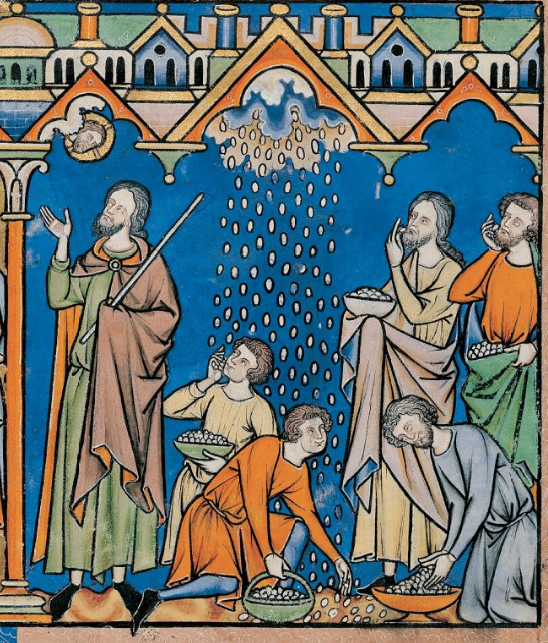 After coming out of slavery in Egypt, the Israelites faced forty years of wandering in the desert. But, the Lord provided. Each day (excluding the seventh day, the Sabbath), the Lord made provision for "thin flakes like frost?on the ground...It was white like coriander seed and tasted like wafers made with honey" (16:14,31). The Israelites called this strange food?manna.God provided manna every day, but if the people gathered more than they needed for the day, it rotted. The Israelites learned, therefore, to trust God for each day's provision.When Jesus taught his disciples to pray "Give us this day our daily bread," he was reminding them of the manna God provided in the wilderness.When we pray the Lord's Prayer, we pray for God to give us what we need to make it through the day: nothing more, nothing less.
What's the Oldest Verse in the Bible?
It should be obvious that events?don't have to be written down in the order in which they occur. You could, for example, have two books on your shelf: a book about the Revolutionary War, published in 2014, and a book about the Vietnam War, published in 1986. The older book is the one about the more recent event. And, just because a book is a new publication about an old event does not mean that the book is unreliable. For example, the book in question could reliably be based on firsthand accounts; you could have a book about the Revolutionary War, published in 2014, that is based on George Washington's letters. In short, the date of the account and the date of the event accounted do not have to go together.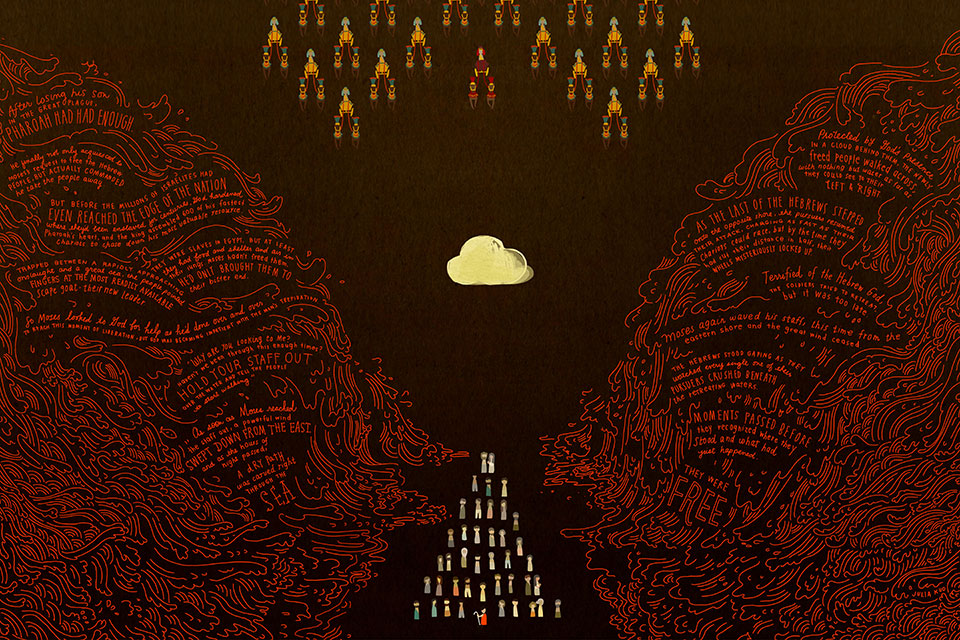 The same principle applies to the Bible. For example, most scholars believe that some of the letters of Paul such as 1 Thessalonians and Philippians were written earlier than the Gospels, even though the Gospels tell of events that happened earlier than the letters of Paul. (There were certainly earlier accounts of the life of Jesus that the Gospel writers used when composing their works, but these early works are lost to history.)Whoever it was who wrote down Exodus in the form in which we have it--tradition says it was Moses, but we cannot know for sure--whoever it was certainly did not write it down while the events he (or she) describes were actually happening. Only after the fact, when the Israelites were free and clear, would anyone have had time or inclination to record the experiences of the Exodus. Which is why I find Exodus 15:21 so fascinating.
The Oldest Verse in the Bible
In Exodus 15, we read a brief little poem that some scholars believe is the oldest poem in the Bible:
20?Then the prophet Miriam, Aaron‘s sister, took a tambourine in her hand; and all the women went out after her with tambourines and with dancing.21And Miriam sang to them:
?Sing to the?Lord, for he has triumphed gloriously;
horse and rider he has thrown into the sea."
Exodus 15:21 is called "Miriam's Song," and some scholars believe it is a victory song that comes from the time immediately?after the Israelites' miraculous crossing of the Red Sea. ?In other words, Miriam's song in Exodus 15;21 could be the spontaneous song of victory that the Israelite women burst into after realizing that they were?free at last!How cool is that?
Did the Red Sea Event Happen?
The miraculous parting of the Red Sea in Exodus 14 is one of the most dramatic events in all the pages of scripture. It is also, for many people, a stumbling block: they read about the walls of water on either side of the Israelites as they pass through on dry ground and think, "This is why I'm not religious--how could anyone believe this stuff?" So, did it actually happen? What are modern, thinking people supposed to think?
I Can't Prove the Red Sea Event Happened
I can't prove to you that Moses stretched out his hand and that the Lord then drove the waters apart, turning the sea into dry land (14:21). But, even without "proof," this miracle (and other Old Testament miracles) don't worry me, and I'm able to accept them as spiritually formative and important indicators of the power and nature of God.
And Natural Explanations Don't Work For Me
Any explanations that use the natural to explain the miraculous, along the lines of "maybe there was a strong wind that made the waters part in just that way?" don't really work, because this is a miracle, and miracles are, by definition, supposed to be supernatural. Ancient people knew how the world worked, and they knew that large bodies of water don't just part and allow people to walk between the walls of water. In fact, that's the reason the Red Sea event is such a big deal: it was considered out of the ordinary course of events, a miracle. So, the Connecticut-Yankee-in-King-Arthur's-Court sort of explanation just doesn't work for me.
Instead, I Start with Jesus
I don't start with Old Testament miracles. I start with Jesus. Jesus trusted the Old Testament (the only scriptures that existed in his lifetime) in his devotional and worship life. We know this because he quotes from the Old Testament extensively, even quoting from the Psalms when he's on the cross: the Hebrew scriptures were central to his life. Jesus also references Moses several times. This means to me that Jesus received and accepted the Hebrew scriptures as formative and important. If he didn't need to worry with historicity--i.e., did this actually?happen?--then neither do I.
And I Believe That the Resurrection?Is?Plausible
If Jesus is risen from the dead, then I can accept his word about everything. If he accepts the Old Testament as formative and important, than so can I.
But?If Jesus Stayed Dead, Then Who Cares?
If Easter morning didn't happen, then who cares what Exodus says about the Red Sea? But if it did happen, then I can accept the Old Testament miracles as spiritually nourishing and important and not get caught up in some kind of modernist obsession with proving that they happened. Because, if Christ is risen, then there is nothing God can't do.What do you think?
What I Did on My Summer Vacation (And You Can, Too!) [#EatThisBook - Exodus 12-13]
Even though I only work one (half) day a week, it's still good for me to get away on vacation from time to time. My family was blessed to do a fair among of traveling this summer, including a European Grand Tour. In the last few months we've been through several European countries and a few different states, but wherever we went, we made sure to do one thing, no matter what. The one thing we did is easy for you to do, too, dear reader, and the best part is, you have my money-back guarantee? that this one thing will change your life.... We went to church.I know it sounds crazy, but it's really true: we actually went to church?while we were on vacation!This summer we visited:
- a charismatic non-denominational church in Oxford, England;
- an African Methodist church in Munich, Germany;
- a Roman Catholic mass--in Flemish!--in the beautiful Church of Our Lady in Bruges, Belgium (I was lost during the sermon but was able to follow the communion liturgy pretty well);
- an American Baptist church on Cape Cod, MA;
- and a small Methodist church in my wife's small Virginia hometown.
The experiences I had while worshipping in other churches are among my favorite memories from what was a great summer.
Moses Creates a New Holiday
In my church, we are in the midst of a 90 scripture reading campaign called Eat This Book. We're currently reading through the book of Exodus, and today read the passage in which Passover is instituted as an annual ritual of remembrance for the Israelites. (I'm supposedly blogging each day about that day's assigned chapter, but today's post is a combined post of Exodus 12 and 13.) One idea struck me in the instructions Moses gives the people regarding the Passover: the Passover is to help the Israelites?remember.
24You shall observe this rite as a perpetual ordinance for you and your children.25When you come to the land that the?Lord?will give you, as he has promised, you shall keep this observance.26And when your children ask you, What do you mean by this observance???27you shall say, It is the passover sacrifice to the?Lord, for he passed over the houses of the Israelites in Egypt, when he struck down the Egyptians but spared our houses.?? And the people bowed down and worshipped.... (Exodus 12:24-17)8You shall tell your child on that day, It is because of what the?Lord?did for me when I came out of Egypt.?9It shall serve for you as a sign on your hand and as a reminder on your forehead, so that the teaching of the?Lord?may be on your lips; for with a strong hand the?Lord?brought you out of Egypt.... (Exodus 13:8-9)14When in the future your child asks you, What does this mean?? you shall answer, By strength of hand the?Lord?brought us out of Egypt, from the house of slavery.15When Pharaoh stubbornly refused to let us go, theLord?killed all the firstborn in the land of Egypt, from human firstborn to the firstborn of animals. Therefore I sacrifice to the?Lord?every male that first opens the womb, but every firstborn of my sons I redeem.?16It shall serve as a sign on your hand and as an emblem?on your forehead that by strength of hand the?Lord?brought us out of Egypt." (Exodus 13:14-16)
The Passover is to be observed yearly, so that every generation will learn and remember that the children of Israel were slaves in Egypt, but the Lord brought them out with a mighty hand and an outstretched arm. They are to remember who they are and whose they are.
Some Things Don't Change
If you know anything about the Old Testament, you'll know that the Israelites are in constant danger of forgetting their unique heritage and instead returning to the slavery of false gods.I'm not an ancient Israelite, but I am just as prone to forgetting my identity as they were, perhaps more so. Our culture is a culture obsessed with getting and spending, and it's a culture that is doing everything possible to make me believe that I am nothing but a consumer. Worship, then, becomes a way of remembering that we are more than just consumers. I appreciate how Walter Brueggemann puts it:
The biblical community of faith is a community of memory, working at its precious identity in a culture devoted to amnesia. The market forces that encourage a consumer consciousness are largely controlled by ideology that wants to abandon the past and forsake the future in order to live in the absolute "now." Those who neither remember nor hope are profoundly vulnerable to consumerism, busy filling the void left be eradication of that extra dimension of historical awareness that belongs to healthy humanness. Thus when the community says, "This do in remembrance," it is not engaged in a mere history lesson or a simple act of piety. It is, rather, engaged in an act of resistance against an ideology that will destroy any Passover-driven humanness."
Weekly worship is a necessary reminder that you and are I not merely consumers. More than that, weekly worship reminds us, that contrary to how things often seem, God is in control and fear is always a lie. Those are messages I need to hear at least once a week.So, you need to be in church every week. Otherwise, how will you remember the truth?
Three Things I Remember Every Time I Go to Church
The following lessons are available to me every week in my home church, but for some reason they were made more clear to me as my family visited other churches this summer, thousands of miles away.When I go to church:
- I remember that it's not about me. Most of my life I think mostly about me. (May God heal me from self-obsession.) But on Sunday morning, in church, I'm reminded otherwise as I sing, pray, and think about the Lord. I'm not at the center of reality. It's good to remember that.
- I remember that I'm not the only one. When I worship with other Christians with whom I have nothing in common except faith in the Lord, I am always encouraged: there are people all over the world, in all kinds of languages, who are walking this journey with me.
- I remember that Christ is risen from the grave. It's been a summer of evil headlines, and it's easy to lose hope and become world-weary. But on Sundays I'm reminded that the same Lord who heard the cry of the Israelites and brought them out of slavery in Egypt is the same Lord who was crucified and raised from the dead and the same Lord who promises that he has overcome the world and that ultimately we have nothing to fear.
So, that's what I did on vacation this summer: I went to church. (At least on Sundays, not the other days of the week. I mean, I'm not?religious about it.)You should try it. It will change your life. I guarantee it?.
![Some Brief Thoughts About Killing [#EatThisBook - Exodus 11]](https://images.squarespace-cdn.com/content/v1/5d70f59aefca59000162e4e6/1568657635464-R9978QF0EU93IY86CPE8/image-asset.jpeg)
Some Brief Thoughts About Killing [#EatThisBook - Exodus 11]

Many people?even those who are inclined toward pacifism‘seem to allow that certain situations may make the killing of another human being an evil necessity. Maybe to prevent genocide or to stop a future Hitler, it becomes necessary to kill. Maybe. (I'm not sure what I think.) But what about God? Is it okay for the Lord to kill?In Exodus 11, Moses announces to Pharoah the last of the terrible plagues that the Lord will inflict on Egypt: all of the firstborn of Egypt will be killed
from the firstborn of Pharoah who sits on his throne to the firstborn of the female slave who is behind the handmill, and all the firstborn of the livestock? (v.5).
I am very uncomfortable with the idea of the final plague. Here are some of thoughts that Exodus 11 raises in my mind:Brief Thoughts on Killing
- There is no war without the killing of innocents. I'm not saying this fact is good--it is an evil fact--but I'm merely just describing what is a fact. In every single war throughout history, innocent women and children suffer and are killed. The talking heads on television will talk about ‘surgical strikes? and avoiding collateral damage. This is a wicked lie. It doesn't matter the cause: in war, innocent people always suffer. Always.
- Killing may at times be necessary?I honestly don‘t know what I think. War may be a necessary evil in an evil world. But war is always evil, and war is always hell. If we are going to speak about war, we need to acknowledge the bitter truth: we are going to kill babies, little children, nursing moms, and many other innocent parties. There may be times when that is the price to pay. But let us be honest about the price.
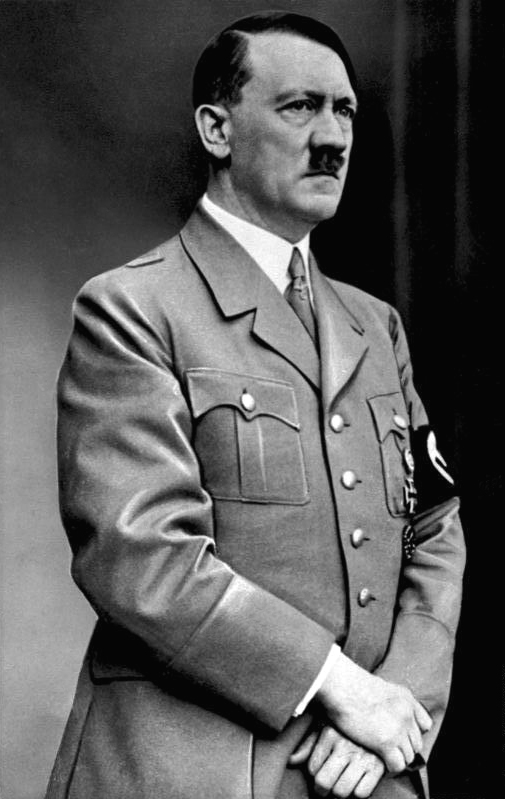
- Perhaps there was no way for the Lord to bring the Israelites out of Egyptian slavery without the final plague. If Hitler could only be stopped through violence, perhaps the same goes for Pharoah.
- [An update from a friend of mine]: We should remember that Pharaoh had ordered the deaths of all the male children of the Israelites (Exodus 1). Perhaps there is some sort of relationship between the final plague and Pharoah's earlier actions. You reap what you sow? I realize that doesn't solve the problem, but is worth thinking about.
- In the mystery of the Trinity, God the Father knows what it is like to lose God the Son. You cannot think of the death of the firstborns in Egypt without thinking of the death of the only begotten of the Father, crucified on Good Friday.
- There is a mysterious connection between the Passover and Good Friday. The Passover is when the Angel of Death passes over the houses of the Israelites but strikes down the firstborn of the Egyptians. Passover then becomes a yearly religious ceremony for the Jews, and it is at Passover that Jesus is crucified by the Romans, centuries after the events described in Exodus 11.
- Christ has died. Christ is Risen. Christ will come again.? We?ll be saying those words in my church this Sunday, and somehow I believe that they are an answer to the difficulties I have with Exodus 11. Christ was an innocent, killed. But Christ was raised from the dead, which means death doesn‘t have the last word. And Christ will come again and make all things well.
- In the meantime, we wait and live in the tension between hard questions about a hard world and the knowledge of the Resurrection.
I warned you about the difficulties of scripture?.
![Is Life Fated, Or Are We Free? [#EatThisBook - Exodus 10]](https://images.squarespace-cdn.com/content/v1/5d70f59aefca59000162e4e6/1568657633253-9XSFE653OYXUG0CTSBZ4/image-asset.jpeg)
Is Life Fated, Or Are We Free? [#EatThisBook - Exodus 10]
How can Pharaoh be blamed if God makes him tyrannical? Are you and I free to choose in life, or are our choices fated?Three times?in Exodus 10 we read that the Lord hardens Pharoah's heart so that Pharaoh will not relent and let the??Israelites go free (v. 1, 20, 27). How is that fair? If Pharaoh has no choice, then how can he be held responsible for his actions? Perhaps, though, Pharoah's free will and God's sovereign will are not mutually exclusive.I found this paragraph from Walter Brueggemann to be helpful in thinking through the relationship between "fate and choice:"
It is perfectly credible, given what we have seen of recalcitrant tyrants in modern times, that Pharaoh should choose to be destroyed rather than to yield (v. 20). Even such choices, however, do not (according to the narrator) fall outside Yahweh's sovereign intention. The juxtaposition of?fate and choice in Pharoah's behavior is not unlike that of Saul in the narratives of 1 Samuel. He is, indeed, fated by Yahweh to fail, but he also chooses his own destruction in a series of choices. Paul Ricoeur has observed about the power of sin in the narrative of Genesis 3 that the human couple are both?victims?and?perpetrators of their destruction. So it is with Saul, and so it is with Pharaoh. And so it is with all of our hard-heartedness in which we choose what has been given us."
 I think that Brueggemann gets it right. What do you think?
![You're Not Exempt From Cause and Effect [#EatThisBook - Exodus 9]](https://images.squarespace-cdn.com/content/v1/5d70f59aefca59000162e4e6/1568657632069-159VOKCXVCCTM7LG4713/image-asset.jpeg)
You're Not Exempt From Cause and Effect [#EatThisBook - Exodus 9]
The Lord sends plague after plague in Exodus 9, and each time, though he momentarily seems to waver, Pharaoh refuses to relent. Why? Why does he persist in a course of action that will inevitably lead to his destruction? Better yet: why do we?One of the perverse parts of human nature: we will persist in behaviors that are?obviously?hurting us. Why? I think it's because we prefer to pretend that the link between cause and effect won't actually apply to?us. Other people need to worry about cause and effect, but we're exempt. As soon as the Lord removes a plague, Pharaoh believes that it won't happen again, that he can continue to oppress the Israelites without facing that effect. And then the Lord sends another plague. Pharaoh acts, and the Lord sends the consequence.Where are you ignoring cause and effect today?
![Who's Responsible for Pharaoh? [#EatThisBook - Exodus 8]](https://images.squarespace-cdn.com/content/v1/5d70f59aefca59000162e4e6/1568657631153-3T52KP0B1T8MVSW6L1JS/image-asset.jpeg)
Who's Responsible for Pharaoh? [#EatThisBook - Exodus 8]
Anyone reading the account of the plagues in Exodus comes upon a troubling phenomenon: sometimes Pharaoh hardens his own heart (8:15), whereas other times (7:3) the Lord hardens Pharoah's heart. Which is it? If it is the Lord who causes Pharoah's heart to be hard, then how is it fair for Pharaoh to be held responsible for his actions?Short answer: I don't know.Longer short answer:The Bible is not a legal brief, written and revised countless times by people trying to close every possible loophole for future liability. The Bible is not an airtight mathematical theorem?of a complex geometry problem. The Bible is instead a collection of writings that reflect God's interactions with men and women over the centuries. The Bible tells the great story of redemption; it does not attempt to answer every question, reconcile every inconsistency, and remove every nuance. If it were a legal brief, you'd need to fire your lawyer. But, it's not. The purpose of the Bible is not to defend God from a lawsuit; one of the purposes of the Bible is to tell us what we need to know about God's plan of salvation.I've wondered recently if perhaps the parts of the Bible that give us difficulty, that trouble us, are perhaps the parts of the Bible to which we most need to pay close attention. Maybe God?wants parts of the scripture to trouble us. Maybe the parts that give us pause are the parts over which we most need to pause.Beware Theological Schemes That Explain?EverythingI tend to be wary of theological explanations that have an answer for every difficult spot in the scriptures. It is true that sometimes we have difficulty in the scriptures because we haven't studied enough, and in these times explanations can be helpful and clear up a perceived difficulty that really isn't a difficulty at all. But other times, the scripture is just difficult, and no one can really give a satisfactory explanation. The Bible is not a legal brief--ambiguity is allowed. The Bible is not a mathematical proof--you are allowed to have remainders that don't completely fit into the system.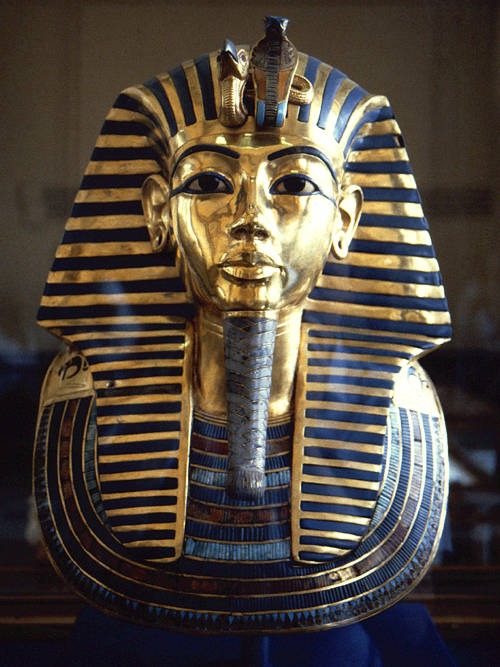 Two Ways of Understanding Pharoah's Hard Heart
- Maybe we take the text at face value: sometimes Pharaoh deliberately resists God, and sometimes God supernaturally increases Pharaohs resistance. This seems unfair, but our perspective is admittedly limited, and maybe the Exodus can only happen if Pharaoh becomes more and more stubborn. Maybe things have to get worse before they can get better. And, as the Apostle Paul writes in Romans 9:14-19, we are not in the position to judge the Lord's actions. We are not God.
- Maybe God just gives Pharaoh over to the desires of his heart. Maybe God doesn't?make?Pharaoh do anything: maybe God just lets it happen. Maybe God knows that Pharaoh is not going to relent, but God's foreknowledge might still allow space for Pharoah's free (wicked) choice.
I don't have a good answer to this theological problem, but maybe that's okay. After all, life is not neat; life does not conform to a legal brief or a mathematical theorem. And neither does scripture.What do you think?